Pet Decoded
Join the Digest
  • Pet Decoded
  • Insurance
    • Healthy Paws
    • Lemonade
    • Spot
  • Dog Food
  • Gear
    • Leashes & Harnesses
    • Beds & Crates
    • Toys
    • Travel Gear
    • Grooming
  • Guides
    • Dog Cost CalculatorNew!
    • Behavior
    • Health
    • Training
    • Breeds & Lifestyle
    • Dog Walking
    • Subscription Boxes
    • Fresh Dog Food Delivery
  • About
  • Contact
  • Emergency Guide
Pet Decoded
  • Pet Decoded
  • Insurance
    • Healthy Paws
    • Lemonade
    • Spot
  • Dog Food
  • Gear
    • Leashes & Harnesses
    • Beds & Crates
    • Toys
    • Travel Gear
    • Grooming
  • Guides
    • Dog Cost CalculatorNew!
    • Behavior
    • Health
    • Training
    • Breeds & Lifestyle
    • Dog Walking
    • Subscription Boxes
    • Fresh Dog Food Delivery
  • About
  • Contact
  • Emergency Guide
Join the Digest
Pet Decoded
Pet Decoded
  • Pet Decoded
  • Insurance
    • Healthy Paws
    • Lemonade
    • Spot
  • Dog Food
  • Gear
    • Leashes & Harnesses
    • Beds & Crates
    • Toys
    • Travel Gear
    • Grooming
  • Guides
    • Dog Cost CalculatorNew!
    • Behavior
    • Health
    • Training
    • Breeds & Lifestyle
    • Dog Walking
    • Subscription Boxes
    • Fresh Dog Food Delivery
  • About
  • Contact
  • Emergency Guide
@2023 – All Right Reserved. Designed and Developed by PenciDesign
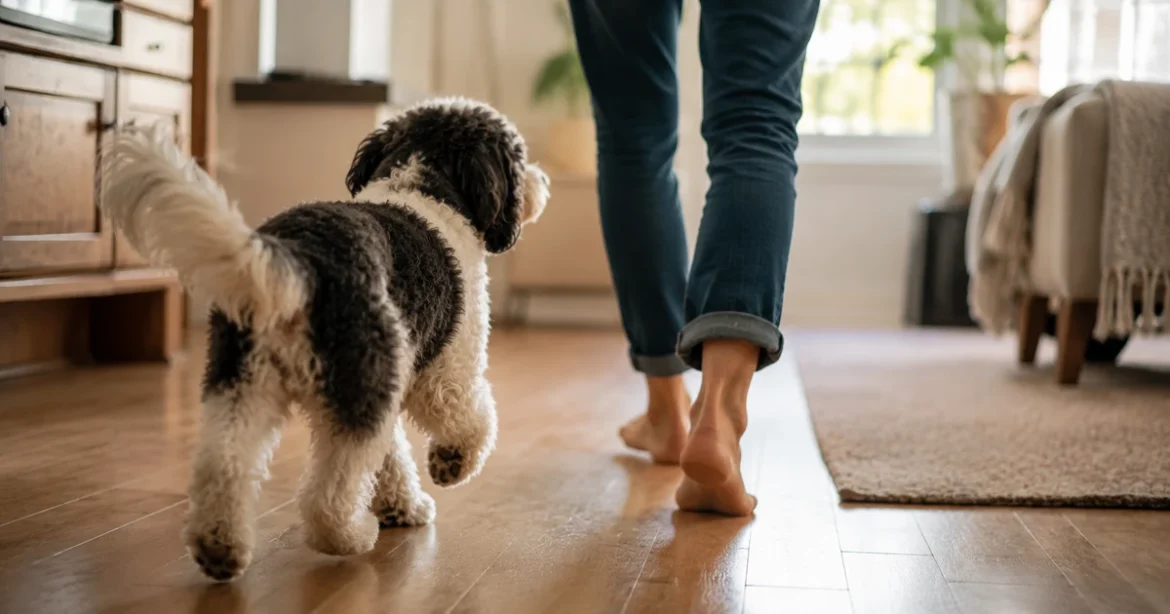
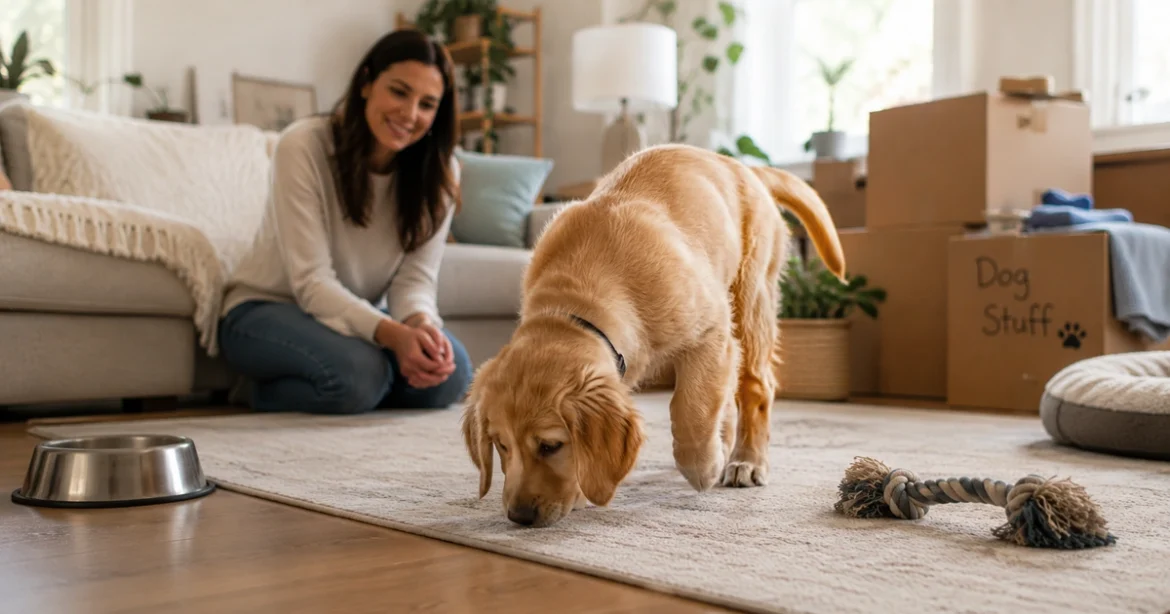
New Dog Owner's First 30 Days: Complete Walkthrough
Breeds & Lifestyle

New Dog Owner’s First 30 Days: Complete Walkthrough

by petdecoded August 6, 2026
written by petdecoded
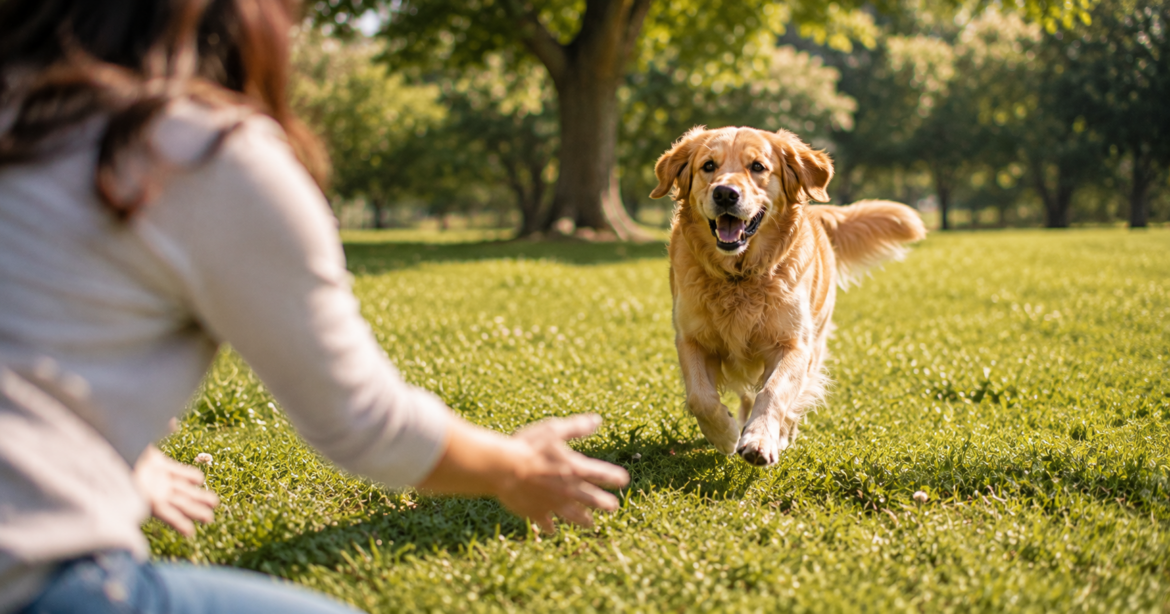
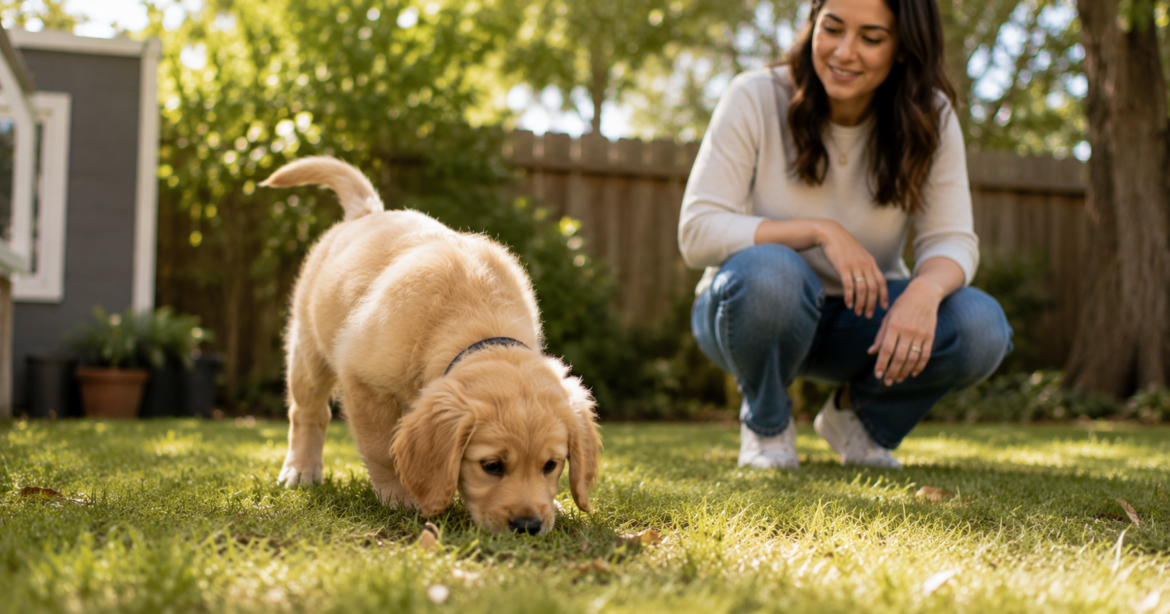
Short answer: The first 30 days with a new dog are about establishing routine, building trust, and starting foundational training — not achieving perfection. Expect an adjustment period for both of you (often summarized as the “3-3-3 rule”: 3 days to decompress, 3 weeks to settle into routine, 3 months to feel fully bonded), and know that a rocky first week is completely normal, not a sign you’ve made a mistake.

Bringing a new dog home is exciting and, often, more disorienting than people expect going in. Here’s a realistic walkthrough of what the first month actually looks like.

Days 1–3: Decompression, not full integration

Keep it low-key

A new dog, especially a rescue, is processing an enormous amount of change all at once. Keep the first few days calm and low-stimulation — limit visitors, avoid overwhelming outings, and focus on establishing a predictable routine (feeding times, bathroom breaks, a designated sleeping spot) rather than trying to do everything at once.

Puppy-proof and set up the basics first

Have food, water bowls, a crate or bed, a leash and collar or harness, and any baby gates or barriers set up before your dog arrives, so you’re not scrambling on day one. Identify and remove obvious hazards (loose cords, toxic plants, small chewable objects) ahead of time.

Days 4–14: Building routine and starting gentle training

Establish a consistent daily schedule

Consistent feeding, bathroom, and exercise times help your dog (especially a puppy) predict what’s coming, which reduces anxiety and speeds up house training. This is also when accidents or adjustment-related behavior issues are most common and most expected.

Start basic training in short sessions

Begin with foundational cues (name recognition, sit) in short, positive sessions. If your dog is a puppy, this is also when the socialization window is most active — see our guide on socializing safely before full vaccination for how to balance exposure with health risk.

Days 15–30: Deepening the bond and expanding the world

Expand exposure gradually

As your dog settles into the household routine, start introducing more variety — new walking routes, controlled introductions to other people and (if appropriate) other dogs, car rides. Keep expanding at a pace that matches your specific dog’s comfort level rather than a fixed calendar.

Schedule the vet visit if you haven’t already

A wellness exam within the first couple of weeks (sooner if there’s any concern) establishes a baseline, catches any issues early, and gets vaccinations or preventive care on track if needed.

What’s normal to struggle with

  • Feeling like you made a mistake in the first week — this is a genuinely common experience, especially with rescues, and doesn’t predict how the relationship will develop long-term
  • Accidents, even from a dog described as house-trained — a new environment resets a lot of learned behavior temporarily
  • A dog that seems either shut-down or, alternatively, more reactive than expected during the decompression period, before their real personality settles in
Give it real time before judging fit. The full “3-3-3” adjustment period means a dog’s true temperament and your actual bond often aren’t fully visible until closer to the 3-month mark — the first 30 days is a foundation, not the finished picture.

Get the New Dog Owner’s Complete Checklist

A printable, week-by-week version of this walkthrough for your fridge or phone, covering everything from supplies to the vet visit timeline.

Download the Checklist (PDF)

Frequently asked questions

How long does it take a rescue dog to adjust to a new home?

The commonly cited “3-3-3 rule” (3 days, 3 weeks, 3 months) is a helpful general framework, though individual dogs vary — some settle faster, others, especially those with a harder history, may take longer to fully relax and show their true personality.

Is it normal to feel overwhelmed the first week with a new dog?

Very common, and not a reliable predictor of how things will go long-term — the adjustment period is genuinely hard for many owners, and feeling overwhelmed doesn’t mean you’ve made the wrong choice.
Related reading

See our full breakdowns of potty training timeline and crate training schedule for the specifics behind the first-month basics. Need help while you’re at work or away during this settling-in period? See our comparison of dog walking and pet sitting services. If this is your first dog, see best dogs for first-time owners, or browse all Breeds & Lifestyle articles.

August 6, 2026 0 comments
0 FacebookPinterestEmail
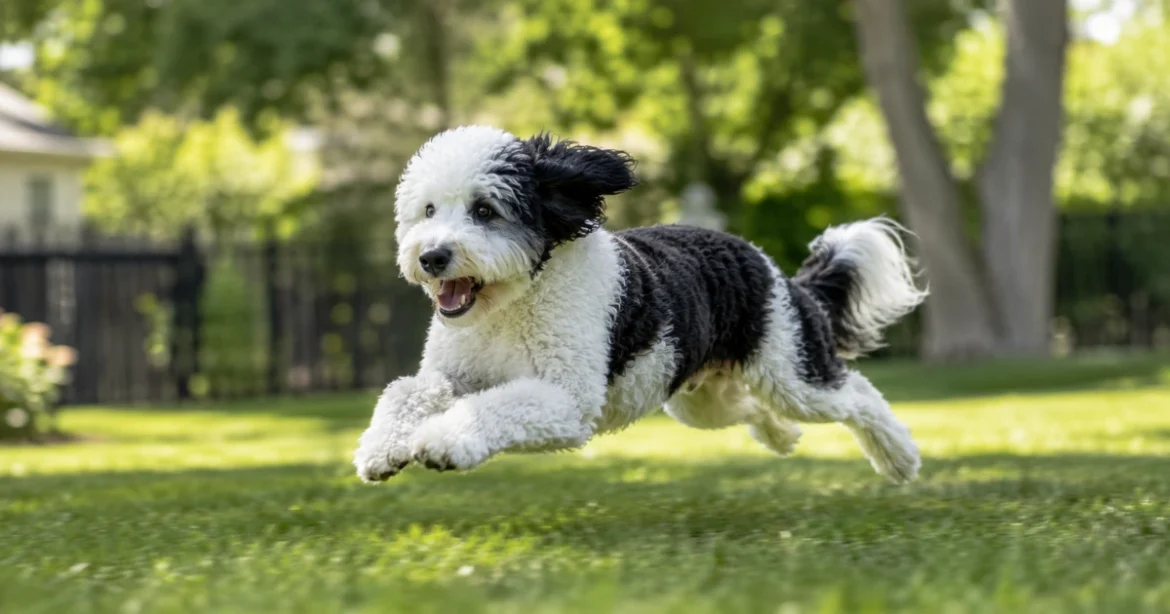
Teaching Recall That Actually Works
Training

Teaching Recall That Actually Works

by petdecoded August 5, 2026
written by petdecoded
Short answer: A reliable recall is built through structured, gradual practice, not by repeating “come” more emphatically when your dog ignores it. The core principle: coming to you should always be the single best thing that can happen in your dog’s day, achieved by making the recall high-value and never, ever punishing a dog once they’ve actually come to you, even if they took forever to get there.

A dog that reliably comes when called is one of the most genuinely useful skills you can teach, and one of the most commonly botched, usually by accident rather than a lack of effort.

The single most important rule: never punish after they come

If your dog finally comes back after ignoring you for five minutes, and you scold them for the delay, you’ve just taught them that coming to you can end badly — which makes them slower to come next time, not faster. However frustrated you are in the moment, the arrival itself always needs to be met with genuine reward, every time, no exceptions.

Building the recall step by step

1. Start indoors, with zero distractions

Say your dog’s name and your recall word (“come” works, though some trainers prefer a unique word your dog hasn’t heard used loosely before), and reward heavily — high-value treats, genuine excitement — the instant they arrive. Repeat often in short sessions.

2. Add mild distractions, still on leash

Practice in the yard or a quiet outdoor space, on a long training leash, gradually introducing mild distractions (another room, a toy nearby) while maintaining the same high rate of reward for a successful recall.

3. Practice with real distractions, still on a long line

A 15–30 foot long training leash lets you practice in more distracting environments (a park, around other people or dogs) while still maintaining the ability to guide your dog back if the recall doesn’t land. This stage often takes the longest, and that’s expected.

4. Test off-leash only in a secure, controlled area

Only move to off-leash practice in a fully enclosed space once your dog has shown consistent, reliable success on the long line across a range of distractions. Rushing this step is the most common reason recall training breaks down in real-world situations.

Keeping the recall valuable long-term

  • Vary the reward: sometimes a treat, sometimes play, sometimes just genuine enthusiastic praise, so the recall stays interesting rather than becoming routine and low-value
  • Call your dog for good things, not just to end fun: if “come” only ever means the walk is over or playtime’s done, your dog learns to associate it with something unwelcome
  • Practice regularly, even once it’s reliable, so the behavior doesn’t fade from disuse
If your dog doesn’t come: resist the urge to chase, which most dogs interpret as an invitation to play (and run further). Instead, try running the other direction, crouching down, or using an exciting tone to trigger their instinct to follow, rather than a frustrated one that can make them more hesitant to approach.

Frequently asked questions

How long does it take to train a reliable recall?

With consistent daily practice, basic reliability in low-distraction settings often develops within a few weeks, but full reliability around real-world distractions can take several months of ongoing practice and reinforcement.

Should I use a shock collar for recall training?

Positive reinforcement-based recall training is widely recommended as the primary approach, since it builds genuine motivation to come rather than compliance driven by avoiding discomfort, which tends to be more reliable and doesn’t risk creating anxiety around the recall cue itself.

Related reading

Recall training pairs well with foundational skills from clicker training for beginners, which can make marking the exact right moment much clearer for your dog. Practicing on a long line? See our leashes guide, or browse all Training articles.

August 5, 2026 0 comments
0 FacebookPinterestEmail
Potty Training Timeline
Training

Potty Training Timeline: Realistic Expectations

by petdecoded August 4, 2026
written by petdecoded
Short answer: Most puppies achieve basic house-training reliability between 4 and 6 months, though full, no-accident consistency often takes closer to a year, and this varies quite a bit by individual puppy and breed size (smaller breeds often take a bit longer). Accidents during this window are a normal, expected part of the process, not a sign that training has failed or a puppy is being stubborn.

House-training timelines get exaggerated in both directions online — some sources make it sound instant, others make it sound endless. Here’s a grounded version, week by week.

Weeks 8–12: Frequent, predictable accidents are normal

At this age, your puppy has very limited bladder control and essentially no ability to “hold it” for planning purposes — they’ll need to go roughly every 1–2 hours while awake, immediately after eating or drinking, and right after waking from any nap. This is the highest-frequency, highest-effort phase, and it’s supposed to be.

Weeks 12–16: Patterns start to emerge

Bladder control improves gradually, and with a consistent schedule, most puppies start showing recognizable patterns — needing to go at fairly predictable times relative to meals, naps, and play. This is also when body language cues (sniffing, circling, heading toward the door) typically become more noticeable and trainable.

Months 4–6: Real reliability starts to build

By this stage, most puppies can hold it for several hours and are showing much more consistent success, especially with a maintained schedule. This is often when owners start to feel like training is “working,” though occasional accidents, especially during exciting or novel situations, are still common.

Months 6–12: Full reliability, with some individual variation

Most dogs reach full house-training reliability somewhere in this window, though smaller breeds (which have smaller bladders relative to their metabolism) sometimes take longer than larger breeds to reach the same consistency.

The core approach that speeds things up

1. Take your puppy out on a consistent schedule

First thing in the morning, after every meal, after naps, after play sessions, and before bed, at minimum — proactive timing prevents far more accidents than reactive cleanup ever will.

2. Reward immediately after they go, outside

Praise and a treat within seconds of finishing, while still outside, clearly connects the reward to the correct location and behavior. Waiting until you’re back inside to reward loses that connection.

3. Supervise closely indoors, or use a crate

A puppy that’s unsupervised indoors is a puppy with the opportunity to have an accident you didn’t catch in time. Close supervision or crating during unsupervised stretches prevents accidents from happening in the first place, which is more effective than correcting them after.

Never punish an accident after the fact. Dogs don’t connect punishment delivered after the moment to the act itself — a puppy that looks “guilty” when you discover an accident is actually reacting to your tone and body language in the moment, not remembering and feeling bad about something from earlier. Punishment after the fact doesn’t teach anything useful and can create anxiety around elimination generally, sometimes making training harder.

When to be more concerned

A puppy well past 6 months with frequent accidents despite a consistent schedule, or a previously house-trained dog that suddenly starts having accidents, is worth a vet visit — a urinary tract infection or other medical issue can look identical to a training problem and needs to be ruled out before assuming it’s purely behavioral.

Frequently asked questions

Why did my house-trained dog suddenly start having accidents?

A sudden regression in a previously reliable dog is worth a vet visit to rule out a urinary tract infection or other medical cause before assuming it’s purely behavioral — this pattern often has a physical explanation rather than a training one.

Do puppy pads slow down potty training?

Some trainers find that pads can create confusion about acceptable indoor-versus-outdoor elimination if used inconsistently, though they can be a reasonable tool for owners without easy outdoor access, especially early on before full vaccination allows outdoor exposure.

Related reading

Potty training and crate training work together closely — see our crate training schedule by age for the companion piece, and the first 30 days walkthrough for the bigger picture, or browse all Training articles.

August 4, 2026 0 comments
0 FacebookPinterestEmail
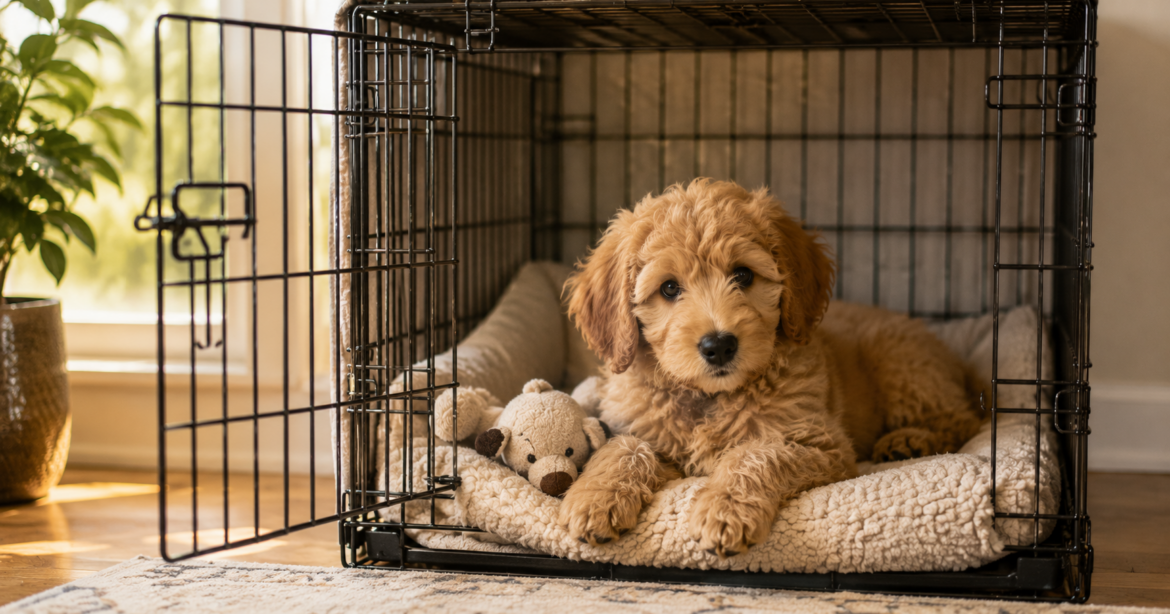
Crate Training Schedule by Age
Training

Crate Training Schedule by Age

by petdecoded August 1, 2026
written by petdecoded
Short answer: A young puppy’s bladder control roughly tracks with age — the general rule of thumb is their age in months plus one equals the number of hours they can comfortably hold it, up to about 6 hours as an adult. Crate training works best introduced gradually, with the crate built as a positive, safe space rather than a punishment, starting with short, calm sessions before working up to overnight and longer stretches.

Crate training done well gives a dog their own safe, denlike space and gives you a reliable management tool — but the timeline matters as much as the technique, since asking too much too soon is where most of the frustration comes from.

Why the timeline matters more than the technique: most crate training frustration doesn’t come from doing the wrong steps — it comes from doing the right steps too fast. A puppy that’s pushed past their actual bladder capacity, or left alone with a closed door before they’ve built trust in the space, tends to develop real crate anxiety that takes far longer to undo than the extra week or two of going slow would have cost. The week-by-week approach below is paced around what puppies can realistically handle at each stage, not the fastest possible route to a trained dog.

Realistic bladder-holding times by age

AgeApproximate max hold time
8–10 weeks~1 hour
3 months~3–4 hours
4 months~4–5 hours
5–6 months~5–6 hours
Adult dog (fully house-trained)Up to ~6–8 hours, though regular breaks are still healthiest

These are general guidelines, not guarantees — individual puppies vary, and factors like recent water intake and activity level shift things in either direction. Overnight is generally easier than daytime stretches since metabolism slows during sleep.

Building a positive association first

Week 1: Make the crate a good place to be, door open

Feed meals in or near the crate, toss treats inside for your puppy to find, and let them come and go freely with the door open. The goal here is purely positive association — no closing the door yet, no pressure.

Week 2: Short, closed-door sessions while you’re present

Start closing the door for just a few minutes at a time while you’re in the room, paired with a stuffed chew toy or treat. Gradually extend the duration as your puppy stays calm, opening the door before any whining escalates into a full protest (which would reward the whining instead).

Week 3: Practice brief absences

Once your puppy is comfortable with closed-door time while you’re nearby, start stepping out of the room for short periods, then gradually longer ones, then brief trips out of the house. Build duration slowly based on how your puppy is actually handling it, not a fixed schedule.

Week 4 onward: Extend toward real-world duration

Gradually work toward the actual stretches you’ll need — a workday, overnight — based on your puppy’s demonstrated bladder control and comfort level from the earlier weeks, rather than jumping straight to a full 8-hour day.

Never use the crate as punishment. A crate associated with being sent there in anger or frustration undermines the entire positive association you’re building, and can create anxiety around a space that’s supposed to feel safe.

Common crate training mistakes

Jumping straight to a full workday. Going from a few minutes to eight hours in one leap almost always backfires — build duration in the gradual stages above instead.
Letting a puppy out because they’re crying. If it’s not a genuine bathroom need, opening the door specifically because of whining teaches a puppy that crying works — wait for a calm moment, even a brief one, before opening.
Using a crate that’s too large. Too much extra space lets a puppy potty in one corner and sleep in another, undermining the instinct not to soil their sleeping area that crate training relies on.
Skipping exercise before crate time. A puppy with pent-up energy struggles far more with confinement than one who’s had a walk or play session first — timing crate sessions after activity, not before, makes a real difference.

Sizing and setup matter too

The crate should be large enough for your puppy to stand, turn around, and lie down comfortably, but not so large that there’s room to sleep in one corner and potty in another — for growing puppies, a divider panel lets you adjust the usable space as they grow rather than buying multiple crates.

Frequently asked questions

Is it cruel to crate a puppy overnight?

Done properly with a positive association built first, overnight crating is widely considered a normal, safe part of house-training — puppies’ instinct not to soil their sleeping area supports this, which is part of why overnight stretches are often easier than daytime ones.

What if my puppy cries in the crate at night?

Some initial adjustment whining is common, especially in the first few nights, but persistent, escalating distress is different and may mean the pace was too fast or a bathroom need is genuine. Rule out a real need first, then avoid letting your puppy out specifically because of crying, which can reinforce the behavior.

When can I stop crating my dog?

Once a dog is reliably house-trained and hasn’t shown destructive or anxious behavior when loose in the house for extended test periods, many owners transition away from crating, though some dogs continue to prefer their crate as a cozy retreat indefinitely.

Do I need to buy a bigger crate as my puppy grows?

Not necessarily — buying a crate sized for your puppy’s expected adult size, with a divider panel to shrink the usable space while they’re small, is generally more practical and cost-effective than replacing crates as they grow.

Can crate training work for an adult rescue dog, not just a puppy?

Yes — the same gradual, positive-association approach applies at any age, though an adult dog with an unknown history may need a slower initial pace, especially if there’s any indication of past negative associations with confinement.

How long after eating should I wait before crating my puppy?

A general rule is about 20–30 minutes after a meal or water break to allow for a bathroom trip first, which reduces the chance of an accident during crate time, especially with young puppies who have limited bladder control.

Related reading

Crate training and house training go hand in hand — see our potty training timeline for the bathroom side of the equation. For picking the right crate size, see our beds and crates guide, or browse all Training articles.

August 1, 2026 0 comments
0 FacebookPinterestEmail
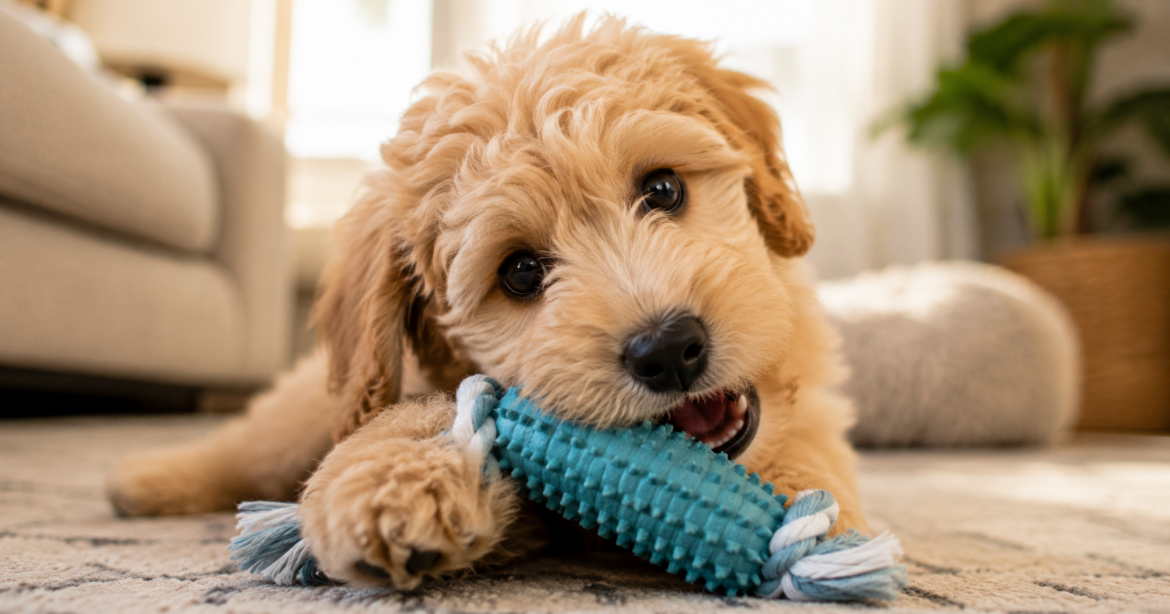
How to Stop a Puppy from Biting
Training

How to Stop a Puppy from Biting

by petdecoded July 31, 2026
written by petdecoded
Short answer: Puppy biting (often called “puppy nipping” or “land sharking”) is normal exploratory and play behavior, not aggression — puppies learn bite pressure the same way human toddlers learn not to hit, through feedback. The most effective approach is teaching bite inhibition (how gentle their mouth needs to be) before eliminating mouthing altogether, using consistent, calm redirection rather than punishment, which tends to backfire.

Puppy teeth are needle-sharp and every new owner underestimates how much that’s going to hurt until it happens. The good news: this phase is temporary, and how you handle it now genuinely shapes your dog’s bite behavior for life.

Why puppies bite so much in the first place

Puppies explore the world with their mouths the way toddlers explore with their hands, and biting is also a core part of normal puppy play — littermates bite each other constantly, and a yelp from a sibling is how a puppy first learns that biting too hard ends the fun. Teething (roughly 3–6 months) adds a physical urge to chew on top of the behavioral drive, which is why this phase often gets more intense before it improves.

Bite inhibition comes before “no biting at all”

Rather than trying to eliminate mouthing entirely and immediately, the more effective sequence is teaching your puppy that hard bites are unacceptable first, then gradually reducing pressure and frequency over time. This mirrors what happens naturally in a litter: a puppy that bites too hard gets immediate, clear feedback, and adjusts.

1. Yelp and stop, immediately

When a bite is too hard, give a sharp, high-pitched “ow” and immediately stop the interaction — withdraw your hand, stand up, turn away. This mimics the feedback a puppy would get from a littermate and is one of the more reliable ways to communicate “too hard” in a language your puppy already understands.

2. Redirect to an appropriate chew immediately after

The moment the biting stops, offer a toy or chew as an acceptable alternative. This teaches your puppy what they should be biting, not just what they shouldn’t — redirection without an alternative just leaves the underlying urge to chew unaddressed.

3. Give a short time-out for repeated hard biting

If the yelp-and-redirect cycle doesn’t calm things down, a brief pause in play (leaving the room for 30–60 seconds, or placing your puppy in a safe space briefly) removes the reward of continued interaction. Keep it calm and brief — this isn’t punishment, it’s simply ending the game.

4. Manage the environment while the skill develops

Keep appropriate chew toys within reach at all times, and avoid overly rough hand-play games that encourage mouthing in the first place. A tired puppy also bites less — make sure physical and mental exercise needs are being met, since an under-stimulated puppy often channels excess energy into biting.

What doesn’t work well: yelling, hitting, or holding a puppy’s mouth shut. These approaches can increase fear and anxiety without effectively teaching bite inhibition, and in some cases make a puppy more likely to bite defensively rather than less likely to bite at all.

What’s normal timeline-wise

Most puppies show real improvement in biting intensity and frequency by 5–6 months as teething resolves and consistent redirection takes hold, though full “no mouthing at all” often takes longer and continued consistency. If biting seems to be increasing in intensity, or is accompanied by genuinely aggressive body language (stiff body, growling that isn’t playful) rather than typical puppy exuberance, that’s worth a conversation with a trainer or your vet.

Frequently asked questions

Is it normal for puppies to bite harder when tired?

Yes, an overtired or overstimulated puppy often loses impulse control the same way an overtired toddler does, and biting intensity frequently increases. Recognizing this pattern and shifting to calm downtime rather than more play can help in the moment.

When should puppy biting be a concern rather than normal behavior?

If biting is paired with stiff body language, prolonged growling that doesn’t stop with a break in play, or seems genuinely defensive rather than playful, it’s worth involving a professional trainer or behaviorist rather than assuming it’s a phase that’ll pass on its own.

Related reading

If your puppy also mouths or nips as part of a bigger burst of energy, why dogs get the zoomies covers the related energy-release side of puppy behavior. For toys that hold up to teething, see our dog toys guide, or browse all Training articles.

July 31, 2026 0 comments
0 FacebookPinterestEmail
Signs Your Senior Dog Is in Pain
Health

Signs Your Senior Dog Is in Pain

by petdecoded July 30, 2026
written by petdecoded
Short answer: Dogs are instinctively good at masking pain — a holdover from a wild ancestry where showing weakness was a real vulnerability — so the signs in senior dogs are often subtle and behavioral rather than an obvious limp or yelp. Watch for changes in activity level, appetite, sleep, grooming, and mood more than dramatic physical signs, since those subtler shifts are usually what shows up first.

One of the harder parts of caring for a senior dog is that they genuinely don’t advertise pain the way you might expect. Reading the subtle version is a skill worth building, because it’s often the only warning you get before a bigger issue shows up.

Why dogs hide pain so effectively

In the wild, an animal showing obvious pain or weakness becomes a target — for predators, or for being pushed out by its own group. That instinct to mask discomfort didn’t disappear with domestication, which is part of why vets consistently note that pain in dogs, especially chronic pain from arthritis or aging joints, tends to be underestimated by owners until it’s fairly advanced.

Mobility changes are often the first clue

  • Slower to get up, or hesitating before jumping onto furniture or into the car, when this wasn’t an issue before
  • Stiffness that’s worse after resting and improves somewhat once they’ve been moving for a bit — a classic arthritis pattern
  • Shorter walks by choice, or lagging behind rather than leading the way like they used to
  • Difficulty with stairs, particularly going down, which puts more strain on joints than going up

Behavioral changes are just as telling, and often missed

A dog in pain may become more withdrawn, less interested in play or interaction, or conversely, more irritable and less tolerant of handling (especially around the painful area) than they used to be. Changes in sleep — restlessness, difficulty getting comfortable, more frequent position changes at night — are also common and easy to miss if you’re not specifically watching for them.

Grooming and appetite shifts

A senior dog that stops grooming themselves as thoroughly, particularly in spots that are harder to reach (which often correlates with the same joints causing mobility issues), may be avoiding movements that hurt. Appetite changes — eating more slowly, less interest in food, or reluctance to lower their head fully to a floor-level bowl — can also reflect discomfort, sometimes dental pain rather than joint pain specifically.

Subtler physical signs

  • Panting at rest, without heat or exertion as an explanation
  • A hunched or tense posture, or reluctance to fully stretch out like they used to
  • Muscle loss in one area (often a limb), which can reflect a dog favoring that side over time
  • Excessive licking at a specific joint or area
The most useful thing you can do: pay attention to your own dog’s baseline and watch for change, rather than comparing to some general standard of “normal.” A dog that’s always been mellow slowing down further looks different from a historically energetic dog suddenly avoiding stairs — the second is a much clearer signal, even if neither looks dramatic in isolation.

What to do if you notice these signs

Bring a specific, detailed account to your vet rather than a general “they seem older” — when the changes started, what specifically is different (which stairs, which activities, how long stiffness lasts), and anything that makes it better or worse. Senior dogs benefit enormously from proactive pain management once a cause is identified, and there are more options now (medication, joint supplements, weight management, physical therapy) than many owners realize.

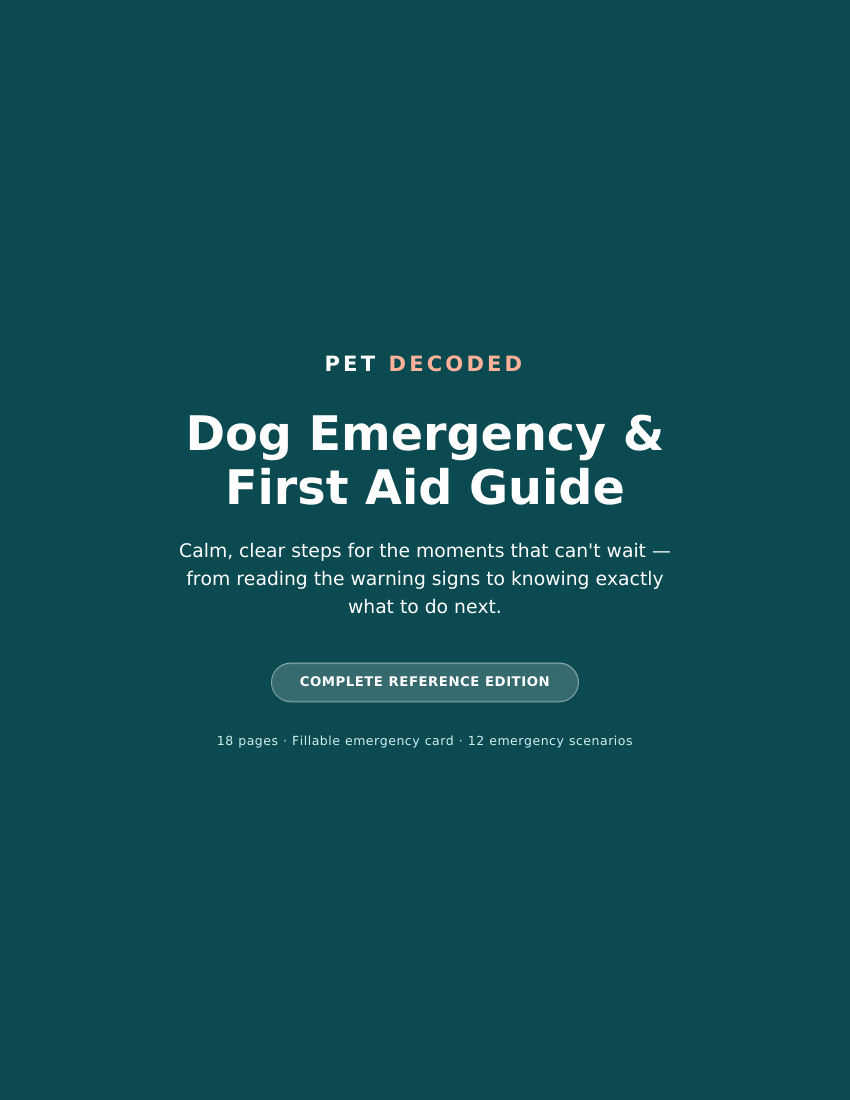
Dog Emergency & First Aid Guide cover
Go deeper

Dog Emergency & First Aid Guide

Beyond pain signs, this 18-page guide covers how to safely handle a senior dog in distress, plus 12 real emergencies and a fillable card for your fridge.

$7 Get the Guide →

Frequently asked questions

Is it normal for senior dogs to slow down?

Some slowing down is a normal part of aging, but a specific, noticeable change from your dog’s own established baseline — not just “dogs get slower” in the abstract — is worth a vet conversation, since it may be a treatable source of pain rather than an inevitability to just accept.

Can arthritis in dogs actually be treated?

Yes, quite effectively in many cases — options range from anti-inflammatory medication and joint supplements to weight management and physical therapy, often used in combination. Early identification generally leads to better long-term comfort than waiting until the pain is severe.

How can I tell if it’s pain or just normal aging?

This distinction is genuinely hard to make from the outside, which is exactly why a vet visit is worthwhile rather than guessing — a physical exam, and sometimes imaging, can identify a specific, often treatable cause behind what looks like “just getting older.”

Related reading

Unexpected vet costs for age-related conditions are exactly what pet insurance is designed to soften — worth a look if your dog is entering their senior years. See also how often senior dogs need vet visits, or browse all Health & Safety articles.

July 30, 2026 0 comments
0 FacebookPinterestEmail
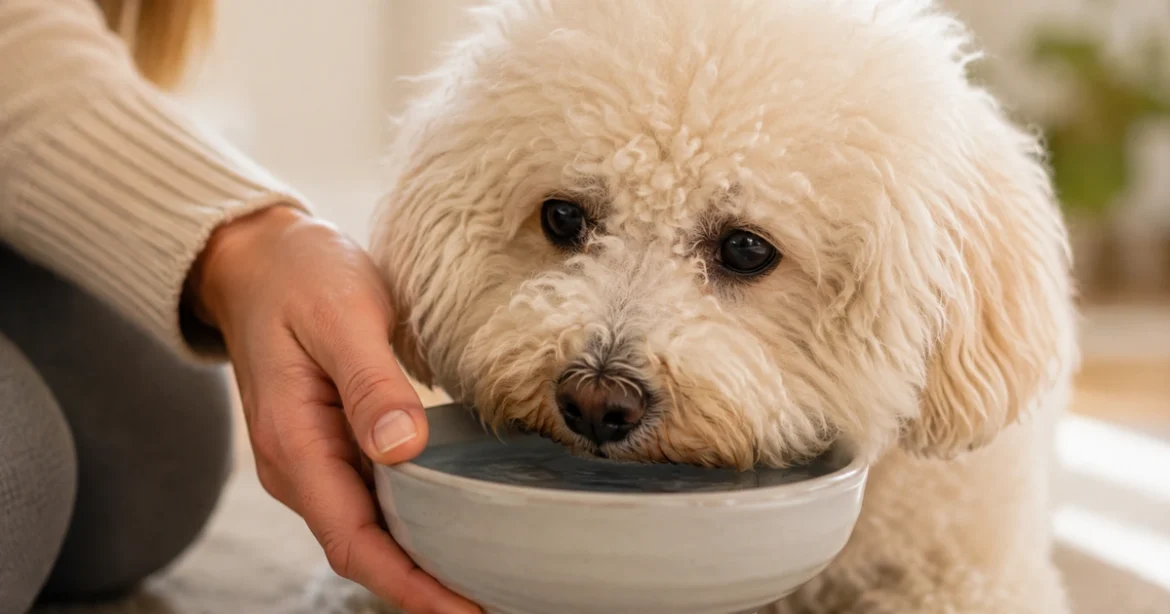
Signs of Dehydration in Dogs
Health

Signs of Dehydration in Dogs

by petdecoded July 28, 2026
written by petdecoded
Short answer: Early signs of dehydration in dogs include dry or tacky gums, skin that’s slow to spring back when gently pulled up (the “skin tent” test), sunken eyes, lethargy, and thick or reduced saliva. Dehydration can move from mild to serious faster than you’d expect, especially in hot weather, in puppies and seniors, or alongside vomiting and diarrhea — which is exactly the kind of situation where knowing the early signs actually matters.

Dogs can’t tell you they’re thirsty in a way you’ll catch immediately, so dehydration often creeps up rather than announcing itself. The good news: there are a few reliable, easy-to-check signs you can look for at home.

The skin tent test

How to check

Gently pinch and lift a small fold of skin between your dog’s shoulder blades, then let go. In a well-hydrated dog, the skin should snap back into place almost immediately. If it springs back slowly, or stays tented for a moment before flattening, that’s a sign of reduced skin elasticity from dehydration. This isn’t a perfect test on its own — older dogs naturally have less elastic skin — but combined with other signs, it’s a genuinely useful quick check.

Gums tell you a lot, quickly

Healthy gums should feel moist and slippery, not dry or tacky (a slightly “sticky” texture when you touch them). Press a finger gently against the gum and release: color should return to pink within about 1–2 seconds (this is called capillary refill time). A longer refill time, along with dry or pale gums, points toward dehydration or, in more severe cases, other circulation-related concerns worth an urgent vet check.

Other physical signs to watch for

  • Sunken eyes: a noticeably hollow appearance around the eyes compared to your dog’s normal look
  • Lethargy or weakness: less interest in normal activity, seeming sluggish or unusually quiet
  • Loss of appetite: dehydrated dogs often don’t want to eat, even food they’d normally be excited about
  • Thick, ropey saliva or noticeably reduced saliva production
  • Dry nose: a less reliable sign on its own (plenty of healthy dogs have naturally drier noses at times), but worth noting alongside other signs
  • Panting more than usual without an obvious heat or exercise-related explanation

Who’s most at risk

Puppies and senior dogs dehydrate faster and are less able to compensate for fluid loss than healthy adult dogs. Dogs experiencing vomiting or diarrhea lose fluids rapidly and are at particular risk, as are dogs in hot weather, dogs with reduced water intake due to illness, and dogs with certain underlying conditions like kidney disease or diabetes that affect fluid regulation.

Seek vet care promptly if you see multiple signs together (tacky gums plus lethargy plus a slow skin tent), your dog has had ongoing vomiting or diarrhea, is refusing water entirely, or is a puppy, senior, or has an existing health condition and is showing any dehydration signs — these groups can decline faster than a healthy adult dog would.

What you can do at home for mild cases

For a dog showing only mild signs and otherwise acting normally, offering fresh water in small, frequent amounts (rather than letting them gulp a large volume at once, which can trigger vomiting) is a reasonable first step. If your dog won’t drink, is showing more than mild signs, or the cause is ongoing vomiting or diarrhea, it’s time to call your vet rather than waiting to see if home efforts work.

Dog Emergency & First Aid Guide cover
Go deeper

Dog Emergency & First Aid Guide

Knowing the signs is step one. This 18-page guide walks through exactly what to do for dehydration and 11 other real emergencies — plus a fillable card for your fridge.

$7 Get the Guide →

Frequently asked questions

How quickly can a dog become dangerously dehydrated?

It varies with the cause and the dog, but a dog with ongoing vomiting and diarrhea, especially a puppy or small dog, can decline within just a matter of hours rather than days. This is part of why prompt vet attention matters more for this issue than a lot of other everyday symptoms.

Does a dry nose always mean dehydration?

No — nose moisture varies naturally throughout the day and isn’t a reliable standalone indicator. It’s worth noting alongside other signs, but a dry nose on its own, in a dog acting otherwise completely normal, usually isn’t cause for concern.

How much water should a healthy dog drink per day?

A commonly cited general guideline is roughly 1 ounce of water per pound of body weight per day, though this varies with activity level, diet (wet vs. dry food), and weather. If you’re noticing a significant, sudden change in how much your dog is drinking — much more or much less — that’s worth mentioning at your next vet visit regardless of dehydration signs.

Related reading

If digestive upset is part of what’s driving the dehydration concern, dog throwing up yellow bile covers a closely related symptom worth reading alongside this one. For emergency prep, see our toxic foods guide, or browse all Health & Safety articles.

July 28, 2026 0 comments
0 FacebookPinterestEmail
Puppy Vaccination Schedule
Health

Puppy Vaccination Schedule: The Complete Guide

by petdecoded July 27, 2026
written by petdecoded
Short answer: Puppies need a series of core vaccines (distemper, parvovirus, adenovirus, and rabies) given in stages roughly every 3–4 weeks from about 6–8 weeks old until around 16 weeks, because early doses can be neutralized by maternal antibodies still present in a young puppy’s system — the series, not a single shot, is what actually builds reliable immunity. Your vet may also recommend non-core vaccines (like bordetella or leptospirosis) based on your specific lifestyle and location.

The multi-visit vaccine schedule can feel excessive to a first-time owner, but the spacing isn’t arbitrary — it’s built around how a puppy’s immune system actually develops.

Why puppies need a series, not one shot

Puppies are born with some temporary immunity passed from their mother (maternal antibodies), which is protective at first but also interferes with a vaccine’s ability to trigger the puppy’s own immune response if given too early. Since no one knows exactly when maternal antibodies fade for a specific puppy, vets give a series of doses spaced a few weeks apart to make sure at least one dose lands after that maternal protection has worn off enough to let the vaccine actually work.

The general schedule

AgeTypical vaccines
6–8 weeksFirst combination vaccine (DHPP: distemper, hepatitis/adenovirus, parainfluenza, parvovirus)
10–12 weeksSecond DHPP dose; discussion of non-core vaccines based on lifestyle
14–16 weeksThird DHPP dose; rabies vaccine (timing varies by state/local law)
12–16 monthsBooster for core vaccines, then typically every 1–3 years depending on the vaccine and local requirements

This is a general framework — your vet’s exact schedule may vary slightly based on your puppy’s individual health, breed, and local disease risk, so treat this as a guide for what to expect rather than a rigid substitute for your vet’s specific plan.

Core vs. non-core vaccines

  • Core vaccines (distemper, parvovirus, adenovirus, rabies) are recommended for essentially all dogs regardless of lifestyle, since the diseases are widespread, serious, and the vaccines are highly effective
  • Non-core vaccines (bordetella/kennel cough, leptospirosis, canine influenza, Lyme disease) are recommended based on your dog’s specific risk factors — boarding or daycare exposure, geographic region, outdoor/wildlife exposure — and your vet is the right person to assess which apply to your situation
Why the 16-week endpoint matters for socialization too. This vaccine timeline overlaps directly with a puppy’s critical socialization window, which is exactly why the balance between exposure and infection risk during this period is worth understanding — see our guide on socializing a puppy safely before full vaccination for how to navigate both at once.

Frequently asked questions

Is it safe to skip or delay a puppy vaccine dose?

Delaying doses extends the window during which your puppy is vulnerable to the diseases the vaccine protects against, so it’s generally not recommended without a specific medical reason discussed with your vet — the schedule’s spacing is intentional, not just a suggestion.

Do adult dogs need vaccines every year?

It depends on the specific vaccine — some are boosted annually, others (depending on the vaccine type and local regulations) may be effective for up to 3 years. Your vet’s recommendation, often influenced by local law for rabies specifically, determines your dog’s individual booster schedule.

Related reading

Balancing socialization with vaccination timing? See how to socialize a puppy before full vaccination. For the full visit schedule beyond puppyhood, see how often you should take your dog to the vet, or browse all Health & Safety articles.

July 27, 2026 0 comments
0 FacebookPinterestEmail
Foods Toxic to Dogs)
Health

Foods Toxic to Dogs: The Complete List for 2026

by petdecoded July 25, 2026
written by petdecoded
Short answer: The most dangerous everyday foods for dogs are chocolate, grapes and raisins, onions and garlic, xylitol (a sugar substitute), alcohol, and macadamia nuts — all of which can cause serious illness even in small amounts. If your dog eats any of these, don’t wait for symptoms: call your vet or a pet poison control hotline right away, since early treatment makes a real difference in outcome.

If your dog just ate something toxic

Call the ASPCA Animal Poison Control Center at (888) 426-4435 or the Pet Poison Helpline at (855) 764-7661 (consultation fees may apply), or contact your vet or the nearest emergency animal hospital immediately.

Have ready: what your dog ate, roughly how much, and when. Do not induce vomiting or give any home remedy unless a vet or poison control specifically tells you to — some substances cause more damage coming back up, and timing matters.

Quick reference: common toxic foods

FoodRisk levelMain concern
Chocolate (especially baking/dark)HighTheobromine toxicity — heart, nervous system
Grapes & raisinsHighAcute kidney failure, even in small amounts
Xylitol (sugar-free gum, some peanut butter)HighRapid, severe blood sugar drop; liver failure
Onions & garlic (raw, cooked, or powdered)HighDamages red blood cells over time
AlcoholHighRapid intoxication, respiratory depression
Macadamia nutsMediumWeakness, tremors, temporary paralysis of hind legs
AvocadoMediumPersin can cause GI upset; pit is a choking/blockage hazard
Cooked bonesMediumSplinter risk — internal punctures, blockages
Raw yeast doughMediumExpands in the stomach; produces alcohol as it ferments
Excess saltMediumSodium ion poisoning in large quantities

The most dangerous foods, explained

Chocolate

Chocolate contains theobromine, a compound dogs metabolize far more slowly than humans do, which lets it build up to toxic levels. Darker, more concentrated chocolate (baking chocolate, dark chocolate, cocoa powder) is significantly more dangerous than milk chocolate for the same weight consumed. Symptoms can include vomiting, diarrhea, restlessness, a racing heart rate, tremors, and in severe cases, seizures. Because toxicity depends on both the type of chocolate and your dog’s size, any chocolate ingestion is worth a call to your vet or poison control rather than trying to estimate risk yourself.

Grapes and raisins

Grapes and raisins are linked to acute kidney failure in dogs, and unlike many other toxic foods, the dangerous dose isn’t reliably predictable — some dogs have reacted severely to a small handful, while other dogs have eaten more without apparent harm, and researchers still don’t fully understand why some dogs are more sensitive than others. Because there’s no safe threshold that’s been established, the standard guidance is to treat any grape or raisin ingestion as an emergency and call your vet immediately rather than waiting to see if symptoms develop.

Xylitol

Xylitol is a sugar substitute found in sugar-free gum, some peanut butters, baked goods, and toothpaste. In dogs, it triggers a rapid, dangerous drop in blood sugar and can cause liver failure, sometimes within hours of ingestion. It’s become a much more common source of poisoning as xylitol has been added to more everyday products, so it’s worth checking the ingredient label on sugar-free peanut butter specifically before sharing it with your dog, and keeping sugar-free gum well out of reach.

Onions and garlic

Onions and garlic, in any form — raw, cooked, powdered, or as part of a seasoning blend — contain compounds that damage a dog’s red blood cells, potentially leading to anemia. The effect is cumulative, meaning repeated small exposures (leftovers seasoned with onion or garlic powder, for instance) can build up over time even if a single exposure doesn’t cause obvious symptoms right away.

Other everyday hazards worth knowing

  • Alcohol: even small amounts affect dogs far more severely than humans, and can cause dangerous drops in body temperature, blood pressure, and breathing rate
  • Macadamia nuts: can cause weakness, vomiting, tremors, and temporary hind-leg weakness or paralysis, usually resolving within 24–48 hours with supportive vet care
  • Cooked bones: become brittle and splinter easily, creating a real risk of internal punctures or blockages — raw bones carry lower splinter risk but their own set of considerations
  • Raw bread dough: yeast continues to ferment and expand in a warm stomach, producing both a physical blockage risk and alcohol as a byproduct

What to do if your dog eats something on this list

Don’t wait for symptoms to appear before acting — by the time visible symptoms show up, treatment can be more complicated and less effective. Call your vet, an emergency animal hospital, or a poison control hotline right away, and have as much information as possible ready: what was eaten, an estimate of how much, and roughly when. Do not attempt to induce vomiting or give any home remedy unless specifically instructed to by a vet or poison control professional — some substances cause additional harm on the way back up, and the right response depends on exactly what was ingested.

Get the printable Toxic Foods Fridge Chart

A quick-reference chart for your fridge or pantry door, covering the foods on this list plus a few more, with emergency contact numbers built in.

Coming soon

Frequently asked questions

How much chocolate is dangerous for a dog?

It depends on both the type of chocolate and your dog’s size — darker chocolate is more concentrated and dangerous by weight than milk chocolate. Because the safe threshold varies so much, any chocolate ingestion is worth a call to your vet or poison control rather than trying to calculate risk on your own.

Are grapes toxic to all dogs?

The exact mechanism and individual sensitivity aren’t fully understood, and there’s no established safe amount, which is why the standard advice treats any grape or raisin ingestion as a potential emergency regardless of the dog’s size or breed.

What human foods are actually safe for dogs?

Plain cooked chicken, carrots, plain pumpkin, blueberries, and plain rice are commonly considered safe in moderation for most healthy dogs. When in doubt about a specific food not covered here, it’s worth a quick check with your vet before sharing it, especially for a dog with an existing health condition.

Dog Emergency & First Aid Guide cover
Go deeper

Dog Emergency & First Aid Guide

If poisoning is on your mind, this 18-page guide covers exactly what to do for this and 11 other real emergencies — plus a fillable card for your fridge.

$7 Get the Guide →

Related reading

If digestive upset or vet visits are on your mind, our guide to picking the right food by life stage and pet insurance comparison cover the everyday and emergency sides of the same concern. For spotting when something’s actually wrong, see dog throwing up yellow bile, or browse all Health & Safety articles.

July 25, 2026 0 comments
0 FacebookPinterestEmail
Behavior

Why Does My Dog Follow Me Everywhere?

by petdecoded July 23, 2026
written by petdecoded
Short answer: Dogs follow their owners from room to room — sometimes called “velcro dog” behavior — mostly because of attachment, pack instinct, and learned habit (you’re often the source of food, walks, and attention). It’s normal in most dogs and especially common in certain breeds. It becomes a concern only when it’s paired with distress, panic, or destructive behavior when you’re out of sight, which can point to separation anxiety.

Some dogs will happily nap across the room from you. Others treat every trip to the bathroom like a two-person expedition. If you’ve got a dog that shadows your every move, you’re dealing with completely normal (if occasionally underfoot) canine behavior — with a few exceptions worth knowing about.

It’s rooted in pack instinct and attachment

Dogs descended from social, cooperative hunters, and that history shows up in how strongly they bond to their household — you specifically function as their social anchor. Following you room to room is a low-effort way of staying close to the group and keeping tabs on what’s happening, the same instinct that would have kept a wild canine near its pack. On top of that, dogs form genuine attachment bonds with their owners, not unlike the parent-child attachment studied in human psychology — you’re their secure base.

You’re also the source of everything good

From a dog’s perspective, you’re the one who controls food, walks, play, and attention. Simple learned association means that staying near you maximizes the odds that something good is about to happen. This is reinforced every time following you leads to a reward — a treat, a walk, a scratch behind the ears — even if you didn’t intend it as training.

Some breeds are bigger “velcro dogs” than others

  • Herding breeds (Border Collies, Australian Shepherds, Corgis): bred to work closely with a handler, so shadowing comes naturally
  • Companion/toy breeds (Maltipoos, Cavalier King Charles Spaniels, Chihuahuas): bred specifically for close human companionship
  • Retrievers (Labradors, Golden Retrievers): highly people-oriented, bred to work in close partnership with a handler
  • Independent breeds (Basenjis, Shiba Inus, Afghan Hounds): historically bred for more independent work, tend to be less velcro-like

Age and life stage matter too — puppies and newly adopted dogs often follow more closely simply because everything is new and you’re their most familiar point of reference. This usually settles somewhat as a dog matures and becomes more confident in a new home.

When following becomes separation anxiety

Normal attachment-following and separation anxiety look similar on the surface but are functionally different. A dog that simply prefers to be near you will settle calmly nearby, sleep, or occupy itself once you stop moving. A dog with separation anxiety typically shows genuine distress — not just a preference — when separated, even briefly.

Signs it may be separation anxiety, not just closeness: panting, pacing, or whining when you leave a room and close the door; destructive chewing or scratching specifically at exit points; accidents in the house only when left alone despite being house-trained; drooling, trembling, or vocalizing when you’re getting ready to leave the house.

If your dog shows real distress rather than just wanting to be nearby, it’s worth talking to your vet or a certified trainer — separation anxiety is very manageable with the right desensitization approach, but it typically doesn’t resolve on its own and can worsen if left unaddressed.

Frequently asked questions

Is it bad to let my dog follow me everywhere?

No — for most dogs, this is a normal expression of attachment and doesn’t need to be discouraged. If it becomes disruptive (tripping hazards, anxiety when you’re in a room they can’t access), teaching a solid “place” or “settle” command can give your dog an alternative way to stay close without being underfoot.

Why has my dog suddenly started following me more than usual?

A sudden increase in clinginess can be behavioral (a recent change like a move, a new pet, or a household stressor) or medical (dogs in pain or feeling unwell often seek more closeness). If there’s no clear behavioral trigger and the change is sudden, a vet check is a reasonable first step to rule out a physical cause.

Do older dogs follow their owners more?

Often, yes — senior dogs can become more attached as their vision or hearing declines, since staying close to you provides more of the sensory reassurance they’re losing elsewhere. It can occasionally be a sign of early cognitive changes as well, so a vet visit is worthwhile if it’s a sudden shift.

Related reading

If your dog’s attachment style seems more intense than “just following,” it’s worth reading about what your dog’s eye contact really means too — the two behaviors often show up together.

July 23, 2026 0 comments
0 FacebookPinterestEmail
Why Does My Dog Get the Zoomies?
Behavior

Why Does My Dog Get the Zoomies?

by petdecoded July 22, 2026
written by petdecoded
Short answer: Zoomies — officially called FRAPs, or Frenetic Random Activity Periods — are a sudden burst of high-energy, often circular or zig-zagging running that dogs use to release pent-up physical or emotional energy. They’re completely normal, most common in puppies and young dogs, and typically triggered by excitement, relief after a stressful moment, or just built-up energy with nowhere else to go.

If your dog has ever gone from completely calm to sprinting laps around the living room in about half a second, you’ve witnessed a FRAP — and yes, that’s the real term researchers and trainers actually use for it, which is a little bit delightful on its own.

It’s a genuine energy release valve

Dogs, especially young and high-energy dogs, accumulate physical and nervous energy throughout the day, and a FRAP is one of the more efficient ways to burn a big chunk of it off in a short burst. It’s not random misbehavior — it’s closer to a pressure valve than anything else, and most dogs seem noticeably calmer and more settled once it runs its course.

Common triggers, once you start noticing the pattern

  • After a bath: one of the most reliable triggers — likely a mix of relief that the stressful event is over and the physical sensation of being wet and toweled
  • Right after waking up: built-up energy from sleep, released the moment they’re up and moving
  • After being crated or confined: energy that had nowhere to go while your dog waited
  • During or right after play: excitement escalating past a threshold and needing an outlet
  • Evening, especially in puppies: often called the “witching hour,” a predictable burst of energy as the day winds down

Puppies get them more, and that’s expected

Younger dogs have more excess energy relative to their exercise needs, less impulse control, and are still developing the self-regulation that comes with maturity — all of which adds up to more frequent and more intense zoomies. Most dogs show fewer, shorter episodes as they get older, though plenty of adult dogs still get the occasional burst, particularly high-energy breeds.

Should you try to stop it?

In most contexts, no — it’s a normal, harmless behavior that’s actually a healthy outlet. The only real consideration is safety: make sure the space is clear of anything your dog could crash into or trip over, and if it’s happening somewhere genuinely unsafe (near stairs, a busy street, breakable items), redirecting to a safer space is more appropriate than trying to suppress the behavior entirely.

Worth a closer look if: the episodes seem to reflect anxiety rather than joy (paired with a tense body, whale eye, or panting that doesn’t match a hot day), are unusually frequent and intense to the point of exhaustion or injury, or appear alongside disorientation rather than the usual loose, exuberant running.

Frequently asked questions

Are zoomies a sign my dog needs more exercise?

Frequent, intense zoomies can be a signal that your dog has more built-up energy than their current routine is burning off, especially in high-energy or working breeds. If they’re happening constantly rather than occasionally, increasing daily exercise or mental stimulation is worth trying.

Is it safe to let my dog have zoomies indoors?

Generally yes, as long as the space is reasonably clear of hazards — sharp furniture corners, breakables, stairs. Hardwood or tile floors can be slippery for a dog running at full speed, so a rug runner in high-traffic zoomie zones can help prevent slips.

Do senior dogs still get zoomies?

Less often and less intensely, generally, though many senior dogs still have the occasional burst, particularly after something exciting happens. A dramatic decline compared to their usual pattern, especially paired with stiffness, is more likely related to joint comfort than a loss of enthusiasm.

Related reading

If bursts of frantic energy seem focused specifically on their own tail rather than running laps, why dogs chase their tail covers the more localized version of the same energy release.

July 22, 2026 0 comments
0 FacebookPinterestEmail
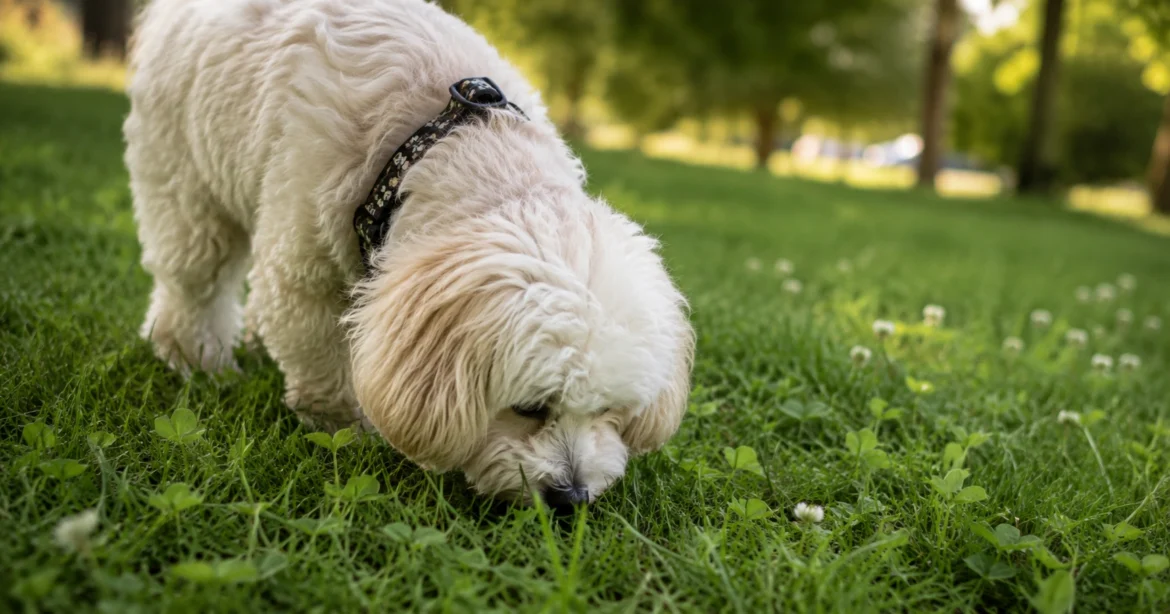
Why Does My Dog Eat Grass?
Behavior

Why Does My Dog Eat Grass?

by petdecoded July 21, 2026
written by petdecoded
Short answer: Eating grass is common and usually normal in dogs — research suggests most dogs that eat grass aren’t sick beforehand and rarely vomit afterward, which contradicts the popular assumption that it’s purely a self-induced-vomiting behavior. It’s more likely linked to instinct, mild digestive upset, boredom, or simply enjoying the taste and texture. It’s only a concern if it’s sudden, obsessive, or the grass has been treated with chemicals.

Grass-eating is one of the most common dog behaviors owners ask about — and one of the most misunderstood. The old assumption that dogs eat grass specifically to make themselves throw up doesn’t actually hold up well against the research.

The vomiting theory is mostly a myth

A frequently cited study of dog owners found that only a small minority of dogs showed signs of illness before eating grass, and most dogs that ate grass didn’t vomit afterward at all. If grass-eating were primarily a deliberate self-medicating behavior to induce vomiting, you’d expect the opposite pattern. That doesn’t mean it never happens that way for an individual dog — just that it’s not the default explanation for most grass-eating.

It’s likely instinctive

Wild canines, including wolves, are known to consume plant matter as part of a varied, opportunistic diet — not exclusively meat. Some researchers think grass-eating in domestic dogs is a holdover of this omnivorous instinct rather than a modern quirk. It may also provide small amounts of fiber or micronutrients that a dog’s system is seeking out.

Common everyday reasons

  • Taste and texture: some dogs simply seem to enjoy the sensation, especially fresh, new-growth grass
  • Mild digestive discomfort: a small amount of grass may help settle a mildly upset stomach, similar to how the behavior shows up more around mealtime changes
  • Boredom or lack of stimulation: grass-eating during a long, understimulating walk or in a yard with little else to do is common
  • Nutritional curiosity: occasional grass-eating in an otherwise well-fed dog with a balanced diet is not typically a sign of a nutrient deficiency, despite the popular belief

When grass-eating is worth watching

Occasional grass-eating in an otherwise healthy dog isn’t something to worry about. It becomes worth paying attention to if it’s sudden and frequent, paired with other symptoms (lethargy, repeated vomiting, diarrhea, appetite loss), or if your dog seems frantic or obsessive about it rather than casually grazing.

A real safety concern: lawns and public grass may be treated with pesticides, herbicides, or fertilizers that are toxic if ingested. Avoid letting your dog eat grass in areas you know have been recently treated, and be cautious in public parks where you can’t confirm what’s been applied.

Should you stop your dog from eating grass?

For most dogs, occasional grazing on untreated grass doesn’t need to be discouraged — it’s a low-risk, apparently self-rewarding behavior. If it’s happening constantly, redirecting with a walk in a new direction, more mental stimulation, or a chew toy can help if boredom seems to be the driver. If it’s sudden and excessive, that’s a signal to loop in your vet rather than just managing the behavior.

Frequently asked questions

Is it OK for dogs to eat grass every day?

Occasional daily grazing on clean, untreated grass is generally considered low-risk for most healthy dogs. If it becomes obsessive or replaces normal eating and activity, it’s worth a vet visit to rule out an underlying issue.

Why does my dog eat grass and then throw up?

Long, coarse grass blades can mechanically irritate the throat and stomach lining, which can trigger vomiting independent of any prior nausea — meaning the grass itself may be causing the vomiting, not the other way around. Occasional single episodes usually aren’t concerning; frequent vomiting after eating grass is worth mentioning to your vet.

Does eating grass mean my dog has worms?

Not directly — grass-eating alone isn’t a reliable sign of intestinal parasites. If you’re seeing other signs (visible worms in stool, weight loss, a bloated belly, diarrhea), that’s a separate reason to get a stool sample checked, regardless of grass-eating habits.

Related reading

If digestive habits are on your radar, our guide to picking the right food by life stage covers what to look for if your dog’s stomach seems sensitive.

July 21, 2026 0 comments
0 FacebookPinterestEmail
Newer Posts
Older Posts

The Decoded Digest

Real dog-care guides and comparisons, straight to your inbox — no spam, no fluff.

Popular Posts

  • 1

    New Dog Owner’s First 30 Days: Complete Walkthrough

    August 6, 2026
  • 2

    How to Stop a Puppy from Biting

    July 31, 2026
  • 3

    Puppy Vaccination Schedule: The Complete Guide

    July 27, 2026
  • 4

    Foods Toxic to Dogs: The Complete List for 2026

    July 25, 2026
  • 5

    Best Dogs for First-Time Owners

    August 8, 2026

Topics

  • Behavior
  • Breeds & Lifestyle
  • Health
  • Training

Meet the Dogs

Kimura Kimura
Abbey AbbeyIn memory

Pet Decoded is dedicated to these two — Kimura, who's still by our side, and Abbey, who we lost but will never forget. This site exists so they both live on.

Read our story →

About Pet Decoded

Real answers for dog owners, without the guesswork. We research and compare so you can make the right call for your dog — insurance, food, gear, and more.

Facebook Pinterest Instagram Youtube Envelope
  • Guides
    • Best Pet Insurance
    • Best Dog Food
    • Dog Cost Calculator New!
    • The Amazon Dog Shop
    • Health & Safety
    • Training
    • Behavior
    • Breeds & Lifestyle
    • Dog Walking Services
    • Subscription Boxes
    • Fresh Food Delivery
  • Useful Links
    • About Us
    • Contact
    • Affiliate Disclosure
    • Privacy Policy
    • Terms & Conditions

Join The Decoded Digest

Real dog-care guides and comparisons, straight to your inbox — no spam, no fluff.

© 2026 All Rights Reserved. Pet Decoded · Real answers for dog owners.

  • Pet Decoded Home
  • Privacy Policy
  • Terms and Conditions
Pet Decoded
  • Pet Decoded
  • Insurance
    • Healthy Paws
    • Lemonade
    • Spot
  • Dog Food
  • Gear
    • Leashes & Harnesses
    • Beds & Crates
    • Toys
    • Travel Gear
    • Grooming
  • Guides
    • Dog Cost CalculatorNew!
    • Behavior
    • Health
    • Training
    • Breeds & Lifestyle
    • Dog Walking
    • Subscription Boxes
    • Fresh Dog Food Delivery
  • About
  • Contact
  • Emergency Guide

Shopping Cart

Close

No products in the cart.

Close