
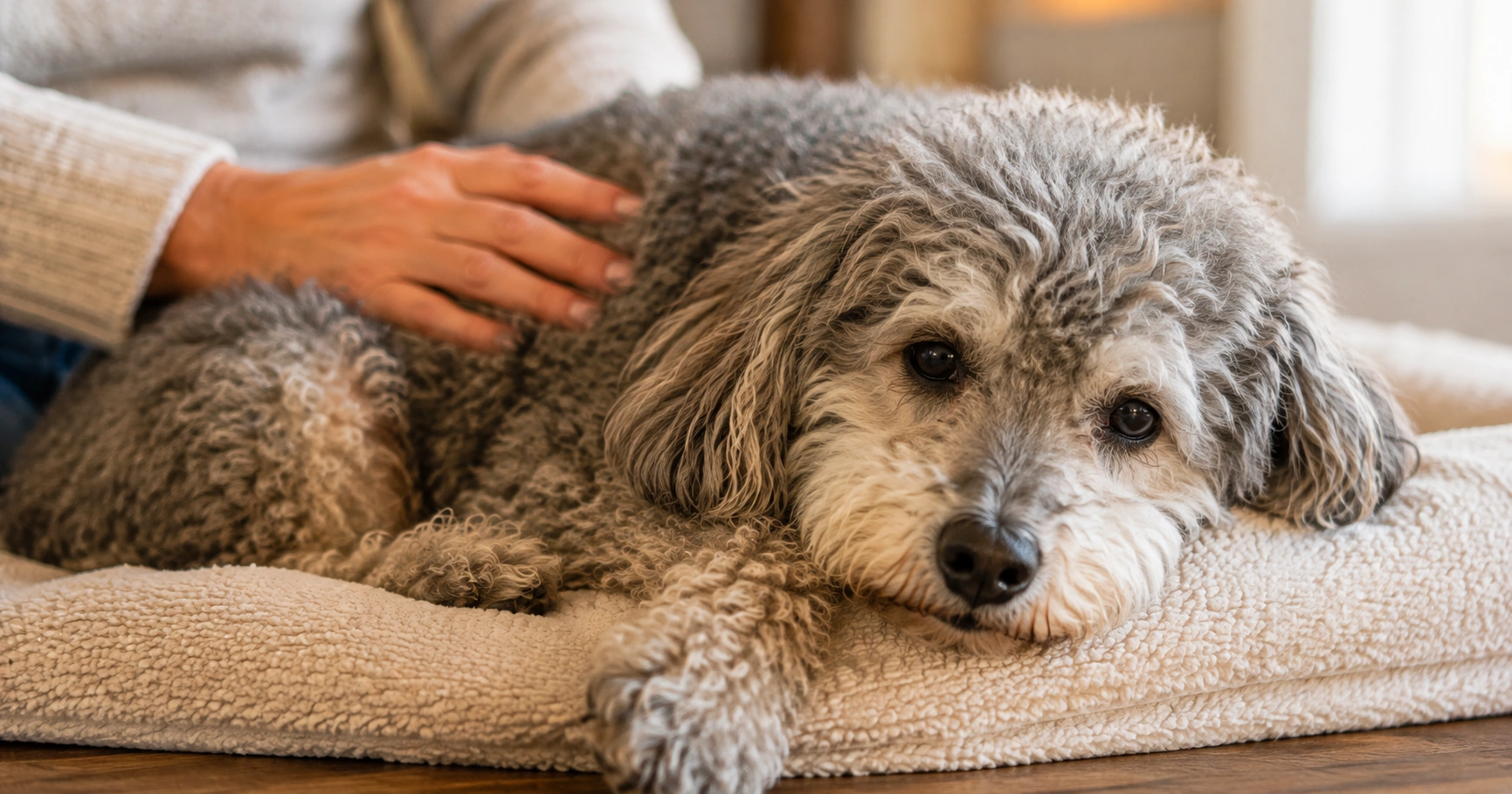
One of the harder parts of caring for a senior dog is that they genuinely don’t advertise pain the way you might expect. Reading the subtle version is a skill worth building, because it’s often the only warning you get before a bigger issue shows up.
Why dogs hide pain so effectively
In the wild, an animal showing obvious pain or weakness becomes a target — for predators, or for being pushed out by its own group. That instinct to mask discomfort didn’t disappear with domestication, which is part of why vets consistently note that pain in dogs, especially chronic pain from arthritis or aging joints, tends to be underestimated by owners until it’s fairly advanced.
Mobility changes are often the first clue
- Slower to get up, or hesitating before jumping onto furniture or into the car, when this wasn’t an issue before
- Stiffness that’s worse after resting and improves somewhat once they’ve been moving for a bit — a classic arthritis pattern
- Shorter walks by choice, or lagging behind rather than leading the way like they used to
- Difficulty with stairs, particularly going down, which puts more strain on joints than going up
Behavioral changes are just as telling, and often missed
A dog in pain may become more withdrawn, less interested in play or interaction, or conversely, more irritable and less tolerant of handling (especially around the painful area) than they used to be. Changes in sleep — restlessness, difficulty getting comfortable, more frequent position changes at night — are also common and easy to miss if you’re not specifically watching for them.
Grooming and appetite shifts
A senior dog that stops grooming themselves as thoroughly, particularly in spots that are harder to reach (which often correlates with the same joints causing mobility issues), may be avoiding movements that hurt. Appetite changes — eating more slowly, less interest in food, or reluctance to lower their head fully to a floor-level bowl — can also reflect discomfort, sometimes dental pain rather than joint pain specifically.
Subtler physical signs
- Panting at rest, without heat or exertion as an explanation
- A hunched or tense posture, or reluctance to fully stretch out like they used to
- Muscle loss in one area (often a limb), which can reflect a dog favoring that side over time
- Excessive licking at a specific joint or area
What to do if you notice these signs
Bring a specific, detailed account to your vet rather than a general “they seem older” — when the changes started, what specifically is different (which stairs, which activities, how long stiffness lasts), and anything that makes it better or worse. Senior dogs benefit enormously from proactive pain management once a cause is identified, and there are more options now (medication, joint supplements, weight management, physical therapy) than many owners realize.
Dog Emergency & First Aid Guide
Beyond pain signs, this 18-page guide covers how to safely handle a senior dog in distress, plus 12 real emergencies and a fillable card for your fridge.
$7 Get the Guide →Frequently asked questions
Is it normal for senior dogs to slow down?
Some slowing down is a normal part of aging, but a specific, noticeable change from your dog’s own established baseline — not just “dogs get slower” in the abstract — is worth a vet conversation, since it may be a treatable source of pain rather than an inevitability to just accept.
Can arthritis in dogs actually be treated?
Yes, quite effectively in many cases — options range from anti-inflammatory medication and joint supplements to weight management and physical therapy, often used in combination. Early identification generally leads to better long-term comfort than waiting until the pain is severe.
How can I tell if it’s pain or just normal aging?
This distinction is genuinely hard to make from the outside, which is exactly why a vet visit is worthwhile rather than guessing — a physical exam, and sometimes imaging, can identify a specific, often treatable cause behind what looks like “just getting older.”