
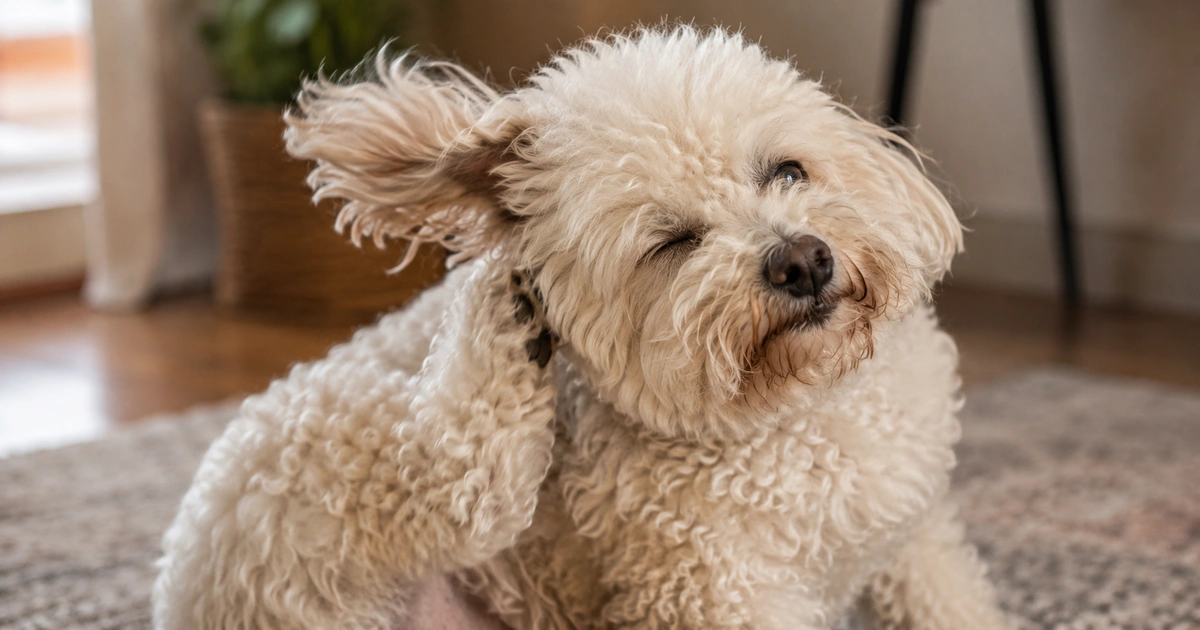
Occasional head shaking after a bath or a roll in the grass is normal dog behavior. Frequent, repeated shaking — especially combined with other signs — usually points to something going on in the ear canal that’s worth checking.
Why head shaking is such a reliable ear-infection signal
Head shaking is a dog’s direct, physical response to irritation or discomfort inside the ear canal — it’s an attempt to relieve an itch or pressure that scratching alone can’t fully reach. Combined with the fact that ear infections are genuinely common in dogs (particularly certain breeds and situations), persistent head shaking is one of the more dependable early indicators owners can catch before an infection progresses.
What else usually shows up alongside it
- Scratching at the ear more than usual, sometimes intensely
- A noticeable odor coming from the ear, often described as musty or yeasty
- Redness or swelling inside the visible part of the ear
- Discharge — brown, yellow, or black debris, depending on the type of infection
- Sensitivity when the ear is touched, or head-tilting toward the affected side
- Rubbing the ear against furniture or the floor for relief
Why some dogs get ear infections more than others
Floppy-eared breeds (Cocker Spaniels, Basset Hounds, Labradors) have less airflow to the ear canal, creating a warmer, moister environment that’s more hospitable to yeast and bacteria. Dogs that swim frequently face a similar issue — trapped moisture after water exposure. Dogs with underlying allergies are also more prone to recurring ear infections, since allergic inflammation in the ear canal creates conditions that make secondary infection more likely.
Why at-home cleaning alone usually isn’t enough
Once an infection has actually taken hold (versus just routine ear maintenance in a healthy ear), it typically needs a vet-prescribed medication — often ear drops targeting the specific type of infection (bacterial, yeast, or both) — determined after your vet examines the ear and sometimes takes a sample to identify what’s actually causing it. Over-the-counter cleaning alone often isn’t enough once symptoms are present, and can even mask or delay proper treatment if used as a substitute for a vet visit.
Frequently asked questions
Can I clean my dog’s ears at home to prevent infections?
Routine cleaning with a vet-approved ear cleaner, especially for breeds prone to infections or dogs that swim often, can help as a preventive measure. It’s different from treating an active infection, which needs a vet-diagnosed and prescribed approach.
How long does a dog ear infection take to clear up?
With appropriate treatment, many uncomplicated infections improve within 1–2 weeks, though the full course of prescribed medication should be completed even if symptoms improve early, similar to finishing a course of antibiotics in humans.
Are ear infections in dogs contagious to other pets?
Bacterial and yeast ear infections themselves generally aren’t contagious between pets, though ear mites (a less common cause of similar symptoms) can spread between animals in close contact, which is one more reason a proper vet diagnosis matters.