
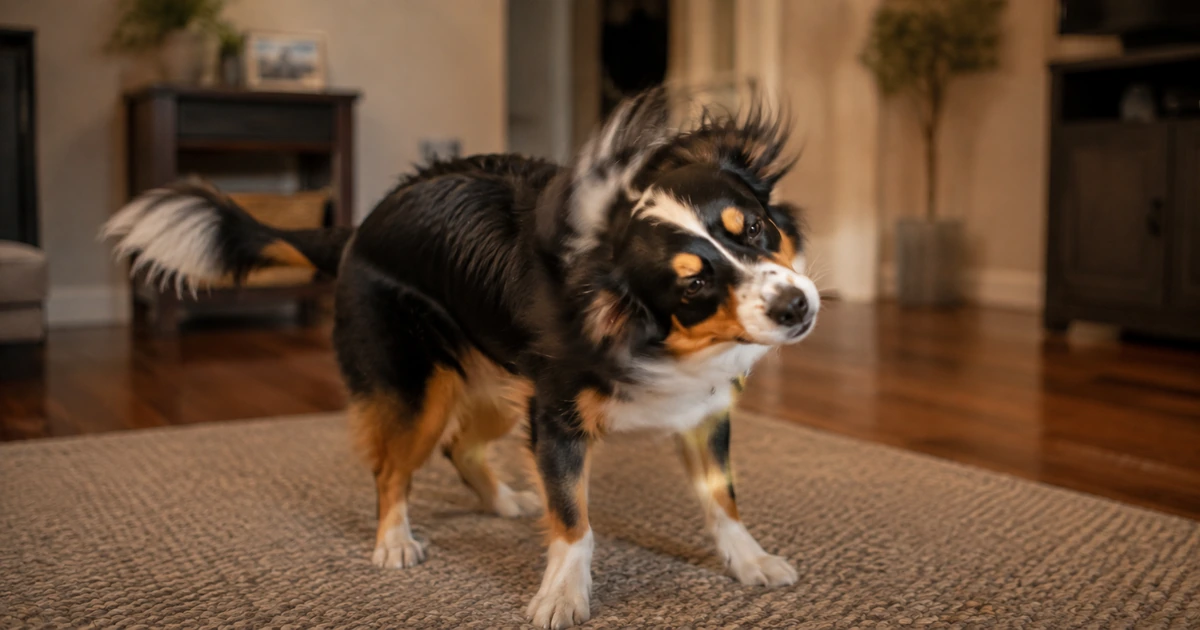
Every dog owner has had a moment of “wait, why is my dog shaking?” and 95% of the time, the answer turns out to be something mundane. Still, it’s worth knowing the difference, because that other 5% is where you actually want to move fast.
Cold is the most obvious one
Small dogs, short-haired breeds, and older dogs lose body heat faster and will shiver in temperatures that wouldn’t bother a thicker-coated dog. If your dog’s shaking and it’s cold out — or the AC’s cranked — that’s probably your answer. A sweater or a warmer spot to lie down usually settles it within a few minutes.
Excitement shakes are real, and they’re funny once you know what they are
Some dogs vibrate with pure anticipation — leash coming out, car door opening, you reaching for the treat jar. It’s the same physiological arousal response that makes your own hands shake a little before something exciting, just with less social filtering. Loose, wiggly body language alongside it is the tell that this is joy, not distress.
Fear and stress shakes look similar but feel different to watch
Thunderstorms, fireworks, vet visits, a loud argument in the next room — a stressed dog often trembles, and it usually comes with a stiffer body, tucked tail, pinned-back ears, or trying to hide. If you know what triggered it, you’re probably looking at fear, not illness, and the fix is more about managing the trigger than calling the vet.
The “wet dog shake” is its own thing entirely
- After a bath, swim, or rain: that full-body shake is mechanical, not emotional — it’s an efficient way to fling water off fur, and dogs are remarkably good at it
- After waking up or getting up from a nap: a quick full-body shake is often just resetting fur and muscles, similar to a human stretch
- After a stressful moment ends: some behaviorists believe a shake-off after a tense encounter (another dog, a vet exam) helps a dog physically “reset” before moving on —ever notice your dog shake right after something uncomfortable finishes?
When shaking is a symptom, not a personality quirk
Generalized tremor syndrome, low blood sugar (especially in small-breed and toy puppies), pain, nausea, and toxin exposure can all cause shaking that looks different from the everyday kind — usually more persistent, whole-body, and not tied to an obvious trigger like cold or excitement.
Frequently asked questions
Why does my senior dog shake more than they used to?
Older dogs lose muscle mass and body fat, both of which help regulate temperature, so they’re more prone to shivering in the same conditions that wouldn’t have bothered them a few years ago. It can also be a sign of arthritis pain, so if it’s new and frequent, it’s worth flagging at your next vet visit.
Is it normal for small dogs to shake more than big dogs?
Yes — small dogs have a higher surface-area-to-volume ratio, which means they lose heat faster, and many small breeds also just run more naturally high-strung and reactive. Chihuahuas in particular are famous for it, and it’s mostly just biology and temperament, not a health problem.
Can anxiety cause chronic shaking in dogs?
In dogs with significant, ongoing anxiety, yes — trembling can become a more constant baseline rather than a one-off reaction to a specific trigger. If that’s the pattern you’re seeing, it’s worth a conversation with your vet about a broader anxiety management plan rather than treating each shaking episode individually.