
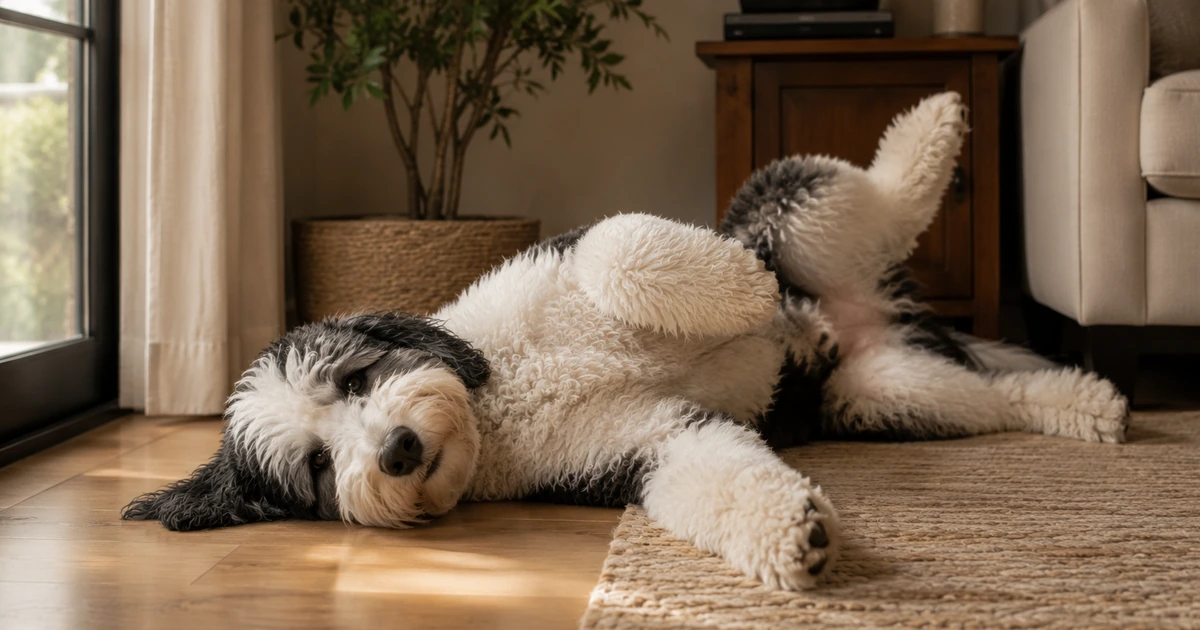
That long, theatrical sigh your dog lets out right as they collapse onto the floor has a lot of personality to it — and it turns out that’s not a coincidence. Sighing genuinely tracks with emotional state in dogs, and the context around it tells you which emotion you’re actually looking at.
The contented sigh has a distinct shape
A dog that sighs while settling into a comfortable spot, often paired with a relaxed body, soft half-closed eyes, and a slow exhale, is showing classic signs of contentment. Behavioral researchers who study canine emotional expression have found that dogs’ physical and vocal signals in relaxed states are consistent enough to be genuinely readable — this isn’t just an anthropomorphized guess, it’s a pattern that holds up.
The “disappointed” sigh is a different animal
If you’ve ever told your dog “not now” about a walk or a treat and gotten a heavy sigh with a flop and a pointed look in your direction, that’s very likely mild frustration or disappointment — the canine equivalent of an eye-roll. The body language differs from the contented version: often a harder flop, held eye contact, sometimes paired with resting their chin dramatically on their paws.
Groaning has its own context clues
- Groaning while getting comfortable: usually just settling in, especially common in larger or older dogs
- Groaning when getting up: can be effort-related, and in older dogs specifically, worth watching for a pattern that suggests joint stiffness
- Groaning during a belly rub or petting: often genuine pleasure — the canine version of a contented hum
Breed and body type play a role too
Larger, heavier dogs tend to sigh and groan more audibly simply due to lung capacity and body mass — a Great Dane’s contented exhale is going to be a lot more dramatic than a Chihuahua’s. It doesn’t mean bigger dogs feel things more intensely, just that the sound carries more.
Frequently asked questions
Do dogs sigh when they’re sad?
Context matters more than the sound itself — a sigh paired with a relaxed, settled body is different from one paired with a withdrawn, low-energy posture over an extended period, which could reflect something closer to genuine low mood or stress rather than momentary disappointment.
Is it normal for older dogs to groan more?
Some increase in groaning with age is common and often just reflects effort or general stiffness getting up and down. A sharper increase, or groaning that seems tied to specific movements, is worth flagging to your vet as a possible sign of joint pain.
Why does my dog sigh right when I stop petting them?
This is a pretty clear “I wanted that to continue” signal — the mild-frustration version of a sigh, tied directly to an interrupted pleasant activity. It’s harmless and, frankly, one of the more relatable things a dog does.