
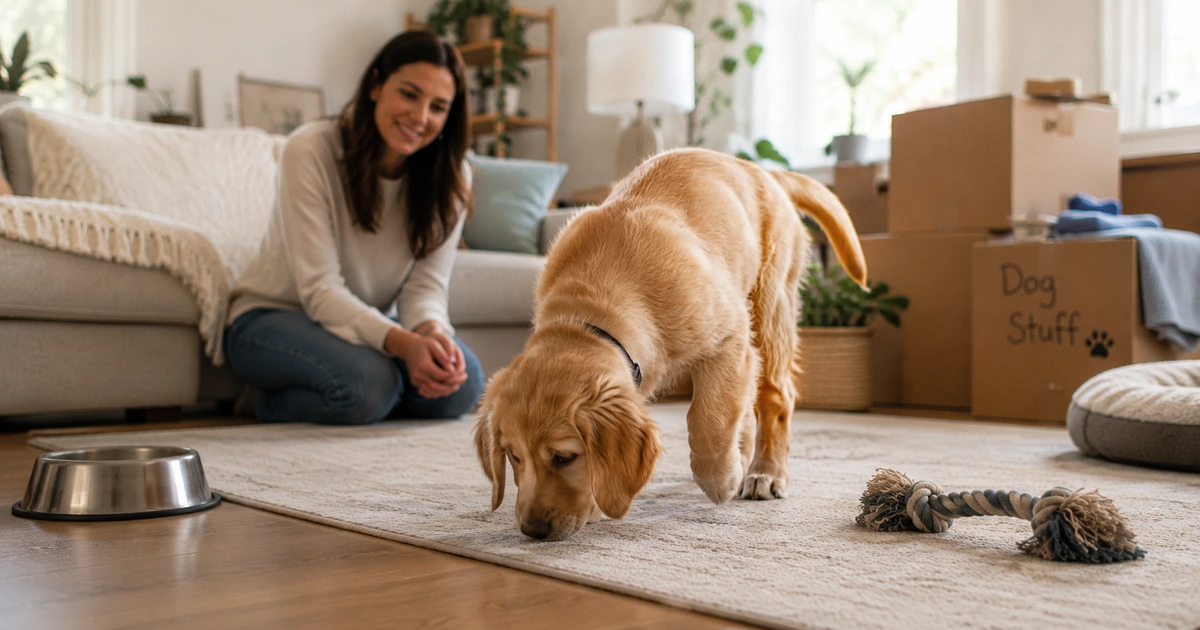
Bringing a new dog home is exciting and, often, more disorienting than people expect going in. Here’s a realistic walkthrough of what the first month actually looks like.
Days 1–3: Decompression, not full integration
Keep it low-key
A new dog, especially a rescue, is processing an enormous amount of change all at once. Keep the first few days calm and low-stimulation — limit visitors, avoid overwhelming outings, and focus on establishing a predictable routine (feeding times, bathroom breaks, a designated sleeping spot) rather than trying to do everything at once.
Puppy-proof and set up the basics first
Have food, water bowls, a crate or bed, a leash and collar or harness, and any baby gates or barriers set up before your dog arrives, so you’re not scrambling on day one. Identify and remove obvious hazards (loose cords, toxic plants, small chewable objects) ahead of time.
Days 4–14: Building routine and starting gentle training
Establish a consistent daily schedule
Consistent feeding, bathroom, and exercise times help your dog (especially a puppy) predict what’s coming, which reduces anxiety and speeds up house training. This is also when accidents or adjustment-related behavior issues are most common and most expected.
Start basic training in short sessions
Begin with foundational cues (name recognition, sit) in short, positive sessions. If your dog is a puppy, this is also when the socialization window is most active — see our guide on socializing safely before full vaccination for how to balance exposure with health risk.
Days 15–30: Deepening the bond and expanding the world
Expand exposure gradually
As your dog settles into the household routine, start introducing more variety — new walking routes, controlled introductions to other people and (if appropriate) other dogs, car rides. Keep expanding at a pace that matches your specific dog’s comfort level rather than a fixed calendar.
Schedule the vet visit if you haven’t already
A wellness exam within the first couple of weeks (sooner if there’s any concern) establishes a baseline, catches any issues early, and gets vaccinations or preventive care on track if needed.
What’s normal to struggle with
- Feeling like you made a mistake in the first week — this is a genuinely common experience, especially with rescues, and doesn’t predict how the relationship will develop long-term
- Accidents, even from a dog described as house-trained — a new environment resets a lot of learned behavior temporarily
- A dog that seems either shut-down or, alternatively, more reactive than expected during the decompression period, before their real personality settles in
Get the New Dog Owner’s Complete Checklist
A printable, week-by-week version of this walkthrough for your fridge or phone, covering everything from supplies to the vet visit timeline.
Download the Checklist (PDF)Frequently asked questions
How long does it take a rescue dog to adjust to a new home?
The commonly cited “3-3-3 rule” (3 days, 3 weeks, 3 months) is a helpful general framework, though individual dogs vary — some settle faster, others, especially those with a harder history, may take longer to fully relax and show their true personality.
Is it normal to feel overwhelmed the first week with a new dog?
Very common, and not a reliable predictor of how things will go long-term — the adjustment period is genuinely hard for many owners, and feeling overwhelmed doesn’t mean you’ve made the wrong choice.