
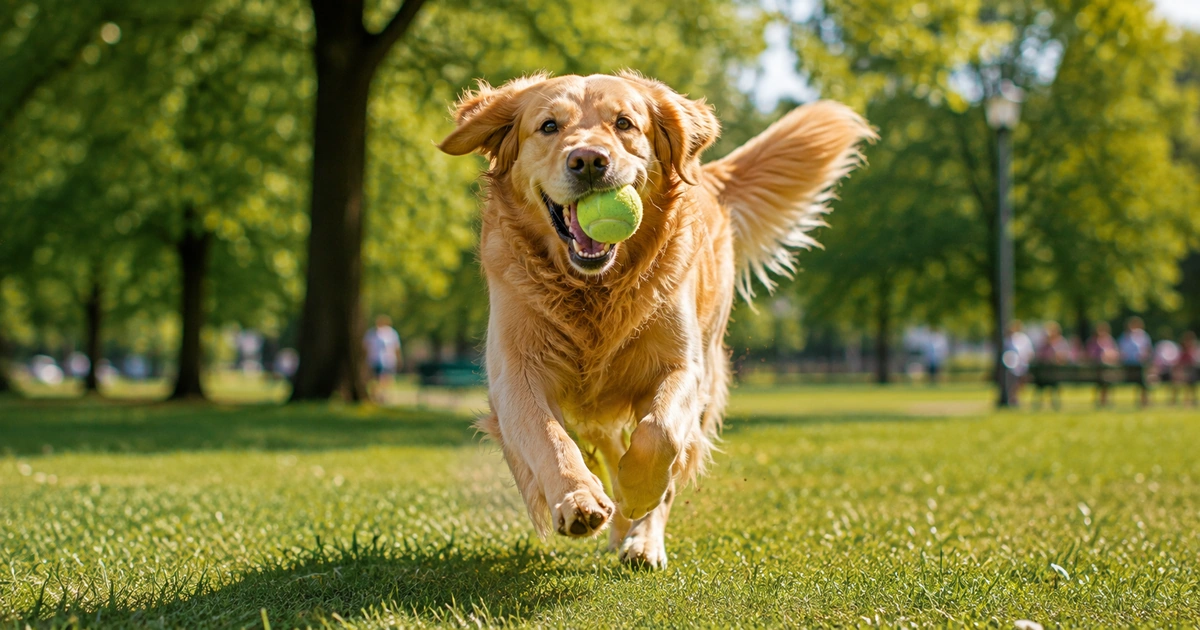
“Dogs need a walk a day” is true but not remotely specific enough to be useful — the actual range across common breeds is huge, and getting it wrong in either direction causes real problems.
Exercise needs by breed
| Breed | Daily exercise | Notes |
|---|---|---|
| Labrador Retriever | 60–90 min | High energy, needs both physical exercise and mental stimulation; prone to weight gain if under-exercised |
| Golden Retriever | 60–90 min | Similar profile to Lab; enjoys swimming, fetch, and varied activity |
| French Bulldog | 20–30 min | Brachycephalic build means real heat and overexertion risk — short, cool-weather walks, never intense exercise in heat |
| Border Collie | 90+ min, plus mental work | One of the highest-energy breeds; under-exercised Border Collies commonly develop serious behavior issues |
| Beagle | 45–60 min | Moderate-high energy, strong scent drive means secure areas matter for off-leash time |
| Bulldog (English) | 20–30 min | Similar brachycephalic heat sensitivity to the Frenchie; short, gentle activity |
| Australian Shepherd | 90+ min, plus mental work | High-drive herding breed; needs a job or structured activity, not just a walk |
| Cavalier King Charles Spaniel | 30–45 min | Moderate needs, adaptable to lower-activity households |
Why getting this wrong causes real problems
An under-exercised high-energy dog (a Border Collie getting a 20-minute walk, for instance) commonly channels that unused energy into destructive chewing, excessive barking, or restlessness that owners often misread as a training or temperament problem rather than an unmet exercise need. On the flip side, over-exercising a brachycephalic breed like a French Bulldog or English Bulldog, especially in heat, poses a genuine overheating risk given their compromised airway anatomy.
Mental stimulation counts too
For working and herding breeds especially, physical exercise alone often isn’t enough — puzzle toys, training sessions, scent work, and structured “jobs” address a different kind of need that a straightforward walk doesn’t fully satisfy. A tired body and an under-stimulated mind can still add up to a restless, difficult-to-manage dog.
Frequently asked questions
Can I over-exercise my dog?
Yes, especially puppies (whose growth plates are still developing) and brachycephalic breeds (whose airways limit heat dissipation) — matching intensity and duration to your specific dog’s breed, age, and health status matters, not just hitting a generic daily minute count.
Is a walk enough exercise for a high-energy breed?
Often not on its own — high-drive breeds like Border Collies and Australian Shepherds typically need more intense activity (running, fetch, agility-style play) and mental engagement beyond a leisurely walk to genuinely meet their needs.