
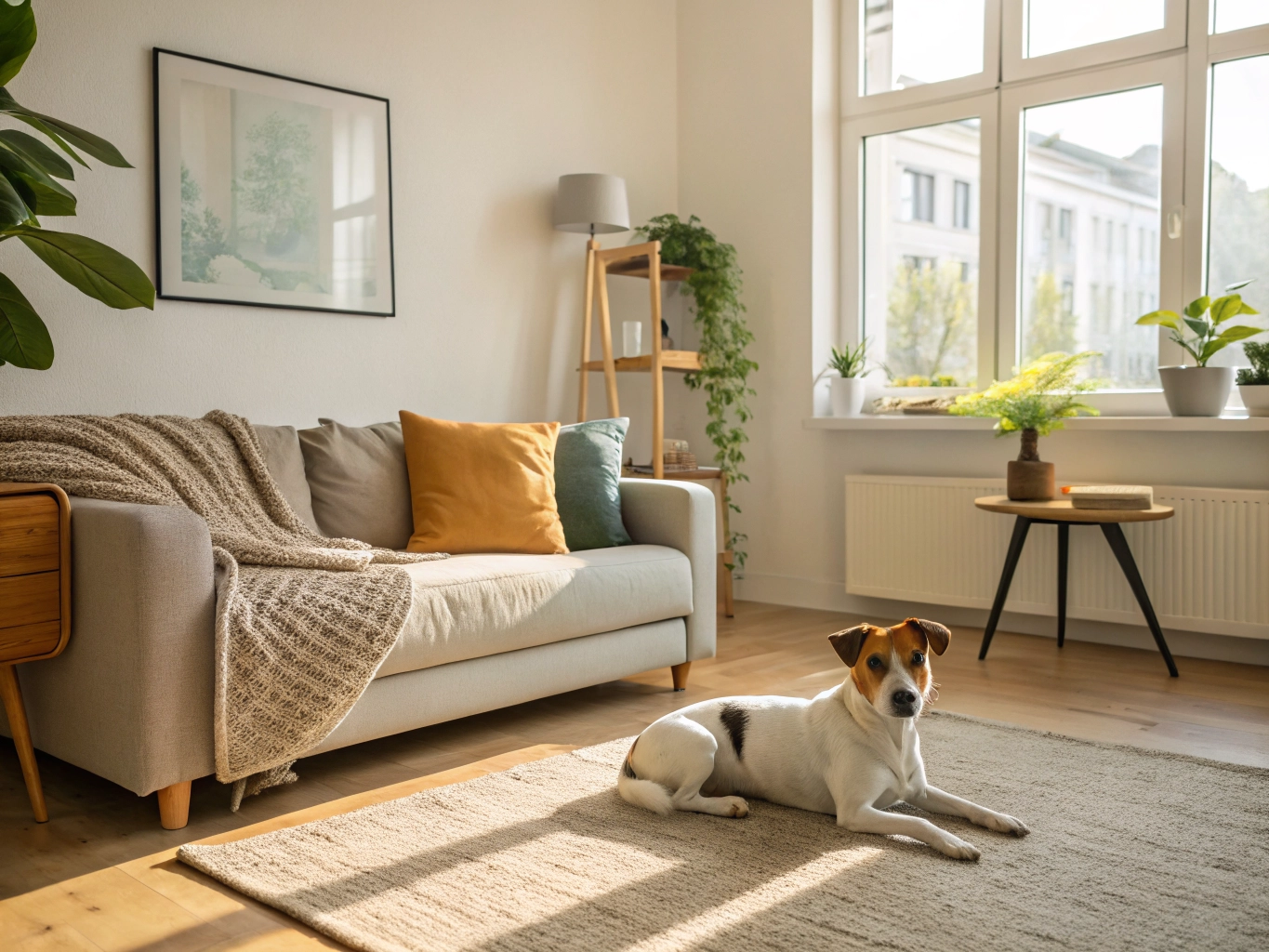
The “small dog = apartment dog” assumption trips up a lot of first-time renters. The real predictors are energy level and how vocal a breed tends to be, not how much floor space they take up lying down.
What actually predicts apartment success
- Energy level relative to what you can provide: a high-energy breed can do fine in an apartment with a truly committed exercise routine, but it’s a bigger daily obligation than a naturally lower-energy dog
- Barking tendency: breeds prone to alert barking or vocalizing at every hallway sound are a real neighbor-relations consideration in shared-wall living
- Tolerance for being alone for stretches: apartment living often means less immediate outdoor access, so a dog that handles solo time reasonably well is a practical asset
Breeds that tend to do well
French Bulldog
Low-to-moderate exercise needs and a generally calm indoor demeanor make Frenchies a popular apartment choice. Their brachycephalic (flat-faced) build means heat sensitivity and breathing considerations are worth researching before committing to the breed generally.
Greyhound
Genuinely surprises people — despite their size, retired racing Greyhounds especially are famously low-key indoors, often described as “45-mph couch potatoes.” A daily walk or two meets their needs; they’re not a high-maintenance apartment tenant.
Cavalier King Charles Spaniel
Small, affectionate, and adaptable, with moderate exercise needs that fit well into apartment routines. Generally not a heavy barker, which helps with shared-wall living.
Basset Hound
Low energy and content with modest daily exercise, though their vocal tendencies (baying, not just barking) are worth being aware of for close-quarter neighbors.
Whippet
A smaller cousin of the Greyhound with the same surprising couch-potato streak — short bursts of energy followed by long stretches of calm. Generally quiet indoors and easy on neighbors, though they’re sensitive to cold and don’t love being left alone for very long stretches.
Boston Terrier
Compact, generally low-to-moderate energy, and not typically a heavy barker — a solid fit for smaller units. Like other flat-faced breeds, heat and exercise intensity need to be managed carefully.
Breeds that are trickier in an apartment
High-energy working and herding breeds (Border Collies, Australian Shepherds), breeds with strong alert-barking instincts (many terriers, some guardian breeds), and very large breeds with significant daily exercise requirements can all work in an apartment with real dedication, but they ask more of an owner in that setting than the breeds above. This isn’t a hard no — plenty of Border Collies live happily in apartments with owners who commit to serious daily exercise and mental enrichment — but it’s a bigger daily obligation than choosing a breed that’s naturally suited to less space.
Frequently asked questions
Can large dogs live happily in apartments?
Yes, if their energy level is manageable and their exercise needs are genuinely met — several large breeds (Greyhounds, many mastiff-type breeds) are actually lower-energy indoors than some small, high-strung breeds.
How much exercise does an apartment dog need?
It depends entirely on the breed, not the living situation — a low-energy breed might be well served by 30–45 minutes a day, while a higher-energy breed in the same apartment would need considerably more to avoid boredom-driven behavior issues.
What breeds should I generally avoid in a small apartment?
Breeds bred for all-day physical work — Border Collies, Australian Shepherds, and similar herding or working breeds — tend to struggle most without a serious daily exercise commitment, since under-stimulation in these breeds often shows up as destructive or anxious behavior rather than just restlessness.
Is a puppy or an adult dog easier in an apartment?
An adult dog is usually the easier apartment choice, since you can see its actual energy level and temperament before bringing it home rather than guessing at how a puppy will turn out. If you do go the puppy route, look closely at the breed’s adult energy level, not just how calm the puppy seems now.
Do apartment dogs need a yard to be happy?
No — a yard is a convenience, not a requirement. Dogs generally need walks, mental stimulation, and social time regardless of whether they have yard access; a well-exercised apartment dog is often better off than a yard dog who’s let outside but not actually walked or engaged with.
How do I check whether my building allows a specific breed?
Ask your leasing office directly for the property’s written pet policy before you commit to a breed — weight limits and breed restrictions are common, vary widely between buildings, and are usually easier to confirm upfront than to work around after the fact.