
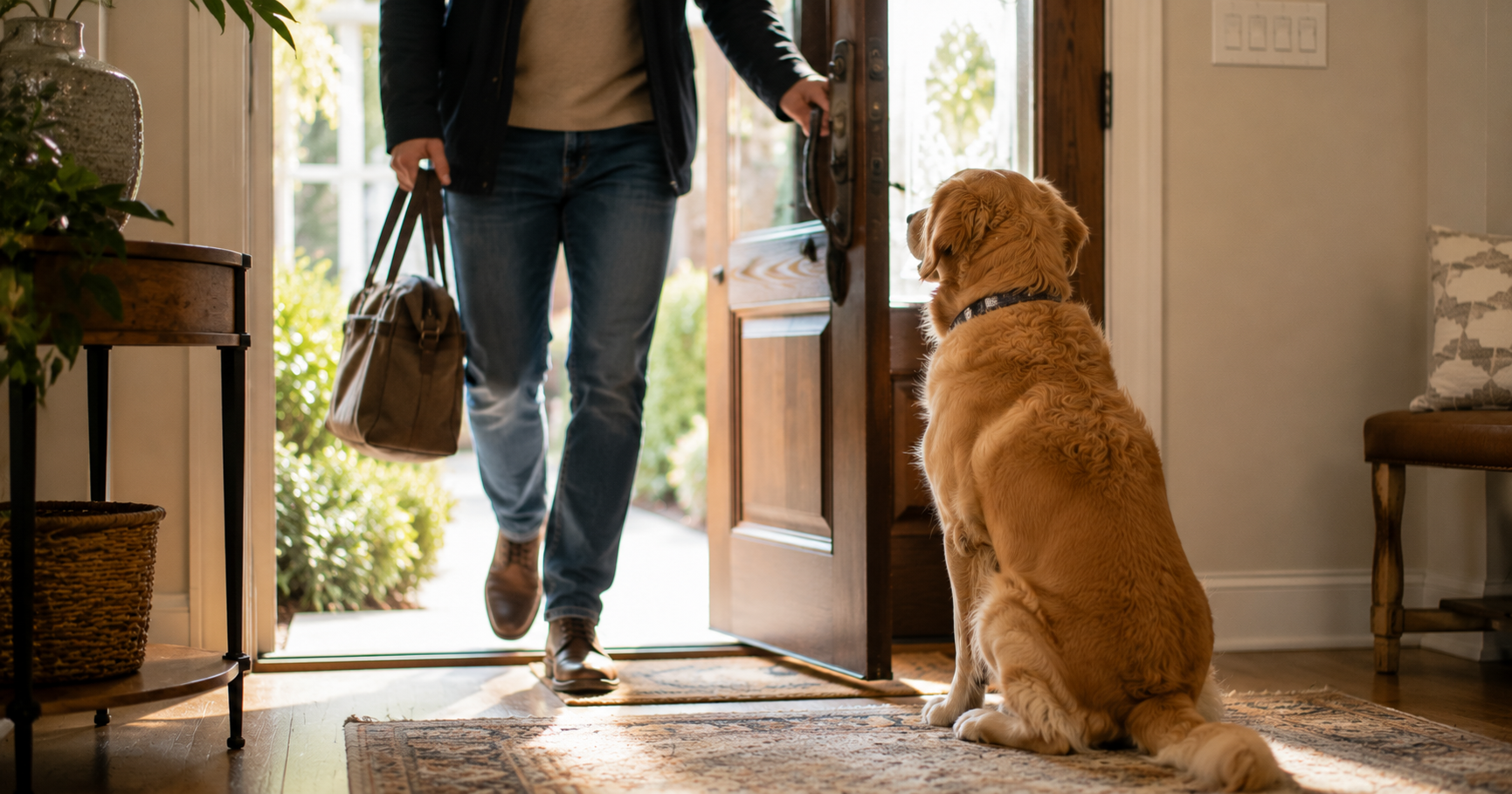
Jumping is one of those behaviors that persists specifically because it works so well — dogs are excellent at reading that jumping gets a reaction, and most guests, even ones who claim to hate it, end up giving some kind of response.
Why jumping is so persistent
From a dog’s perspective, jumping up gets them closer to a person’s face (where the most interesting information — scent, expression — lives) and reliably triggers some kind of reaction, even a startled “oh!” or a hand pushing them away. Both count as attention from a dog’s point of view, which means even a negative-seeming reaction can accidentally reinforce the behavior rather than discourage it.
The four-on-the-floor method
1. Withhold all attention the instant paws leave the ground
No eye contact, no talking, no pushing away (pushing is still touch, which still counts as attention to a dog). Turn away or step back, calmly and without drama.
2. Reward and greet the moment all four paws are down
The instant your dog is back on the ground, deliver calm praise, attention, or a treat. This is the actual teaching moment — it clearly rewards the behavior you want instead of just punishing the one you don’t.
3. Practice with low-stakes “guests” first
Rehearse the greeting with people your dog already knows well before expecting it to hold up with excited new visitors, which is a much higher-arousal, harder-to-manage scenario. Build the skill in easy conditions first.
4. Brief real guests on the rule before they arrive
Ask visitors specifically to ignore your dog completely (no touching, talking, or eye contact) until all four paws are on the floor. One well-meaning guest who pets a jumping dog “just this once” can meaningfully set back weeks of consistent training.
Managing the environment while training
- A leash at the door gives you physical control during the highest-arousal moment (someone arriving) without needing to rely purely on verbal cues
- Teaching an alternative behavior (sit, or going to a mat) gives your dog something specific to do instead of jumping, which tends to work better than just suppressing the jump with no replacement
- Managing your dog’s excitement level before guests arrive (a walk beforehand, calm settling time) can reduce the overall arousal that fuels jumping in the first place
Frequently asked questions
Is it okay to knee my dog in the chest to stop jumping?
This older method isn’t generally recommended — it can cause injury, doesn’t teach an alternative behavior, and can create fear or a negative association with greetings rather than solving the underlying attention-seeking motivation.
Why does my dog only jump on certain people?
Often it’s about who reacts — if certain people consistently give attention (even scolding attention) when your dog jumps, that person becomes a more reliably reinforced jumping target than someone who’s been trained to ignore it.