
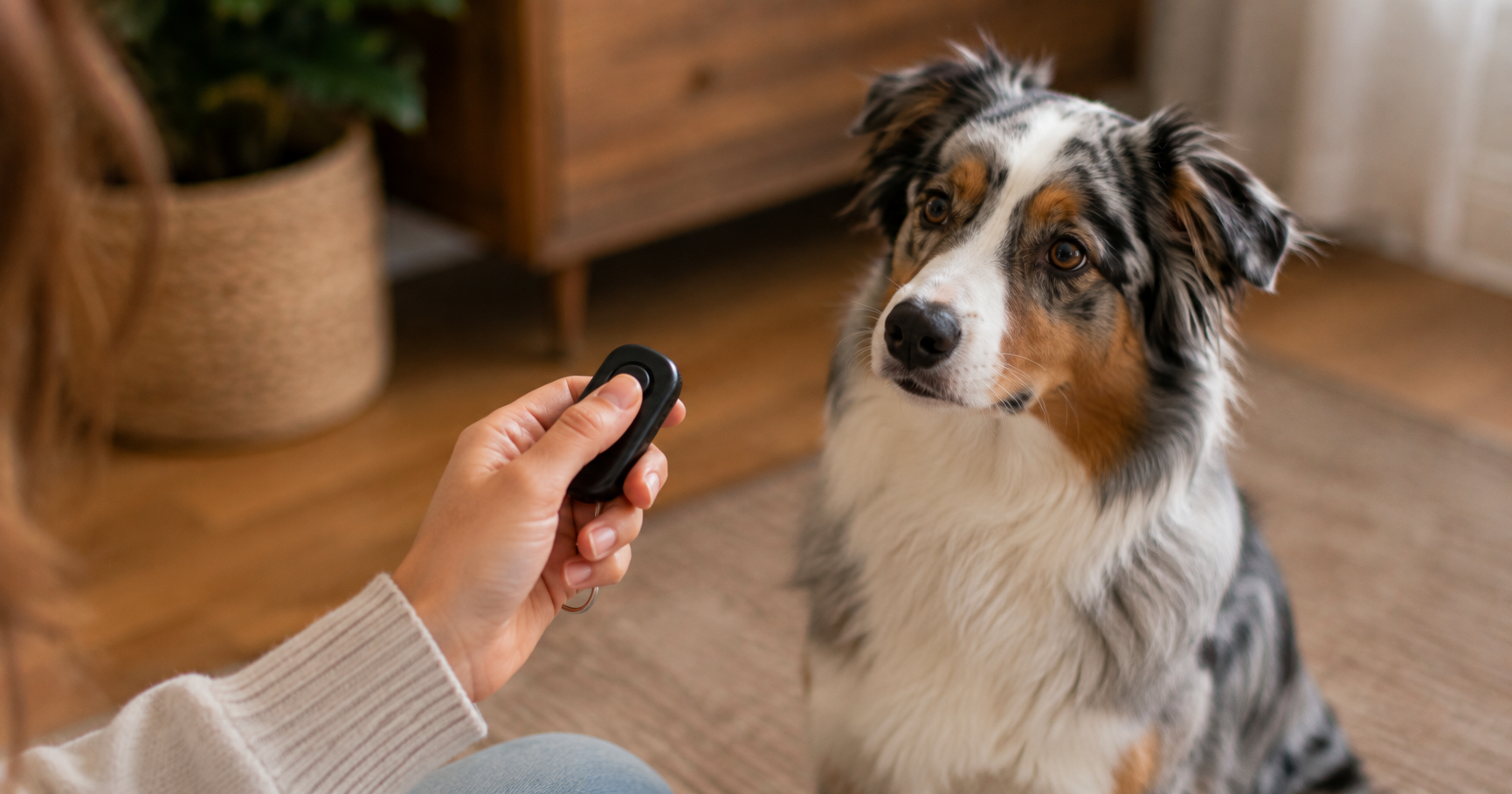
Clicker training has a reputation for being complicated, but the core mechanism is simple: click at the exact right instant, then always follow with a treat. Everything else builds from that one habit.
Why a click works better than just saying “good”
A clicker produces the exact same sound every single time, with no variation in tone or timing the way a verbal “good boy” naturally has. That consistency lets your dog form a very precise association: click means a specific action, right now, earned a reward — which is harder to communicate as cleanly with words alone, especially for actions that happen quickly (like the instant all four paws touch the ground, or the exact moment of a full sit).
Step 1: “Charge” the clicker first
Build the click-to-treat association
Before using the clicker for any actual training, spend a few short sessions simply clicking and immediately giving a treat, with no behavior required. Repeat this 10–15 times per session, a few times a day, for a day or two. This teaches your dog that the click itself reliably predicts a reward, which is the entire foundation the rest of clicker training relies on.
Step 2: Click at the exact right moment
Timing is everything
Once the clicker is charged, click the instant your dog performs the behavior you want — not a second before, not a second after. If you’re shaping a sit, click the moment their rear touches the ground, then follow with a treat. The click marks the behavior; the treat that follows is what makes it worth repeating.
Step 3: Add a verbal cue once the behavior is reliable
Name it once it’s consistent
Once your dog is reliably offering the behavior in response to a lure or shaping process, start saying the cue word (“sit”) right before they do it, then click and reward. Over repetitions, the verbal cue becomes the trigger, and the clicker stays as the precision marker for correct execution.
Step 4: Phase out the clicker for well-established behaviors
Once a behavior is solid and reliable, you can shift to intermittent, variable rewards (praise sometimes, a treat sometimes, not every single time) the way most trained behaviors eventually work — the clicker’s precision is most valuable while a behavior is still being learned, not necessarily forever.
- Keep sessions short: 5–10 minutes, multiple times a day, works better than one long session for maintaining focus and enthusiasm
- Always click before treating, never the reverse — the order is what builds the precise association
- End sessions on a success, even a small one, to keep training feeling positive
Frequently asked questions
Can I use a word instead of an actual clicker?
Yes, a consistent marker word (like “yes,” said the same way every time) can work similarly, though a physical clicker’s sound tends to be more distinct and consistent than a spoken word, which can vary subtly in tone depending on your mood or context.
Is clicker training only for puppies?
No, it works for dogs of any age, including teaching new behaviors to adult or senior dogs — the precision-marking mechanism is just as effective regardless of your dog’s age or how much prior training they’ve had.