
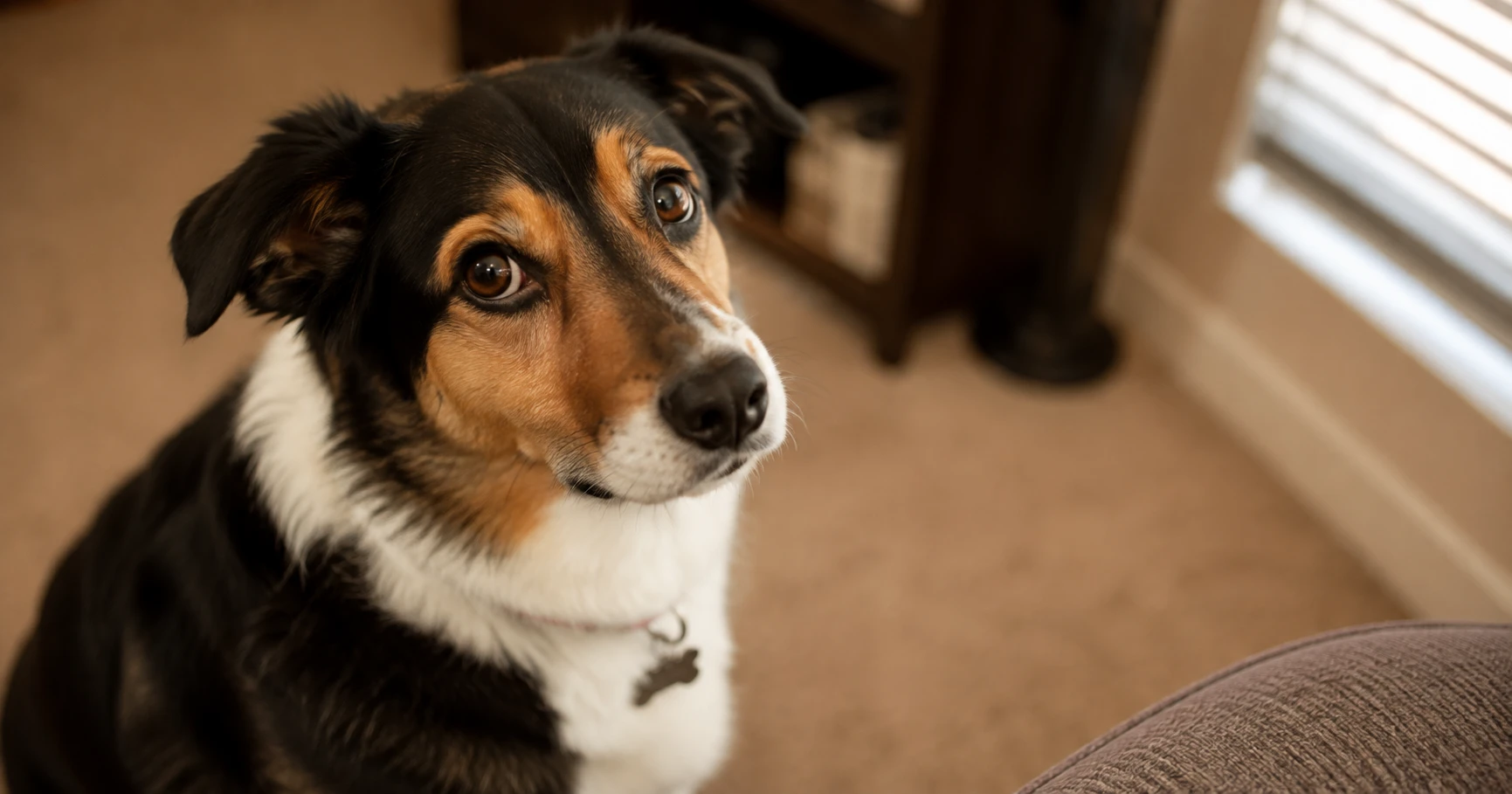
If you’ve ever caught your dog just… looking at you, unmoving, for what feels like an uncomfortably long time, you’re not imagining it. Dogs are one of the only species that seek out prolonged eye contact with humans specifically, and it’s not accidental — it’s a behavior that’s been shaped by thousands of years of living alongside us.
It’s mostly about bonding
A well-known 2015 study published in Science found that when dogs and their owners gazed into each other’s eyes, both showed a spike in oxytocin — the same hormone involved in parent-infant bonding in humans. Dogs that made more eye contact with their owners had bigger oxytocin increases, and the effect ran both ways: owners’ oxytocin rose too. Wolves, notably, don’t do this with humans, which suggests it’s a trait that emerged specifically through domestication.
In practice, this means a relaxed, soft stare — especially paired with a loose body, soft eyes, and maybe a slow tail wag — is usually your dog checking in, feeling close to you, or just enjoying being near you. It’s one of the more reliable signs of a secure, affectionate bond.
It can also mean “I want something”
Dogs are excellent readers of human attention, and they quickly learn that staring gets a response. If your dog stares at you right before mealtime, sits by the door and stares, or stares at your hand holding a treat, that’s learned, goal-directed behavior — not confusion or distress. This is the same mechanism that makes dogs stare at food on the counter: focused attention aimed at a specific outcome.
- Staring + sitting by the leash or door: probably wants a walk
- Staring + hovering near the food bowl: probably wants food
- Staring right after you say a command: may be confused or waiting for a cue you haven’t given yet
- Staring + a relaxed body, no tension: likely just affection or attentiveness
Dogs also stare to read your face
Dogs are remarkably good at reading human facial expressions and body language, arguably better than any other non-primate species. A prolonged stare is sometimes your dog actively trying to figure out your mood, whether you’re about to do something interesting (grab the leash, open a snack bag), or whether you’re upset with them. This is part of why dogs seem to “know” when you’re sad or stressed before you’ve said anything — they’re reading micro-expressions and posture, not just words.
When staring is a sign of tension, not affection
Context matters. A hard, unblinking stare paired with a stiff body, closed mouth, and forward-leaning posture is a very different signal than a soft, relaxed gaze. That kind of stare — sometimes called a “whale eye” when you can see the whites of the eyes — can be a warning sign of discomfort, guarding behavior (over food, a toy, or space), or anxiety. It’s worth taking seriously, especially around kids or unfamiliar dogs, because it can precede a growl or snap if the underlying tension isn’t addressed.
Could staring be a medical issue?
Occasionally, yes. A sudden change in staring behavior — especially blank, unfocused staring into space or at walls, disorientation, or staring that comes with confusion, pacing, or unusual vocalizing — can be associated with underlying issues like vision changes, cognitive decline in senior dogs, or in rare cases, a neurological event. This is different from the everyday, engaged staring described above. If the change is sudden and out of character, especially in an older dog, it’s worth a vet visit rather than assuming it’s behavioral.
Frequently asked questions
Should I stare back at my dog?
With your own dog, in a relaxed context, yes — soft mutual eye contact reinforces bonding. With unfamiliar dogs, avoid prolonged direct eye contact, since some dogs read it as a challenge or threat rather than affection.
Why does my dog stare at me while I eat?
This is almost always learned, goal-directed behavior: your dog has associated your eating with the possibility of getting food, either because it’s happened before or because the smell and activity are simply interesting. It’s not a sign of anything deeper than hopeful anticipation.
Why does my dog stare at nothing / at walls?
Occasional brief staring at a spot is often your dog noticing a sound, scent, or shadow you can’t perceive — dogs’ hearing and smell are far more sensitive than ours. Frequent, prolonged blank staring, especially in a senior dog, is worth mentioning to your vet, since it can sometimes be associated with cognitive changes.