
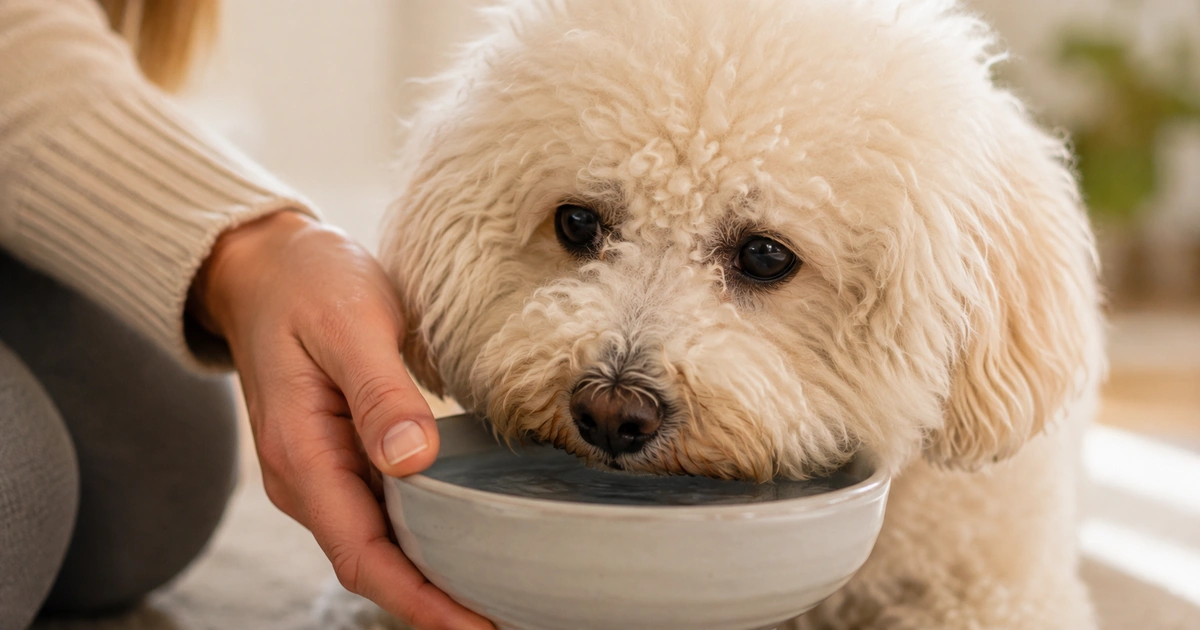
Dogs can’t tell you they’re thirsty in a way you’ll catch immediately, so dehydration often creeps up rather than announcing itself. The good news: there are a few reliable, easy-to-check signs you can look for at home.
The skin tent test
How to check
Gently pinch and lift a small fold of skin between your dog’s shoulder blades, then let go. In a well-hydrated dog, the skin should snap back into place almost immediately. If it springs back slowly, or stays tented for a moment before flattening, that’s a sign of reduced skin elasticity from dehydration. This isn’t a perfect test on its own — older dogs naturally have less elastic skin — but combined with other signs, it’s a genuinely useful quick check.
Gums tell you a lot, quickly
Healthy gums should feel moist and slippery, not dry or tacky (a slightly “sticky” texture when you touch them). Press a finger gently against the gum and release: color should return to pink within about 1–2 seconds (this is called capillary refill time). A longer refill time, along with dry or pale gums, points toward dehydration or, in more severe cases, other circulation-related concerns worth an urgent vet check.
Other physical signs to watch for
- Sunken eyes: a noticeably hollow appearance around the eyes compared to your dog’s normal look
- Lethargy or weakness: less interest in normal activity, seeming sluggish or unusually quiet
- Loss of appetite: dehydrated dogs often don’t want to eat, even food they’d normally be excited about
- Thick, ropey saliva or noticeably reduced saliva production
- Dry nose: a less reliable sign on its own (plenty of healthy dogs have naturally drier noses at times), but worth noting alongside other signs
- Panting more than usual without an obvious heat or exercise-related explanation
Who’s most at risk
Puppies and senior dogs dehydrate faster and are less able to compensate for fluid loss than healthy adult dogs. Dogs experiencing vomiting or diarrhea lose fluids rapidly and are at particular risk, as are dogs in hot weather, dogs with reduced water intake due to illness, and dogs with certain underlying conditions like kidney disease or diabetes that affect fluid regulation.
Seek vet care promptly if you see multiple signs together (tacky gums plus lethargy plus a slow skin tent), your dog has had ongoing vomiting or diarrhea, is refusing water entirely, or is a puppy, senior, or has an existing health condition and is showing any dehydration signs — these groups can decline faster than a healthy adult dog would.
What you can do at home for mild cases
For a dog showing only mild signs and otherwise acting normally, offering fresh water in small, frequent amounts (rather than letting them gulp a large volume at once, which can trigger vomiting) is a reasonable first step. If your dog won’t drink, is showing more than mild signs, or the cause is ongoing vomiting or diarrhea, it’s time to call your vet rather than waiting to see if home efforts work.
Dog Emergency & First Aid Guide
Knowing the signs is step one. This 18-page guide walks through exactly what to do for dehydration and 11 other real emergencies — plus a fillable card for your fridge.
$7 Get the Guide →Frequently asked questions
How quickly can a dog become dangerously dehydrated?
It varies with the cause and the dog, but a dog with ongoing vomiting and diarrhea, especially a puppy or small dog, can decline within just a matter of hours rather than days. This is part of why prompt vet attention matters more for this issue than a lot of other everyday symptoms.
Does a dry nose always mean dehydration?
No — nose moisture varies naturally throughout the day and isn’t a reliable standalone indicator. It’s worth noting alongside other signs, but a dry nose on its own, in a dog acting otherwise completely normal, usually isn’t cause for concern.
How much water should a healthy dog drink per day?
A commonly cited general guideline is roughly 1 ounce of water per pound of body weight per day, though this varies with activity level, diet (wet vs. dry food), and weather. If you’re noticing a significant, sudden change in how much your dog is drinking — much more or much less — that’s worth mentioning at your next vet visit regardless of dehydration signs.