
Pet Decoded
Join the Digest
  • Pet Decoded
  • Insurance
    • Healthy Paws
    • Lemonade
    • Spot
  • Dog Food
  • Gear
    • Leashes & Harnesses
    • Beds & Crates
    • Toys
    • Travel Gear
    • Grooming
  • Guides
    • Dog Cost CalculatorNew!
    • Behavior
    • Health
    • Training
    • Breeds & Lifestyle
    • Dog Walking
    • Subscription Boxes
    • Fresh Dog Food Delivery
  • About
  • Contact
  • Emergency Guide
Pet Decoded
  • Pet Decoded
  • Insurance
    • Healthy Paws
    • Lemonade
    • Spot
  • Dog Food
  • Gear
    • Leashes & Harnesses
    • Beds & Crates
    • Toys
    • Travel Gear
    • Grooming
  • Guides
    • Dog Cost CalculatorNew!
    • Behavior
    • Health
    • Training
    • Breeds & Lifestyle
    • Dog Walking
    • Subscription Boxes
    • Fresh Dog Food Delivery
  • About
  • Contact
  • Emergency Guide
Join the Digest
Pet Decoded
Pet Decoded
  • Pet Decoded
  • Insurance
    • Healthy Paws
    • Lemonade
    • Spot
  • Dog Food
  • Gear
    • Leashes & Harnesses
    • Beds & Crates
    • Toys
    • Travel Gear
    • Grooming
  • Guides
    • Dog Cost CalculatorNew!
    • Behavior
    • Health
    • Training
    • Breeds & Lifestyle
    • Dog Walking
    • Subscription Boxes
    • Fresh Dog Food Delivery
  • About
  • Contact
  • Emergency Guide
@2023 – All Right Reserved. Designed and Developed by PenciDesign
Why Does My Dog Sleep on My Feet?
Behavior

Why Does My Dog Sleep on My Feet?

by petdecoded August 31, 2026
written by petdecoded
Short answer: Sleeping on or touching your feet is a mix of security, warmth, and pack bonding — it puts your dog close to you (their safest point of reference) while still giving them room to move. Feet also carry a lot of your scent, which is comforting to a dog’s nose. It’s normal and not something you need to change unless it’s disrupting your sleep or your dog’s.

If your dog has claimed your feet as their personal pillow, you’re seeing one of the more common sleep-position preferences in domestic dogs — and it says more about comfort and trust than anything else.

It’s about safety and proximity

Wild canines sleep in groups for warmth and protection, with the most vulnerable members typically positioned toward the center of the pack. Sleeping against or on you mimics that arrangement — close enough to feel safe, without being fully underfoot in a way that limits movement. Feet specifically are an easy, low-commitment spot: close to you, but not requiring your dog to squeeze onto the couch or bed with you directly.

You’re the warmest, most familiar thing around

Dogs run a slightly higher body temperature than humans, but they still seek out warm bodies to sleep against, especially in a cool room. Feet, which tend to be a bit cooler than the rest of your body, are still a reliable, always-available heat source at floor level — particularly appealing to a dog who sleeps on the ground rather than a bed.

Scent plays a bigger role than you’d think

A dog’s sense of smell is many times more sensitive than a human’s, and feet carry a concentrated dose of your individual scent — sweat, skin oils, and everywhere you’ve walked that day. For a dog, that scent is deeply comforting and identifying; sleeping surrounded by it is a low-effort way to stay connected to you even while unconscious.

It can also be a learned habit

  • Started as a puppy: if your dog slept near your feet early on, the association between “near your feet” and “safe, comfortable sleep” is now well established
  • Reinforced by routine: dogs are creatures of habit, and once a sleep spot becomes “theirs,” they’ll gravitate back to it consistently
  • Positioned near an exit or vantage point: some dogs choose feet specifically because it’s near the door or gives a clear sightline to the room, satisfying a watchful instinct

When it’s worth changing

There’s no health reason to discourage this behavior in a healthy dog. It’s worth addressing only if it’s genuinely disrupting your sleep, causing tension with a partner who doesn’t want a dog in the bed, or if your dog becomes anxious or possessive (growling, stiffening) when you try to move — which would be a resource-guarding issue worth addressing separately from the sleeping-position itself.

If you want to shift the habit: provide a dedicated dog bed close to yours (not across the room, which can feel like too big a jump at first), and reward calm settling there consistently. Moving the spot gradually, rather than all at once, tends to stick better than an abrupt change.

Frequently asked questions

Is it bad to let my dog sleep in my bed?

Not inherently — it’s a personal preference issue more than a training or health issue for most dogs and owners. The main considerations are allergies, sleep quality for you, and whether your dog respects being moved without resource-guarding behavior.

Why does my dog only sleep touching me at night, not during the day?

Nighttime sleep tends to be longer and more vulnerable, so the instinct to stay close to a trusted person (or pack member) is often stronger then. Daytime naps are shorter and lighter, so proximity may matter less to your dog in that context.

Why has my dog stopped sleeping near me?

A sudden change in sleep location can be behavioral (a new pet, a stressful change, temperature shifts) or medical (joint pain making it harder to get into a preferred spot, or general discomfort). If it’s sudden and your dog seems otherwise off, a vet check is a reasonable first step.
Related reading

If closeness at bedtime seems connected to bigger attachment patterns, why dogs follow their owners everywhere covers the daytime version of the same bond.

August 31, 2026 0 comments
0 FacebookPinterestEmail
How Much Exercise Does a Lab, Golden, or Frenchie Actually Need?
Breeds & Lifestyle

How Much Exercise Does a Lab, Golden, or Frenchie Actually Need?

by petdecoded August 29, 2026
written by petdecoded
Short answer: Exercise needs vary enormously by breed, and treating all dogs like they need the same daily walk is a common mistake. A Labrador or Golden Retriever generally needs 60–90 minutes of real activity a day, while a French Bulldog’s needs are much lighter (20–30 minutes, and heat-sensitive) due to their brachycephalic build. Matching the breed’s actual needs, not a generic guideline, is what prevents both boredom-driven behavior issues and overexertion.

“Dogs need a walk a day” is true but not remotely specific enough to be useful — the actual range across common breeds is huge, and getting it wrong in either direction causes real problems.

Exercise needs by breed

BreedDaily exerciseNotes
Labrador Retriever60–90 minHigh energy, needs both physical exercise and mental stimulation; prone to weight gain if under-exercised
Golden Retriever60–90 minSimilar profile to Lab; enjoys swimming, fetch, and varied activity
French Bulldog20–30 minBrachycephalic build means real heat and overexertion risk — short, cool-weather walks, never intense exercise in heat
Border Collie90+ min, plus mental workOne of the highest-energy breeds; under-exercised Border Collies commonly develop serious behavior issues
Beagle45–60 minModerate-high energy, strong scent drive means secure areas matter for off-leash time
Bulldog (English)20–30 minSimilar brachycephalic heat sensitivity to the Frenchie; short, gentle activity
Australian Shepherd90+ min, plus mental workHigh-drive herding breed; needs a job or structured activity, not just a walk
Cavalier King Charles Spaniel30–45 minModerate needs, adaptable to lower-activity households

Why getting this wrong causes real problems

An under-exercised high-energy dog (a Border Collie getting a 20-minute walk, for instance) commonly channels that unused energy into destructive chewing, excessive barking, or restlessness that owners often misread as a training or temperament problem rather than an unmet exercise need. On the flip side, over-exercising a brachycephalic breed like a French Bulldog or English Bulldog, especially in heat, poses a genuine overheating risk given their compromised airway anatomy.

Mental stimulation counts too

For working and herding breeds especially, physical exercise alone often isn’t enough — puzzle toys, training sessions, scent work, and structured “jobs” address a different kind of need that a straightforward walk doesn’t fully satisfy. A tired body and an under-stimulated mind can still add up to a restless, difficult-to-manage dog.

Age changes the equation too. Puppies need shorter, more frequent activity (over-exercising a growing puppy, especially on hard surfaces, can stress developing joints), and senior dogs often need adjusted, gentler routines as mobility changes — breed guidelines are a starting point, not a fixed rule across a dog’s whole life.

Frequently asked questions

Can I over-exercise my dog?

Yes, especially puppies (whose growth plates are still developing) and brachycephalic breeds (whose airways limit heat dissipation) — matching intensity and duration to your specific dog’s breed, age, and health status matters, not just hitting a generic daily minute count.

Is a walk enough exercise for a high-energy breed?

Often not on its own — high-drive breeds like Border Collies and Australian Shepherds typically need more intense activity (running, fetch, agility-style play) and mental engagement beyond a leisurely walk to genuinely meet their needs.

Related reading

Choosing a breed with realistic exercise needs for your lifestyle starts with our guide to best dogs for first-time owners. For toys that add mental stimulation, see our dog toys guide, or browse all Breeds & Lifestyle articles.

August 29, 2026 0 comments
0 FacebookPinterestEmail
How to Stop a Dog from Jumping on Guests
Training

How to Stop a Dog from Jumping on Guests

by petdecoded August 28, 2026
written by petdecoded
Short answer: Jumping is almost always an attention-seeking greeting behavior, and it works — guests react, touch, or talk to a jumping dog far more often than they’d think, which reinforces it every single time. The fix is consistency: attention only comes when all four paws are on the floor, and guests need to be briefed on the rule too, since one exception undoes a lot of progress.

Jumping is one of those behaviors that persists specifically because it works so well — dogs are excellent at reading that jumping gets a reaction, and most guests, even ones who claim to hate it, end up giving some kind of response.

Why jumping is so persistent

From a dog’s perspective, jumping up gets them closer to a person’s face (where the most interesting information — scent, expression — lives) and reliably triggers some kind of reaction, even a startled “oh!” or a hand pushing them away. Both count as attention from a dog’s point of view, which means even a negative-seeming reaction can accidentally reinforce the behavior rather than discourage it.

The four-on-the-floor method

1. Withhold all attention the instant paws leave the ground

No eye contact, no talking, no pushing away (pushing is still touch, which still counts as attention to a dog). Turn away or step back, calmly and without drama.

2. Reward and greet the moment all four paws are down

The instant your dog is back on the ground, deliver calm praise, attention, or a treat. This is the actual teaching moment — it clearly rewards the behavior you want instead of just punishing the one you don’t.

3. Practice with low-stakes “guests” first

Rehearse the greeting with people your dog already knows well before expecting it to hold up with excited new visitors, which is a much higher-arousal, harder-to-manage scenario. Build the skill in easy conditions first.

4. Brief real guests on the rule before they arrive

Ask visitors specifically to ignore your dog completely (no touching, talking, or eye contact) until all four paws are on the floor. One well-meaning guest who pets a jumping dog “just this once” can meaningfully set back weeks of consistent training.

Managing the environment while training

  • A leash at the door gives you physical control during the highest-arousal moment (someone arriving) without needing to rely purely on verbal cues
  • Teaching an alternative behavior (sit, or going to a mat) gives your dog something specific to do instead of jumping, which tends to work better than just suppressing the jump with no replacement
  • Managing your dog’s excitement level before guests arrive (a walk beforehand, calm settling time) can reduce the overall arousal that fuels jumping in the first place
Consistency across everyone in the household matters. If one family member allows jumping while another discourages it, the mixed signal significantly slows progress — the whole household (and regular guests) need to be on the same page for this to work reliably.

Frequently asked questions

Is it okay to knee my dog in the chest to stop jumping?

This older method isn’t generally recommended — it can cause injury, doesn’t teach an alternative behavior, and can create fear or a negative association with greetings rather than solving the underlying attention-seeking motivation.

Why does my dog only jump on certain people?

Often it’s about who reacts — if certain people consistently give attention (even scolding attention) when your dog jumps, that person becomes a more reliably reinforced jumping target than someone who’s been trained to ignore it.

Related reading

Managing excitement around visitors pairs well with broader impulse control work — see our clicker training for beginners guide for a foundational tool that helps across many behaviors, and teaching recall for a related impulse-control skill, or browse all Training articles.

August 28, 2026 0 comments
0 FacebookPinterestEmail
Can Dogs Eat Eggs
Health

Can Dogs Eat Eggs?

by petdecoded August 26, 2026
written by petdecoded
Short answer: Yes, cooked eggs are a genuinely good, protein-rich treat for most dogs, and plenty of dog food brands include egg as an ingredient specifically for its nutritional value. Cook them plain (no butter, salt, onion, or garlic) and serve in moderation as a treat or food topper, not a daily main course.

Eggs are one of the more nutritionally solid “human foods” you can actually feel good about sharing, as long as you keep the preparation simple.

Why eggs are actually a good choice

Eggs are a complete protein source, meaning they contain all the essential amino acids a dog needs, along with vitamins like B12 and riboflavin, and minerals including selenium. This is exactly why you’ll find eggs listed as an ingredient in a fair number of quality commercial dog foods — it’s a genuinely nutrient-dense addition, not just a novelty treat.

How to serve them safely

  • Cook them plain: scrambled or hard-boiled, with no butter, oil, salt, onion, or garlic added
  • Skip raw eggs: raw eggs carry a real (if generally low) salmonella risk, and raw egg whites contain avidin, which can interfere with biotin absorption over time if fed frequently
  • Let them cool before serving, and cut or mash into a size appropriate for your dog
  • Introduce gradually if it’s new to your dog’s diet, watching for any digestive upset

How often is reasonable

An egg or two a week, used as a treat or food topper rather than a daily staple, is a reasonable guideline for most healthy adult dogs. Dogs with certain health conditions (pancreatitis, egg allergies, or specific dietary restrictions from a vet) may need to avoid eggs entirely, so it’s worth checking with your vet if your dog has any known condition before adding them regularly.

Frequently asked questions

Can dogs eat eggshells?

Crushed, finely ground eggshell is sometimes used as a calcium supplement in homemade diets, but it should only be added under veterinary or nutritionist guidance for balance — whole or large shell pieces pose a choking and digestive risk and shouldn’t be fed as-is.

Are eggs a good option for dogs with upset stomachs?

Plain scrambled or boiled egg is sometimes used as a bland, easily digestible option alongside plain rice for a dog recovering from mild digestive upset, though it’s worth confirming with your vet for anything beyond a one-off mild case.

Related reading

For a full picture of what’s safe and what’s not, see our complete guide to foods toxic to dogs. See also can dogs eat cheese, can dogs eat apples, or browse all Health & Safety articles.

August 26, 2026 0 comments
0 FacebookPinterestEmail
Why Does My Dog Eat Poop?
Behavior

Why Does My Dog Eat Poop?

by petdecoded August 24, 2026
written by petdecoded
Short answer: Eating poop — called coprophagia — is surprisingly common in dogs and is usually behavioral rather than a sign of a medical problem or nutrient deficiency, despite that being the most popular theory among owners. It can stem from instinct, boredom, attention-seeking, or simply exploring the world with their mouth. It’s unpleasant but rarely dangerous on its own, though it can occasionally transmit parasites.

Coprophagia is one of the more universally unpopular dog behaviors, but it’s also one of the most common — large surveys of dog owners consistently find that a meaningful percentage of dogs engage in it at least occasionally, which suggests it’s within the range of normal (if gross) canine behavior rather than a rare abnormality.

It can be rooted in instinct

Mother dogs instinctively clean up after their puppies, including consuming their waste, both for den hygiene and to reduce the scent trail that could attract predators to a vulnerable litter. Puppies also sometimes investigate and mouth everything in their environment, including feces, simply as part of normal exploratory behavior. Some of this instinct can carry into adulthood, especially in dogs that were never firmly redirected away from it as puppies.

The nutrient-deficiency theory is mostly overstated

A common belief is that dogs eat poop because they’re missing something in their diet — digestive enzymes, specific nutrients — and are trying to “recapture” it. While this can theoretically play a role in rare cases involving a genuine malabsorption issue or an underlying digestive condition, most dogs that eat poop are otherwise healthy and eating a complete, balanced diet. It’s a popular explanation more because it’s intuitive than because it’s well-supported for the average case.

More common behavioral reasons

  • Boredom or under-stimulation: a dog left alone in a yard for long stretches with little to do may start investigating (and eating) whatever’s available
  • Attention-seeking: if a dog has learned that eating poop gets an immediate, dramatic reaction from you, that reaction — even negative — can reinforce the behavior
  • Anxiety, especially around punishment history: dogs that have been harshly punished for house-training accidents sometimes learn to eat the evidence to avoid a negative reaction, which is a genuinely counterproductive side effect of punitive housetraining
  • Simple opportunism: some dogs will eat almost anything they find on a walk, and stool is just one more thing in that category for certain individual dogs
  • Eating a cat’s litter box waste: a very common specific version of this, often driven by the higher protein content of cat food showing up in cat feces, which some dogs find appealing

How to actually reduce it

Punishment after the fact doesn’t work well for this behavior — by the time you catch your dog, the connection between the correction and the act is already lost, and it can backfire into the anxiety-driven version above. What tends to work better: cleaning up your yard promptly so there’s less opportunity, keeping your dog on a leash or under closer supervision during walks and yard time, teaching and rewarding a solid “leave it” cue, ensuring your dog is getting enough physical and mental stimulation, and making a cat’s litter box inaccessible if that’s the specific trigger.

A real health note: eating feces — especially from other animals or unfamiliar dogs — can transmit intestinal parasites. If your dog does this regularly, keep them current on parasite prevention and mention the behavior to your vet at your next checkup.

Frequently asked questions

Is eating poop dangerous for dogs?

It’s unpleasant but generally not acutely dangerous for a healthy dog with up-to-date parasite prevention. The main risk is exposure to intestinal parasites or, less commonly, bacteria, particularly if the stool is from an unfamiliar animal.

Do puppies grow out of eating poop?

Many do, especially if it’s redirected consistently and isn’t reinforced by attention. Some dogs continue the behavior into adulthood if it becomes a habit, which is why early, calm redirection tends to work better than waiting for it to resolve on its own.

Will changing my dog’s food stop them from eating poop?

It can help in the rare cases where a genuine digestive or absorption issue is the driver, but for most dogs it’s a behavioral habit that diet changes alone won’t fix. A vet visit can help rule out a medical cause before you spend money on specialty food marketed to solve it.

Related reading

If digestive health is a concern, our guide to picking the right food by life stage covers what to look for, and unexpected vet visits are exactly what pet insurance is designed to soften the cost of.

August 24, 2026 0 comments
0 FacebookPinterestEmail
Best Family Dogs with Kids
Breeds & Lifestyle

Best Family Dogs with Kids

by petdecoded August 22, 2026
written by petdecoded
Short answer: Breed matters, but supervision and training matter more — even famously gentle breeds can bite if a child’s behavior isn’t managed appropriately, and even less “typical” family breeds can be wonderful with kids given proper socialization. That said, Labrador and Golden Retrievers, Beagles, and Bernese Mountain Dogs have consistently strong reputations for patience and gentleness specifically around children.

Breed reputation is a real, useful signal, but it’s incomplete on its own — how a dog is raised, trained, and supervised around kids matters just as much as which breed you choose.

Breeds with strong family reputations

Labrador Retriever

Consistently ranks as one of the most kid-friendly breeds — patient, sturdy enough to handle boisterous play, and generally tolerant temperament. Their high energy means they also need genuine daily exercise to stay well-balanced in a busy household.

Golden Retriever

Gentle, patient, and eager to be part of family activities, with a temperament well-suited to households with young kids. Regular grooming is part of the deal with their coat.

Beagle

Friendly, sturdy, and generally good-natured with children, though their strong scent-driven instincts mean recall training and secure fencing are worth extra attention.

Bernese Mountain Dog

Gentle giants with a calm, patient temperament well-suited to family life, though their large size means even friendly enthusiasm can be a lot for a very young child, and their shorter lifespan and higher health-cost profile are worth researching.

What matters more than breed alone

  • Early socialization with children specifically, ideally starting in puppyhood, builds comfort and predictable behavior around kids
  • Teaching kids appropriate interaction (no ear/tail pulling, respecting a dog’s space while eating or resting, recognizing stress signals) prevents most bite incidents, regardless of breed
  • Never leaving young children and dogs unsupervised, even with a breed known for gentleness — this is the single biggest factor in preventing incidents across all breeds
  • Matching energy level to your household’s pace so the dog’s needs are realistically met alongside the demands of raising kids
Any dog can bite under the wrong circumstances. Breed reputation reflects general tendencies, not guarantees — a well-socialized, well-supervised dog of a “less typical” family breed is often a safer bet than an untrained, unsupervised dog of a famously gentle one.

Frequently asked questions

Are small dogs good with kids?

It varies by individual temperament and breed more than size alone — some small breeds are patient and sturdy, while others can be more easily startled or injured by rough play, which is worth researching for the specific breed you’re considering.

What age should kids be before getting a family dog?

There’s no strict cutoff, but younger children generally need more direct, constant supervision around any dog, while older kids who can reliably follow interaction guidelines add less risk to the equation — family readiness matters as much as a specific age.

Related reading

See our full guide to best dogs for first-time owners for more on matching a breed to your household, and exercise needs by breed for keeping an active family dog well-balanced, or browse all Breeds & Lifestyle articles.

August 22, 2026 0 comments
0 FacebookPinterestEmail
How to Stop Leash Pulling
Training

How to Stop Leash Pulling

by petdecoded August 21, 2026
written by petdecoded
Short answer: Leash pulling gets reinforced almost by accident — your dog pulls, and the walk keeps moving forward, which teaches them that pulling works. The most effective fix is the “be a tree” method: stop moving the instant the leash goes tight, and only move again once there’s slack, which removes the reward for pulling without any harsh correction.

Leash pulling is one of the most common training complaints, and also one of the more fixable ones, because the underlying mechanism is refreshingly simple once you see it.

Why dogs pull in the first place

Dogs are naturally faster walkers than most humans and are highly motivated by what’s ahead — a smell, another dog, an interesting patch of grass — so pulling toward it is the default behavior without training otherwise. The critical detail: every time your dog pulls and the walk continues forward anyway, that’s an accidental reward, reinforcing exactly the behavior you don’t want.

The “be a tree” method

1. Stop the instant the leash goes tight

The moment you feel tension on the leash, stop walking completely — plant your feet, don’t move forward even an inch. Don’t yank back or say anything yet; just stop.

2. Wait for slack, then move again

Stand still until your dog either turns back toward you or the leash slackens on its own (often out of curiosity about why you stopped). The instant there’s slack, resume walking. This is the entire mechanism: forward motion only happens on a loose leash, never a tight one.

3. Reward position near you, not just the stop

Occasionally reward your dog with a treat when they’re walking in a good position near you, not just after a stop-and-slack cycle. This reinforces the position you want proactively, rather than only reacting to pulling after the fact.

4. Expect a LOT of repetitions early on

The first few walks using this method can involve stopping dozens of times in a short distance, which is completely normal and not a sign it’s not working — consistency is what makes the pattern click. Most dogs show real improvement within 1–2 weeks of consistent practice, faster with more frequent short sessions than infrequent long ones.

Equipment can help, but isn’t a substitute for training

  • Front-clip harnesses redirect a pulling dog’s momentum sideways rather than letting them drive forward with full body weight, making pulling less physically rewarding while you train
  • Avoid retractable leashes during training — they don’t provide the consistent tension feedback the stop-and-reset method relies on
  • A standard 4–6 foot leash gives you the control and consistency this method needs
What to avoid: yanking the leash sharply or using a shock collar as a first-line approach — these can suppress pulling temporarily through discomfort rather than teaching your dog what to do instead, and can create negative associations with walks generally.

Frequently asked questions

How long does it take to stop a dog from pulling?

With consistent practice, most dogs show meaningful improvement within a few weeks, though full reliability, especially around high-distraction environments, often takes longer and benefits from continued reinforcement even after the initial improvement.

Do harnesses make pulling worse?

Standard back-clip harnesses can actually make pulling more comfortable for a dog (similar to sled dog gear), which is why front-clip harnesses, which redirect pulling sideways, are generally recommended specifically for dogs learning loose-leash walking.

Is it normal for puppies to pull more than adult dogs?

Yes, puppies have less impulse control and haven’t yet learned leash manners, so more frequent pulling and more repetitions of the stop-and-reset method are expected and normal at this stage.

Related reading

Loose-leash walking pairs well with teaching a reliable recall for off-leash situations later on. For the right harness to pair with training, see our leashes and harnesses guide, or browse all Training articles.

August 21, 2026 0 comments
0 FacebookPinterestEmail
Health

Can Dogs Eat Peanut Butter?

by petdecoded August 19, 2026
written by petdecoded
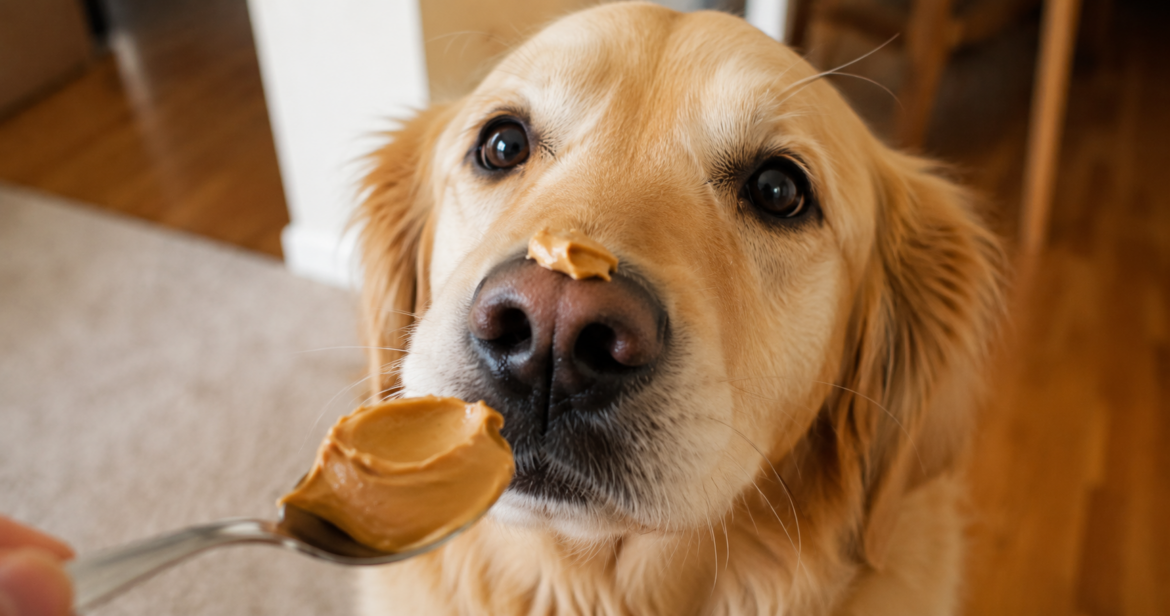
Short answer: Yes, plain peanut butter is safe for most dogs in moderation and is a popular way to hide pills or stuff a puzzle toy. The real danger isn’t the peanut butter itself — it’s xylitol, a sugar substitute increasingly used in “natural” and sugar-free peanut butter brands, which is highly toxic to dogs. Always check the ingredient label before sharing, every time, even if you’ve used that brand safely before.

Peanut butter has become such a default dog treat that it’s easy to stop reading the label — which is exactly the habit worth breaking, since manufacturers have quietly added xylitol to more products over the past several years.

Plain peanut butter: genuinely fine, and has some upsides

Peanuts themselves aren’t toxic to dogs, and peanut butter delivers protein and healthy fats in a texture dogs love, which is exactly why it’s a go-to for pilling a dog or filling a puzzle toy. Look for a short, simple ingredient list: peanuts, maybe salt, maybe a small amount of oil. That’s the version worth keeping in the pantry.

The xylitol problem, explained

Xylitol is a sugar alcohol used as a low-calorie sweetener, and it’s shown up in a growing number of “natural,” “keto,” or reduced-sugar peanut butter brands as manufacturers reformulate for human dietary trends — with little regard for the fact that it’s genuinely dangerous to dogs. In dogs, xylitol triggers a rapid insulin release that can cause a dangerous blood sugar crash, and in larger amounts, liver failure. This is a real and growing risk specifically because it keeps appearing in products people don’t expect it in.

How to actually check before sharing

  • Read the full ingredient list every time, even for a brand you’ve used before — formulations change without much fanfare
  • Watch for “xylitol” specifically on the label, sometimes listed under “sugar alcohol” more generically
  • Be extra cautious with anything marketed as “sugar-free,” “natural,” “diet,” or “keto” — these are the categories most likely to contain xylitol
  • Consider a dog-specific peanut butter if you want to remove the guesswork entirely — several brands make xylitol-free peanut butter specifically formulated for dogs
If your dog eats xylitol-containing peanut butter: this is an emergency, not a wait-and-see situation. Call your vet, an emergency animal hospital, or a poison control hotline (ASPCA: 888-426-4435) immediately. Symptoms can develop within 30–60 minutes and include weakness, vomiting, and disorientation.

Moderation still matters, even with safe peanut butter

Peanut butter is calorie-dense and often high in fat, so it’s best used as an occasional treat or training reward rather than a regular part of a dog’s diet — too much, too often, can contribute to weight gain or, in sensitive dogs, an upset stomach. A small dollop in a puzzle toy or a thin smear on a pill goes a long way.

Frequently asked questions

How much peanut butter can I give my dog?

As an occasional treat, a teaspoon or so for a small dog and up to a tablespoon for a larger dog is a reasonable general guideline, though it should stay occasional rather than a daily habit given the fat and calorie content.

Is crunchy or smooth peanut butter better for dogs?

Either is generally fine ingredient-wise; smooth is often preferred for stuffing puzzle toys since it’s easier to work into small spaces, while crunchy poses a very minor extra choking consideration for dogs that gulp food quickly.

Can puppies eat peanut butter?

Yes, in small amounts, following the same xylitol-check rule as adult dogs. Introduce any new food gradually and in small quantities to watch for individual sensitivity, as with any new treat for a puppy.

Related reading

Peanut butter is just one item on a longer list — our complete guide to foods toxic to dogs covers the rest of what to keep out of reach. See also can dogs eat eggs, can dogs eat bananas, or browse all Health & Safety articles.

August 19, 2026 0 comments
0 FacebookPinterestEmail
Why Does My Dog Lick Me So Much Kimura
Behavior

Why Does My Dog Lick Me So Much?

by petdecoded August 17, 2026
written by petdecoded
Short answer: Licking is one of the main ways dogs communicate and bond — it releases endorphins for the dog and often starts as instinctive behavior carried over from puppyhood grooming and nursing. Most licking is affection, taste, or attention-seeking. Sudden or excessive licking, especially of surfaces or the air rather than people, can occasionally signal nausea, anxiety, or a compulsive behavior worth mentioning to your vet.

Dog kisses are one of those things owners either love or find a little much — but either way, the behavior itself is worth understanding, because “my dog licks me” covers a range of very different underlying reasons.

It starts as instinct from puppyhood

Puppies lick their mother’s face to stimulate her to regurgitate food (an instinct inherited from wild canines) and are groomed by licking from birth. That early wiring doesn’t disappear in adulthood — licking stays associated with closeness, care, and social bonding throughout a dog’s life, which is a big part of why it gets redirected toward you.

It’s a bonding and calming behavior

Licking triggers the release of endorphins in dogs, which has a mild calming, pleasurable effect — not unlike how humans might find a repetitive, soothing action relaxing. Licking you specifically can be your dog’s way of expressing affection, seeking closeness, and self-soothing all at once, especially if it happens during calm moments like cuddling on the couch.

You probably just taste interesting

Dogs have an extraordinarily sensitive sense of smell and taste compared to humans, and your skin carries salt, oils, and traces of whatever you’ve been doing that day. Hands especially — if you’ve been cooking, eating, or handling anything food-related — are a common target simply because there’s something worth investigating there.

It’s often a learned attention-getter

If licking has ever gotten a reaction from you — a laugh, a scratch behind the ears, even just eye contact — your dog has learned that it works. Dogs are quick studies of what gets a response, and licking is a low-cost, high-reward behavior to keep in the toolkit for getting your attention when they want it.

  • Licking during cuddles/calm time: almost always affection and bonding
  • Licking your hands after cooking/eating: taste-driven, purely opportunistic
  • Licking that starts the moment you stop paying attention: learned attention-seeking
  • Licking that’s frantic, repetitive, or directed at the air/surfaces: worth a closer look (see below)

When licking points to something else

Occasionally, excessive licking is a sign of stress, anxiety, or nausea rather than affection. Dogs experiencing nausea will sometimes lick their lips, the air, or nearby surfaces repeatedly — a behavior that looks superficially similar to affectionate licking but has a different rhythm and intensity, and usually isn’t directed specifically at a person. Anxious dogs may also develop excessive self-licking (of their own paws or body) as a stress-relief or compulsive behavior, which is different from licking you.

When to check with your vet: licking that’s sudden, frantic, directed at the air or empty surfaces, paired with lip-smacking, drooling, or a lack of appetite, or excessive self-licking on paws/skin that leaves the fur damp or irritated. These patterns are more consistent with nausea, pain, or anxiety than affection.

Frequently asked questions

Should I let my dog lick my face?

It’s mostly a matter of personal preference and hygiene rather than a safety issue for most healthy people — a dog’s mouth isn’t dramatically “cleaner” or “dirtier” than a human’s, just different. If you’d rather redirect it, calmly turning your head and offering a hand instead, paired with consistent redirection over time, works better than scolding.

Why does my dog lick my feet specifically?

Feet carry a concentrated amount of scent and sweat, which makes them especially interesting to a dog’s nose. It’s usually the same taste/scent-driven curiosity as licking hands, just aimed at a body part with more to investigate.

Why does my dog lick me right before bed?

This is commonly a calming, bonding ritual — similar to how some dogs circle before lying down. It’s often paired with settling in for the night and is generally nothing to worry about if your dog seems relaxed rather than agitated while doing it.

Related reading

Curious what else counts as normal affection versus a sign of stress? Check out why dogs follow their owners everywhere — licking and shadowing often show up together in especially bonded dogs.

August 17, 2026 0 comments
0 FacebookPinterestEmail
Best Apartment Dogs
Breeds & Lifestyle

Best Apartment Dogs

by petdecoded August 11, 2026
written by petdecoded
Short answer: Size is a poor predictor of whether a breed does well in an apartment — a Greyhound (large, but famously low-energy indoors) often does better than a small, high-strung terrier that barks constantly. What actually matters is energy level, noise tendency, and how well a breed’s needs can be met without a yard. French Bulldogs, Cavalier King Charles Spaniels, Greyhounds, and Basset Hounds are consistently strong apartment fits.

The “small dog = apartment dog” assumption trips up a lot of first-time renters. The real predictors are energy level and how vocal a breed tends to be, not how much floor space they take up lying down.

How we put this list together: we cross-referenced breed temperament data from AKC and veterinary behavior sources against real apartment-owner reports — not just “small dog” lists, which miss the energy and noise factors that actually determine whether a dog and its neighbors are happy. We weighted exercise needs, alert-barking tendency, and tolerance for alone time, since those three factors matter more in shared-wall living than raw size.

What actually predicts apartment success

  • Energy level relative to what you can provide: a high-energy breed can do fine in an apartment with a truly committed exercise routine, but it’s a bigger daily obligation than a naturally lower-energy dog
  • Barking tendency: breeds prone to alert barking or vocalizing at every hallway sound are a real neighbor-relations consideration in shared-wall living
  • Tolerance for being alone for stretches: apartment living often means less immediate outdoor access, so a dog that handles solo time reasonably well is a practical asset

Breeds that tend to do well

French Bulldog

Low-to-moderate exercise needs and a generally calm indoor demeanor make Frenchies a popular apartment choice. Their brachycephalic (flat-faced) build means heat sensitivity and breathing considerations are worth researching before committing to the breed generally.

Greyhound

Genuinely surprises people — despite their size, retired racing Greyhounds especially are famously low-key indoors, often described as “45-mph couch potatoes.” A daily walk or two meets their needs; they’re not a high-maintenance apartment tenant.

Cavalier King Charles Spaniel

Small, affectionate, and adaptable, with moderate exercise needs that fit well into apartment routines. Generally not a heavy barker, which helps with shared-wall living.

Basset Hound

Low energy and content with modest daily exercise, though their vocal tendencies (baying, not just barking) are worth being aware of for close-quarter neighbors.

Whippet

A smaller cousin of the Greyhound with the same surprising couch-potato streak — short bursts of energy followed by long stretches of calm. Generally quiet indoors and easy on neighbors, though they’re sensitive to cold and don’t love being left alone for very long stretches.

Boston Terrier

Compact, generally low-to-moderate energy, and not typically a heavy barker — a solid fit for smaller units. Like other flat-faced breeds, heat and exercise intensity need to be managed carefully.

Breeds that are trickier in an apartment

High-energy working and herding breeds (Border Collies, Australian Shepherds), breeds with strong alert-barking instincts (many terriers, some guardian breeds), and very large breeds with significant daily exercise requirements can all work in an apartment with real dedication, but they ask more of an owner in that setting than the breeds above. This isn’t a hard no — plenty of Border Collies live happily in apartments with owners who commit to serious daily exercise and mental enrichment — but it’s a bigger daily obligation than choosing a breed that’s naturally suited to less space.

Check your building’s specific rules. Many apartments have breed or weight restrictions, so confirm what’s actually allowed before falling in love with a specific breed — this varies a lot by building and isn’t always intuitive.

Frequently asked questions

Can large dogs live happily in apartments?

Yes, if their energy level is manageable and their exercise needs are genuinely met — several large breeds (Greyhounds, many mastiff-type breeds) are actually lower-energy indoors than some small, high-strung breeds.

How much exercise does an apartment dog need?

It depends entirely on the breed, not the living situation — a low-energy breed might be well served by 30–45 minutes a day, while a higher-energy breed in the same apartment would need considerably more to avoid boredom-driven behavior issues.

What breeds should I generally avoid in a small apartment?

Breeds bred for all-day physical work — Border Collies, Australian Shepherds, and similar herding or working breeds — tend to struggle most without a serious daily exercise commitment, since under-stimulation in these breeds often shows up as destructive or anxious behavior rather than just restlessness.

Is a puppy or an adult dog easier in an apartment?

An adult dog is usually the easier apartment choice, since you can see its actual energy level and temperament before bringing it home rather than guessing at how a puppy will turn out. If you do go the puppy route, look closely at the breed’s adult energy level, not just how calm the puppy seems now.

Do apartment dogs need a yard to be happy?

No — a yard is a convenience, not a requirement. Dogs generally need walks, mental stimulation, and social time regardless of whether they have yard access; a well-exercised apartment dog is often better off than a yard dog who’s let outside but not actually walked or engaged with.

How do I check whether my building allows a specific breed?

Ask your leasing office directly for the property’s written pet policy before you commit to a breed — weight limits and breed restrictions are common, vary widely between buildings, and are usually easier to confirm upfront than to work around after the fact.

Related reading

Curious about shedding too? See our guide to low-shedding breeds that actually exist. For exercise needs by breed, see our exercise guide, or browse all Breeds & Lifestyle articles.

August 11, 2026 0 comments
0 FacebookPinterestEmail
Low-Shedding Dog Breeds That Actually Exist
Breeds & Lifestyle

Low-Shedding Dog Breeds That Actually Exist (The Doodle Truth)

by petdecoded August 10, 2026
written by petdecoded
Short answer: No dog breed is truly non-shedding or fully hypoallergenic — all dogs produce some dander, which is the actual allergen for most people, not just loose fur. That said, breeds with curly or wiry, continuously growing coats (Poodles, many terriers) shed dramatically less visible hair than double-coated breeds, and matter for allergy sufferers more than the “doodle” label alone, which varies a lot depending on which parent’s coat type a given puppy inherits.

“Hypoallergenic dog” is one of the most persistently oversold claims in the pet world, and it’s worth untangling the marketing from the actual biology before choosing a breed for allergy reasons.

How we picked these breeds: we focused on breeds with a genuinely different coat structure — curly, wiry, or continuously growing hair that behaves more like human hair than a typical shedding double coat — rather than breeds that are simply marketed as “hypoallergenic” without a real biological reason behind the claim. Every breed below still requires real grooming maintenance in exchange for the lower shedding, which is worth factoring into the decision alongside the allergy question.

Why “hypoallergenic” is misleading

Most dog allergies are actually a reaction to dander (dead skin cells), saliva, and urine proteins, not just loose fur itself — all dogs produce dander, full stop. What genuinely varies between breeds is how much of that dander and hair ends up airborne or on surfaces, which is why low-shedding coats can meaningfully reduce allergen exposure without eliminating it, and why some allergic people react differently to different individual dogs regardless of “hypoallergenic” branding.

Breeds that genuinely shed less

Poodle (all sizes)

The gold standard for low-shedding coats — curly, continuously growing hair (more like human hair than typical dog fur) that traps loose hair rather than releasing it, though this does mean regular grooming and haircuts are necessary maintenance, not optional.

Portuguese Water Dog

Similar curly, low-shedding coat to the Poodle, with a friendly, energetic temperament. Also requires regular grooming to manage the coat properly.

Wire Fox Terrier and other wire-coated terriers

Wiry coats shed less visibly than typical double coats, though periodic hand-stripping or professional grooming is often needed to maintain the coat’s texture and reduce what shedding does occur.

Bichon Frise

Curly, dense coat that sheds minimally, popular specifically for allergy-conscious households, with regular grooming as an ongoing commitment.

Schnauzer (Miniature, Standard, or Giant)

A wiry, double-layered coat that sheds minimally compared to most breeds, available across three sizes to fit different living situations. Like other wire coats, periodic hand-stripping or clipping is part of the maintenance routine, not optional upkeep.

Soft Coated Wheaten Terrier

A single-layer, silky coat (unlike most terriers’ wiry double coats) that sheds minimally and is often well tolerated by mild allergy sufferers, though the coat requires regular brushing to prevent matting and periodic trims to manage length.

The doodle truth

“Doodle” breeds (Labradoodles, Goldendoodles, and similar crosses) are bred by mixing a Poodle with another breed, hoping to combine temperament traits with the Poodle’s low-shedding coat — but coat inheritance in a first-generation cross is genuinely unpredictable, and not every doodle actually gets the Poodle-type coat. Multi-generation breeding (doodle x doodle, selected for coat type over generations) improves the odds of a consistently low-shedding coat, but a single doodle puppy’s actual adult coat isn’t guaranteed by the doodle label alone, especially in early-generation crosses.

If allergies are a real concern: spend meaningful time around an adult dog of the specific breed (or ideally the specific individual dog, if adopting) before committing, since individual reactions vary and this is the most reliable real-world test available — more reliable than any breed label.

Frequently asked questions

Are Labradoodles actually hypoallergenic?

Not reliably, especially in early-generation crosses, since coat type inheritance from the Labrador parent versus the Poodle parent varies. Multi-generation doodles bred specifically for coat consistency have better odds, but there’s no guarantee at the individual puppy level.

Do low-shedding dogs need more grooming?

Generally yes — continuously growing, non-shedding coats (Poodles, most doodles) need regular haircuts and brushing to prevent matting, since the hair doesn’t fall out and self-manage the way a shedding double coat does.

Are there any low-shedding large breeds?

Yes — Standard Poodles and Standard Schnauzers are both large, genuinely low-shedding options, along with the Portuguese Water Dog and Airedale Terrier, so allergy concerns don’t automatically limit you to small breeds.

How can I test whether I’m actually allergic to a specific dog before adopting?

Spending extended, repeated time around the individual dog (not just a quick meet-and-greet) is the most reliable real-world test, since reactions can vary by individual dog even within a low-shedding breed. Some allergists can also do a specific-breed or specific-dog allergy test if you want more data before committing.

Does shaving a shedding dog reduce allergens?

Not really — shaving temporarily reduces visible loose hair, but dander (the actual allergen for most people) is produced at the skin level regardless of coat length, so it doesn’t meaningfully change allergen exposure the way choosing a genuinely different coat type does.

Related reading

Choosing a breed involves more than coat type — see our guide to the best dogs for first-time owners for the fuller picture. For grooming tools to manage any coat type, see our grooming supplies guide, or browse all Breeds & Lifestyle articles.

August 10, 2026 0 comments
0 FacebookPinterestEmail
Best Dogs for First-Time Owners
Breeds & Lifestyle

Best Dogs for First-Time Owners

by petdecoded August 8, 2026
written by petdecoded
Short answer: The best first dog isn’t necessarily the cutest or trendiest — it’s a breed that’s forgiving of training mistakes, has moderate (not extreme) exercise needs, and has a temperament suited to learning alongside a first-time owner. Labrador Retrievers, Golden Retrievers, Cavalier King Charles Spaniels, and Poodles consistently show up on this list for good reason: eager to please, trainable, and adaptable.

Every breed has devoted fans, but some genuinely make the learning curve of dog ownership smoother than others. Here’s what actually matters, and which breeds tend to deliver it.

How we put this list together: we weighted the traits that actually determine how forgiving a breed is of first-timer mistakes — trainability, energy level relative to a beginner’s likely routine, temperament stability, and grooming/health maintenance demands — rather than just breed popularity rankings, which often reflect looks or trends more than real-world livability for someone new to dog ownership.

What makes a breed good for a first-timer

  • Trainability: breeds that are eager to please and food/praise motivated are more forgiving of inconsistent early training technique
  • Moderate energy: extremely high-energy working breeds (Border Collies, Belgian Malinois) can be wonderful, but their exercise and mental stimulation needs are demanding for someone still learning the ropes
  • Stable temperament: breeds without strong guarding, herding, or prey-drive instincts tend to need less specialized management
  • Manageable size: a large, strong dog that hasn’t learned leash manners yet is a bigger physical challenge than a smaller one in the same boat

Breeds that consistently fit the bill

Labrador Retriever

Famously friendly, trainable, and food-motivated, which makes reward-based training click quickly. They need real daily exercise, but their eagerness to please makes basic obedience training relatively straightforward for a first-timer.

Golden Retriever

Similar profile to the Lab — affectionate, patient, and highly trainable, with a well-earned reputation as a gentle, adaptable family dog. Their coat needs more regular grooming than a Lab’s, worth factoring in.

Cavalier King Charles Spaniel

A smaller, lower-energy option for owners who want an affectionate companion without the exercise demands of a sporting breed. They’re generally easygoing and adapt well to apartment living.

Poodle (Standard, Miniature, or Toy)

Widely considered one of the most trainable breeds, highly intelligent, and available in three sizes to fit different living situations. Regular grooming is a real commitment, but the low-shedding coat is a plus for allergy-prone households.

Bichon Frise

Small, cheerful, and generally easygoing, with a low-shedding coat that suits allergy-conscious first-time owners. Moderate exercise needs make them a solid fit for apartment or smaller-home living, though the coat does need regular brushing to avoid matting.

Cocker Spaniel

Affectionate, eager to please, and generally responsive to training, with moderate exercise needs that fit a typical first-time owner’s routine. Their long, silky coat and floppy ears do need more regular grooming and ear-cleaning attention than a short-haired breed.

Breeds that are trickier for a first dog, and why

This isn’t a knock on these breeds — many make wonderful dogs in the right hands — but they generally ask more of an owner still learning: Border Collies and other high-drive herding breeds (intense exercise and mental stimulation needs), primitive/independent breeds like Shiba Inus and Akitas (strong-willed, less naturally food-motivated for training), and guardian breeds (early, structured socialization is especially important). None of these are off-limits for a determined first-time owner — plenty of people successfully raise a Border Collie as their first dog — but they ask for a level of daily commitment and, often, professional trainer support that’s worth planning for honestly before bringing one home.

Beyond breed: consider age and source. A well-matched adult rescue dog with a known temperament can sometimes be an easier first dog than a puppy of an “easy” breed, since you’re not managing the intensive puppy phase on top of learning dog ownership generally.

Frequently asked questions

Are mixed-breed dogs good for first-time owners?

Absolutely — a mixed-breed dog with a known, calm temperament (common with adult shelter dogs, where staff can often describe actual behavior rather than just breed guesses) can be an excellent first dog, sometimes easier to predict than a purebred puppy.

Should a first-time owner get a puppy or an adult dog?

Both can work well, but an adult dog with an established, known temperament removes some of the guesswork and intensive early-stage work (house training, socialization window) that puppies require, which some first-time owners find genuinely easier.

Is it better to adopt or buy from a breeder as a first-time owner?

Both paths can work well for a first dog. Adoption often comes with more known information about an adult dog’s temperament and any existing training, while a reputable breeder can offer more certainty about a puppy’s likely adult size, energy level, and breed-specific health screening. What matters most either way is asking direct questions about temperament and, for a breeder, seeing health clearances for the breed’s known issues.

Do first-time owners really need obedience classes?

They’re not strictly required, but a structured puppy or basic obedience class gives a first-time owner real-time feedback and correction on technique that’s genuinely hard to get from articles or videos alone, and it doubles as valuable early socialization for the dog.

How much does owning a first dog typically cost?

Initial costs (adoption or purchase fee, first vet visit, basic gear) commonly run several hundred to over a thousand dollars depending on the breed and source, with ongoing monthly costs for food, routine vet care, and preventives adding up on top of that — worth budgeting for realistically before bringing a dog home, not just the upfront adoption fee.

Related reading

Bringing a new dog home either way? Our first 30 days walkthrough covers what to actually expect. For exercise needs by breed, see our exercise guide, or browse all Breeds & Lifestyle articles.

August 8, 2026 0 comments
0 FacebookPinterestEmail
Newer Posts
Older Posts

The Decoded Digest

Real dog-care guides and comparisons, straight to your inbox — no spam, no fluff.

Popular Posts

  • 1

    New Dog Owner’s First 30 Days: Complete Walkthrough

    August 6, 2026
  • 2

    Puppy Vaccination Schedule: The Complete Guide

    July 27, 2026
  • 3

    How to Stop a Puppy from Biting

    July 31, 2026
  • 4

    Foods Toxic to Dogs: The Complete List for 2026

    July 25, 2026
  • 5

    Best Dogs for First-Time Owners

    August 8, 2026

Topics

  • Behavior
  • Breeds & Lifestyle
  • Health
  • Training

Meet the Dogs

Kimura Kimura
Abbey AbbeyIn memory

Pet Decoded is dedicated to these two — Kimura, who's still by our side, and Abbey, who we lost but will never forget. This site exists so they both live on.

Read our story →

About Pet Decoded

Real answers for dog owners, without the guesswork. We research and compare so you can make the right call for your dog — insurance, food, gear, and more.

Facebook Pinterest Instagram Youtube Envelope
  • Guides
    • Best Pet Insurance
    • Best Dog Food
    • Dog Cost Calculator New!
    • The Amazon Dog Shop
    • Health & Safety
    • Training
    • Behavior
    • Breeds & Lifestyle
    • Dog Walking Services
    • Subscription Boxes
    • Fresh Food Delivery
  • Useful Links
    • About Us
    • Contact
    • Affiliate Disclosure
    • Privacy Policy
    • Terms & Conditions

Join The Decoded Digest

Real dog-care guides and comparisons, straight to your inbox — no spam, no fluff.

© 2026 All Rights Reserved. Pet Decoded · Real answers for dog owners.

  • Pet Decoded Home
  • Privacy Policy
  • Terms and Conditions
Pet Decoded
  • Pet Decoded
  • Insurance
    • Healthy Paws
    • Lemonade
    • Spot
  • Dog Food
  • Gear
    • Leashes & Harnesses
    • Beds & Crates
    • Toys
    • Travel Gear
    • Grooming
  • Guides
    • Dog Cost CalculatorNew!
    • Behavior
    • Health
    • Training
    • Breeds & Lifestyle
    • Dog Walking
    • Subscription Boxes
    • Fresh Dog Food Delivery
  • About
  • Contact
  • Emergency Guide

Shopping Cart

Close

No products in the cart.

Close