
Pet Decoded
Join the Digest
  • Pet Decoded
  • Insurance
    • Healthy Paws
    • Lemonade
    • Spot
  • Dog Food
  • Gear
    • Leashes & Harnesses
    • Beds & Crates
    • Toys
    • Travel Gear
    • Grooming
  • Guides
    • Dog Cost CalculatorNew!
    • Behavior
    • Health
    • Training
    • Breeds & Lifestyle
    • Dog Walking
    • Subscription Boxes
    • Fresh Dog Food Delivery
  • About
  • Contact
  • Emergency Guide
Pet Decoded
  • Pet Decoded
  • Insurance
    • Healthy Paws
    • Lemonade
    • Spot
  • Dog Food
  • Gear
    • Leashes & Harnesses
    • Beds & Crates
    • Toys
    • Travel Gear
    • Grooming
  • Guides
    • Dog Cost CalculatorNew!
    • Behavior
    • Health
    • Training
    • Breeds & Lifestyle
    • Dog Walking
    • Subscription Boxes
    • Fresh Dog Food Delivery
  • About
  • Contact
  • Emergency Guide
Join the Digest
Pet Decoded
Pet Decoded
  • Pet Decoded
  • Insurance
    • Healthy Paws
    • Lemonade
    • Spot
  • Dog Food
  • Gear
    • Leashes & Harnesses
    • Beds & Crates
    • Toys
    • Travel Gear
    • Grooming
  • Guides
    • Dog Cost CalculatorNew!
    • Behavior
    • Health
    • Training
    • Breeds & Lifestyle
    • Dog Walking
    • Subscription Boxes
    • Fresh Dog Food Delivery
  • About
  • Contact
  • Emergency Guide
@2023 – All Right Reserved. Designed and Developed by PenciDesign
Dog Shaking Head Constantly (Ear Infection Signs)
Health

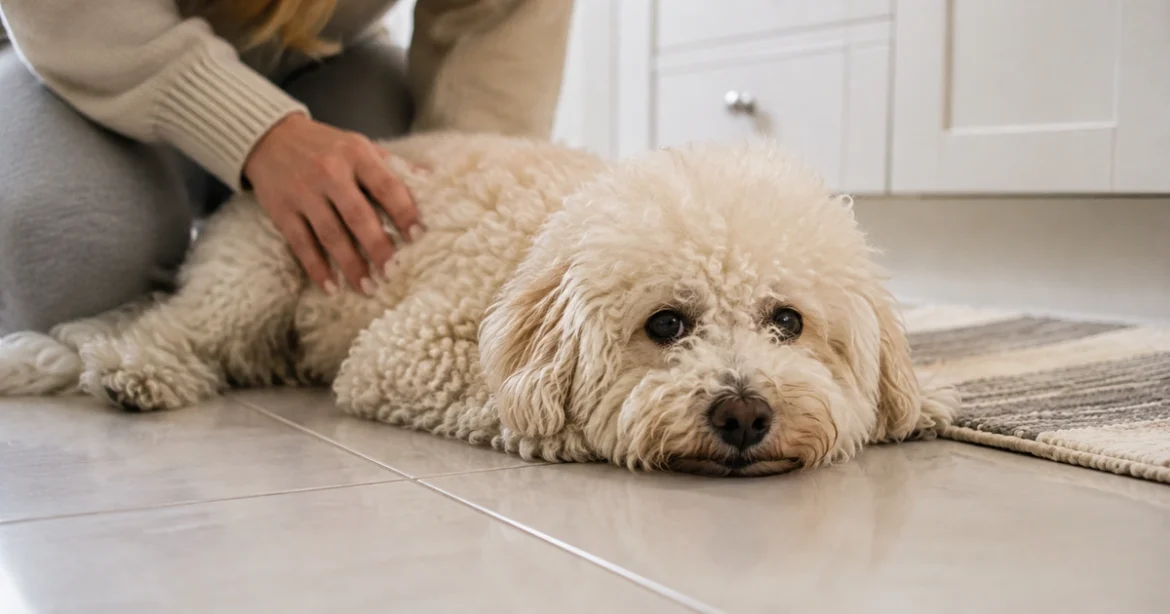
Dog Shaking Head Constantly: Ear Infection Signs to Know

by petdecoded September 23, 2026
written by petdecoded
Short answer: Frequent head shaking, especially paired with ear scratching, an odor, redness, or visible discharge, is one of the more reliable signs of an ear infection in dogs. Ear infections are common, especially in floppy-eared and water-loving breeds, and while they’re rarely an emergency, they don’t resolve on their own and need an actual vet-prescribed treatment, not just at-home cleaning.

Occasional head shaking after a bath or a roll in the grass is normal dog behavior. Frequent, repeated shaking — especially combined with other signs — usually points to something going on in the ear canal that’s worth checking.

Why head shaking is such a reliable ear-infection signal

Head shaking is a dog’s direct, physical response to irritation or discomfort inside the ear canal — it’s an attempt to relieve an itch or pressure that scratching alone can’t fully reach. Combined with the fact that ear infections are genuinely common in dogs (particularly certain breeds and situations), persistent head shaking is one of the more dependable early indicators owners can catch before an infection progresses.

What else usually shows up alongside it

  • Scratching at the ear more than usual, sometimes intensely
  • A noticeable odor coming from the ear, often described as musty or yeasty
  • Redness or swelling inside the visible part of the ear
  • Discharge — brown, yellow, or black debris, depending on the type of infection
  • Sensitivity when the ear is touched, or head-tilting toward the affected side
  • Rubbing the ear against furniture or the floor for relief

Why some dogs get ear infections more than others

Floppy-eared breeds (Cocker Spaniels, Basset Hounds, Labradors) have less airflow to the ear canal, creating a warmer, moister environment that’s more hospitable to yeast and bacteria. Dogs that swim frequently face a similar issue — trapped moisture after water exposure. Dogs with underlying allergies are also more prone to recurring ear infections, since allergic inflammation in the ear canal creates conditions that make secondary infection more likely.

Why at-home cleaning alone usually isn’t enough

Once an infection has actually taken hold (versus just routine ear maintenance in a healthy ear), it typically needs a vet-prescribed medication — often ear drops targeting the specific type of infection (bacterial, yeast, or both) — determined after your vet examines the ear and sometimes takes a sample to identify what’s actually causing it. Over-the-counter cleaning alone often isn’t enough once symptoms are present, and can even mask or delay proper treatment if used as a substitute for a vet visit.

See a vet if: head shaking or scratching is frequent or persistent, there’s visible discharge, odor, redness, or swelling, your dog seems sensitive to having the ear touched, or this is a recurring issue for a dog with a history of ear infections. Ear infections generally don’t resolve without treatment and can worsen or become more painful the longer they’re left unaddressed.

Frequently asked questions

Can I clean my dog’s ears at home to prevent infections?

Routine cleaning with a vet-approved ear cleaner, especially for breeds prone to infections or dogs that swim often, can help as a preventive measure. It’s different from treating an active infection, which needs a vet-diagnosed and prescribed approach.

How long does a dog ear infection take to clear up?

With appropriate treatment, many uncomplicated infections improve within 1–2 weeks, though the full course of prescribed medication should be completed even if symptoms improve early, similar to finishing a course of antibiotics in humans.

Are ear infections in dogs contagious to other pets?

Bacterial and yeast ear infections themselves generally aren’t contagious between pets, though ear mites (a less common cause of similar symptoms) can spread between animals in close contact, which is one more reason a proper vet diagnosis matters.

Related reading

Head tilting shows up in a different, non-medical context too — see why dogs tilt their head when you talk for the everyday version versus the medical one covered here. For grooming products that help with routine ear care, see our grooming supplies guide, or browse all Health & Safety articles.

September 23, 2026 0 comments
0 FacebookPinterestEmail
Why Does My Dog Tilt Its Head When I Talk?
Behavior

Why Does My Dog Tilt Its Head When I Talk?

by petdecoded September 21, 2026
written by petdecoded
Short answer: Head tilting most likely helps dogs pinpoint the direction and source of a sound more precisely, and may also improve their view of your mouth and face to pick up visual cues alongside your voice. It’s widely believed to be linked to trying to understand you better, though the exact mechanism isn’t fully settled by researchers. A new or persistent head tilt with no obvious trigger, especially paired with stumbling or loss of balance, is a different issue worth an urgent vet visit.

That classic, almost comically endearing head tilt is one of the most photographed dog behaviors — and while researchers don’t have a single definitive answer for exactly why it happens, there are a few well-supported theories.

It may help them locate sound more precisely

Dogs’ ears can move independently and are highly attuned to locating the direction of a sound, but a tilted head can shift the position of the ear canal and pinna (the visible outer ear) in a way that may sharpen a dog’s ability to pinpoint exactly where a sound is coming from — particularly for sounds with less distinct directional cues. This theory is well-supported by how dogs’ ear anatomy functions, even though it hasn’t been definitively proven as the single cause of every tilt.

It may help them see your face better

A dog’s muzzle can partially obstruct their view of your face when looking straight on, especially in longer-snouted breeds. Tilting the head to one side can shift the muzzle out of the direct line of sight, giving a clearer view of your mouth and facial expressions — both of which dogs are known to read closely for cues about tone, mood, and meaning.

It’s associated with attentiveness and specific words

Anecdotally and in informal observation, many owners notice the tilt happens most with specific, familiar words — their name, “walk,” “treat” — rather than random speech, which suggests the behavior is at least partly tied to trying to process and recognize meaningful sounds rather than a general reaction to any noise. This lines up with dogs’ well-documented ability to learn and respond to a meaningful vocabulary of specific words and phrases.

Some dogs tilt more than others

  • Breeds with more expressive ear mobility may show the behavior more visibly than breeds with naturally floppy, less mobile ears
  • Individual personality plays a role too — some dogs are simply more visibly responsive and expressive than others with a similar hearing ability
  • Higher-pitched or unusual tones in your voice (baby talk, a questioning inflection) seem to trigger it more often than a flat, familiar tone

When a head tilt is a medical concern instead

A brief, situational head tilt in response to your voice is completely different from a persistent, uncorrecting head tilt that stays in place. A dog holding its head at a constant angle, especially combined with loss of balance, circling, stumbling, or unusual eye movement, can indicate an inner ear infection, vestibular disease, or in rare cases a neurological issue — this is a genuinely different phenomenon from the responsive, momentary tilt discussed above.

See a vet promptly if: the head tilt is constant rather than momentary, doesn’t correct itself once the sound or conversation stops, or is paired with stumbling, circling, vomiting, or apparent disorientation. These point toward vestibular disease or an ear infection rather than the everyday listening tilt.

Frequently asked questions

Do all dogs tilt their heads?

Most dogs show at least occasional head tilting, though the frequency and visibility vary by individual and, to some degree, by breed and ear shape. Dogs that don’t tilt much aren’t necessarily hearing or understanding less — it’s a visible behavior, not a required one.

Why does my dog only tilt their head at certain words?

This is likely linked to recognizing specific, meaningful words your dog has learned, which prompts more focused attention than unfamiliar or less relevant speech. It’s one of the more charming pieces of evidence for how much specific vocabulary a well-bonded dog actually picks up.

Is head tilting a sign of intelligence?

Not directly — it’s more accurately a sign of attentiveness and active listening than a measure of general intelligence. Dogs of all cognitive abilities can display the behavior; it reflects engagement with the sound, not IQ.

Related reading

If your dog seems especially tuned in to your expressions and mood, why dogs stare at their owners covers the closely related behavior of reading your face.

September 21, 2026 0 comments
0 FacebookPinterestEmail
Dog Throwing Up Yellow Bile
Health

Dog Throwing Up Yellow Bile: Causes and When to Worry

by petdecoded September 18, 2026
written by petdecoded
Short answer: Yellow, foamy vomit is bile — a digestive fluid produced by the liver — and it most commonly shows up when a dog’s stomach has been empty for a while, which is why it’s often called “bilious vomiting syndrome” when it happens on a fairly predictable schedule (early morning, or before a meal). A single episode in an otherwise normal, active dog usually isn’t an emergency. Repeated episodes, or bile vomiting paired with lethargy, appetite loss, or diarrhea, is worth a vet visit.

Finding a puddle of yellow foam on the floor is one of those moments that looks alarming but, more often than not, has a fairly mundane explanation. Here’s how to actually read it.

What bile is, and why an empty stomach brings it up

Bile is produced continuously by the liver and stored in the gallbladder, released into the small intestine to help digest fat. When a dog’s stomach is empty for an extended stretch — overnight, or if a meal gets skipped or delayed — bile can reflux back up into the stomach and irritate the lining enough to trigger vomiting. That’s the mechanism behind the classic “early morning vomit” pattern many owners notice, often right before or shortly after the first meal of the day.

Bilious vomiting syndrome is a recognized, fairly common pattern

Vets use this term for exactly this scenario: a dog that reliably vomits yellow bile on an empty stomach, typically in the early morning or late at night, without other symptoms and without appearing sick otherwise. It’s generally considered manageable rather than dangerous, and the standard first approach is a fairly simple one — feeding a small snack before bed, or splitting meals to shorten the empty-stomach window, often resolves it without any medication.

Other things that can cause the same symptom

  • Dietary indiscretion: eating something that didn’t agree with them (trash, grass in large amounts, a rich treat) can trigger a bile-vomiting episode alongside the irritant itself
  • Mild gastritis: stomach inflammation from a range of causes, usually resolving on its own within a day or two
  • Pancreatitis: inflammation of the pancreas, which tends to come with more intense symptoms — repeated vomiting, abdominal pain, lethargy — rather than an isolated, otherwise-normal episode
  • Intestinal blockage: a more serious possibility, especially if vomiting is repeated, your dog seems unable to keep anything down, or there’s a known history of chewing on non-food items

Seek urgent vet care if the vomiting is repeated (more than once or twice), your dog seems lethargic, is refusing food and water, has a swollen or painful abdomen, or you know or suspect they ate something they shouldn’t have.

What’s actually normal vs. what’s a signal

A single episode of yellow bile vomiting in a dog who’s otherwise acting completely normal — eating, drinking, playful, no repeat episodes — is generally low-concern and often resolves with a minor feeding schedule adjustment. What changes the picture: frequency (happening several times a week or more), other symptoms layered on top, or a dog who seems genuinely unwell rather than just having had one rough morning.

Track the pattern before your vet visit: when it happens (time of day, relation to meals), how often, whether your dog seems otherwise normal afterward, and anything unusual they may have eaten. This context makes a real difference in how quickly your vet can narrow down the cause.

Frequently asked questions

Should I feed my dog after they vomit bile?

For a single, otherwise-normal episode, a small bland meal (plain boiled chicken and rice, for instance) a few hours later is commonly recommended, though it’s worth confirming with your vet if this is a new or recurring issue rather than assuming it’s fine to self-manage indefinitely.

How can I stop my dog from throwing up bile in the morning?

If it fits the bilious vomiting syndrome pattern (empty-stomach timing, otherwise healthy dog), a small snack before bed or splitting the daily food into more frequent smaller meals is the standard first approach, and it resolves the issue for many dogs without further intervention.

Is yellow vomit different from throwing up food?

Yes — vomiting actual food (sometimes undigested) is different from bile, which is a thin, yellow, often foamy liquid with no food content. If you’re seeing a mix of both, or you’re not sure which you’re looking at, describing it in detail to your vet (or taking a photo) helps them assess it accurately.

Related reading

If digestive upset happens regularly, our guide to picking the right food by life stage covers what to look for if sensitivity might be a factor. For other symptoms worth tracking, see signs of dehydration, or browse all Health & Safety articles.

September 18, 2026 0 comments
0 FacebookPinterestEmail
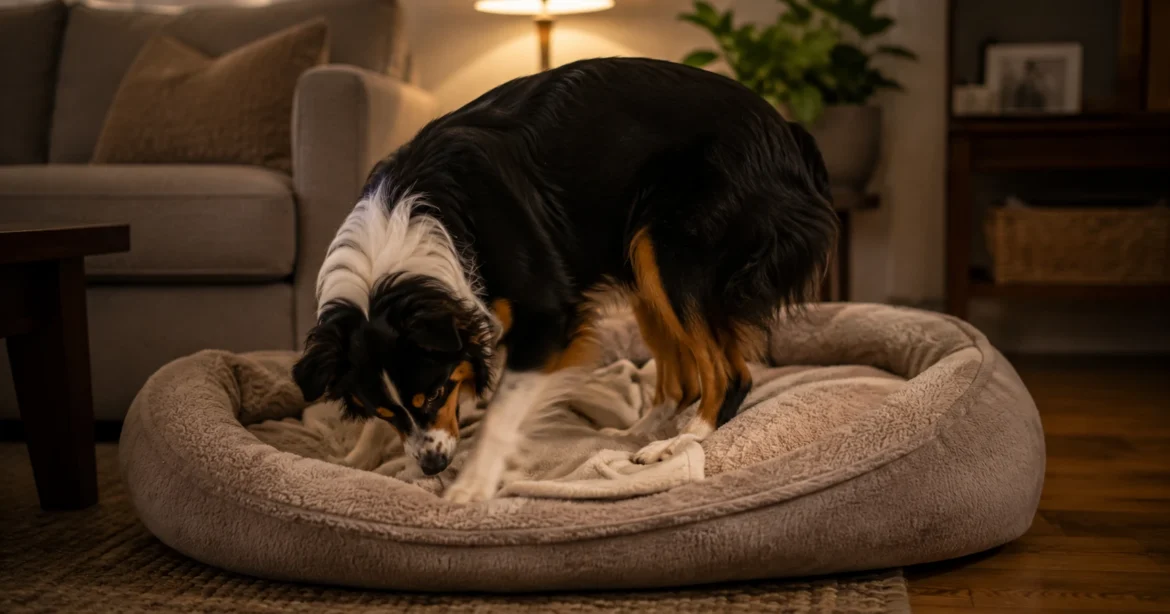
Why Does My Dog Dig Before Lying Down?
Behavior

Why Does My Dog Dig on the Couch or Bed Before Lying Down?

by petdecoded September 16, 2026
written by petdecoded
Short answer: Digging, scratching, or circling before lying down is an instinctive nesting behavior inherited from wild canine ancestors, who used the motion to flatten grass or foliage, check the ground temperature, and clear the area before settling in. It’s harmless and doesn’t need to be discouraged on a bed or couch, though excessive or obsessive digging, especially if it damages skin or claws, is worth a vet visit.

That few seconds of scratching, pawing, and turning your dog does before flopping down isn’t random fidgeting — it’s one of the more clearly instinctive behaviors that’s survived largely unchanged from a dog’s wild ancestors.

It’s inherited nesting behavior

Wild canines sleeping outdoors would dig and circle to flatten tall grass, leaves, or dirt into a more comfortable, insulated bed shape, and to clear away debris, rocks, or insects before lying down. Domestic dogs retain this instinct fully intact even though a couch cushion or dog bed obviously doesn’t need flattening — the behavior fires regardless of whether the underlying reason (uneven ground) still applies.

It may help regulate temperature

Circling and digging can also serve a temperature-related function: in the wild, disturbing the ground surface could expose cooler soil in hot weather or help arrange bedding material for warmth in cold weather. Some researchers believe dogs may still be responding to a version of this instinct, checking or adjusting their spot even when the surface temperature isn’t actually a factor indoors.

It can also be about comfort and positioning

  • Fluffing bedding: on a soft dog bed or blanket, digging can genuinely reposition material into a more comfortable shape
  • Finding the “right” spot: circling lets a dog assess a few slightly different positions before committing to one
  • Pre-sleep ritual: for some dogs, the behavior has simply become a consistent, comforting routine that signals “it’s time to settle”

When digging becomes something to watch

Occasional digging and circling before lying down is completely normal in virtually all dogs and doesn’t need any intervention. It’s worth paying closer attention if the behavior becomes obsessive or prolonged (many minutes of digging rather than a few seconds), is paired with visible discomfort, whining, or difficulty settling at all, or results in damaged claws, raw paw pads, or skin irritation.

Worth a vet visit if: digging is excessive, paired with obvious discomfort getting into a lying position, or your dog seems unable to settle no matter how much digging or repositioning they do — these can point to joint pain, anxiety, or in rare cases, a neurological issue rather than normal nesting instinct.

Should you try to stop it?

Generally no — it’s a normal, low-cost behavior that doesn’t need correcting on furniture or bedding meant for your dog. If it’s happening somewhere inappropriate (digging at carpet in a way that causes damage, for example), redirecting to a designated dog bed rather than trying to eliminate the instinct entirely tends to work better, since you’re working with the behavior rather than against it.

Frequently asked questions

Why does my dog dig at my bed specifically?

If your dog is allowed on your bed, it’s the same nesting instinct applied to that surface — there’s nothing different about the motivation, just the location. If it’s causing damage to bedding you’d rather protect, a designated dog bed nearby is usually the easiest fix.

Is it normal for older dogs to dig less before lying down?

Yes, often — joint stiffness or arthritis can make the digging-and-circling ritual physically harder, so some senior dogs simplify or skip it as they age. A sudden, noticeable drop-off is worth mentioning at a vet visit if it’s paired with other signs of discomfort.

Why does my dog dig at the floor instead of a bed?

The same instinct applies to hard flooring, even though there’s nothing to flatten or fluff — the behavior is largely automatic rather than a rational assessment of the surface. It’s normal, though it can occasionally scratch flooring or damage claws if it’s especially vigorous.

Related reading

Curious about other instinctive behaviors that carried over from wild ancestors? Why dogs eat grass covers another one rooted in the same evolutionary history.

September 16, 2026 0 comments
0 FacebookPinterestEmail
Clicker Training for Beginners
Training

Clicker Training for Beginners

by petdecoded September 14, 2026
written by petdecoded
Short answer: A clicker is a marker signal — a small tool that makes a consistent click sound the instant your dog does the right thing, precisely bridging the gap between the behavior and the treat that follows. It works because it’s more precise than verbal praise (which is harder to time exactly and varies in tone), giving your dog crystal-clear information about exactly which action earned the reward.

Clicker training has a reputation for being complicated, but the core mechanism is simple: click at the exact right instant, then always follow with a treat. Everything else builds from that one habit.

Why a click works better than just saying “good”

A clicker produces the exact same sound every single time, with no variation in tone or timing the way a verbal “good boy” naturally has. That consistency lets your dog form a very precise association: click means a specific action, right now, earned a reward — which is harder to communicate as cleanly with words alone, especially for actions that happen quickly (like the instant all four paws touch the ground, or the exact moment of a full sit).

Step 1: “Charge” the clicker first

Build the click-to-treat association

Before using the clicker for any actual training, spend a few short sessions simply clicking and immediately giving a treat, with no behavior required. Repeat this 10–15 times per session, a few times a day, for a day or two. This teaches your dog that the click itself reliably predicts a reward, which is the entire foundation the rest of clicker training relies on.

Step 2: Click at the exact right moment

Timing is everything

Once the clicker is charged, click the instant your dog performs the behavior you want — not a second before, not a second after. If you’re shaping a sit, click the moment their rear touches the ground, then follow with a treat. The click marks the behavior; the treat that follows is what makes it worth repeating.

Step 3: Add a verbal cue once the behavior is reliable

Name it once it’s consistent

Once your dog is reliably offering the behavior in response to a lure or shaping process, start saying the cue word (“sit”) right before they do it, then click and reward. Over repetitions, the verbal cue becomes the trigger, and the clicker stays as the precision marker for correct execution.

Step 4: Phase out the clicker for well-established behaviors

Once a behavior is solid and reliable, you can shift to intermittent, variable rewards (praise sometimes, a treat sometimes, not every single time) the way most trained behaviors eventually work — the clicker’s precision is most valuable while a behavior is still being learned, not necessarily forever.

  • Keep sessions short: 5–10 minutes, multiple times a day, works better than one long session for maintaining focus and enthusiasm
  • Always click before treating, never the reverse — the order is what builds the precise association
  • End sessions on a success, even a small one, to keep training feeling positive
A common mistake: clicking multiple times for one behavior, or clicking without following through with a treat. Both dilute the clarity of the signal — one click, one treat, every time, especially early in training.

Frequently asked questions

Can I use a word instead of an actual clicker?

Yes, a consistent marker word (like “yes,” said the same way every time) can work similarly, though a physical clicker’s sound tends to be more distinct and consistent than a spoken word, which can vary subtly in tone depending on your mood or context.

Is clicker training only for puppies?

No, it works for dogs of any age, including teaching new behaviors to adult or senior dogs — the precision-marking mechanism is just as effective regardless of your dog’s age or how much prior training they’ve had.

Related reading

Clicker training is a great foundational tool for teaching a reliable recall, where precise timing matters a lot, and for reducing jumping on guests, or browse all Training articles.

September 14, 2026 0 comments
0 FacebookPinterestEmail
Can Dogs Eat Bananas?
Health

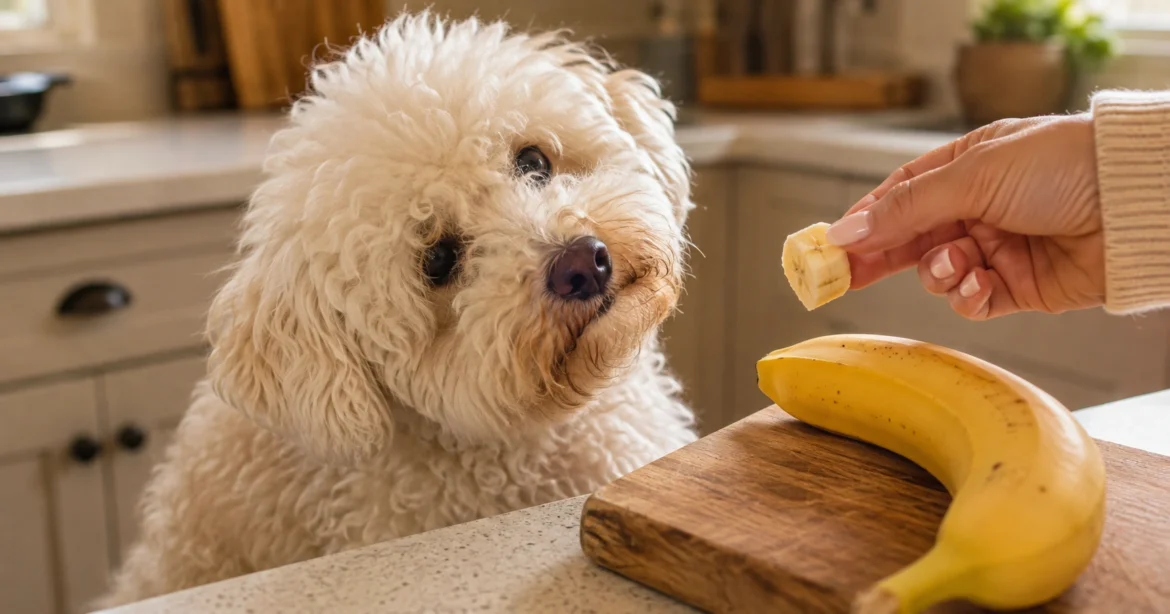
Can Dogs Eat Bananas?

by petdecoded September 12, 2026
written by petdecoded
Short answer: Yes, bananas are safe for dogs and offer potassium, vitamins, and fiber in a treat most dogs genuinely love. The main thing to watch is sugar content — bananas are higher in natural sugar than something like an apple, so they’re best kept to a small, occasional treat rather than a regular snack.

Bananas are an easy, mess-minimal treat option, and most dogs take to them enthusiastically — the main job here is just keeping portions sensible.

What bananas actually offer nutritionally

Bananas provide potassium, vitamin B6, vitamin C, and fiber, along with natural sweetness that makes them an appealing low-effort treat. The soft texture also makes them useful for older dogs or dogs with dental sensitivity who might struggle with harder treats or crunchy fruit.

Sugar content is the main thing to manage

  • Bananas are higher in natural sugar than lower-sugar fruits like apples or berries, so portion control matters more here than with some other fruit treats
  • A few small slices is a reasonable treat-sized portion for most dogs, scaled to their size
  • Dogs with diabetes or weight management needs should have banana (and fruit generally) introduced carefully, ideally with vet input on appropriate portions

How to serve

Fresh, ripe banana, sliced or mashed, is the simplest and safest preparation — no peel (it’s not toxic, but it’s tough to digest and not worth the trouble), and no added sugar, chocolate, or other mix-ins if you’re using it in a homemade treat or frozen snack. Mashed banana frozen into small portions can also make a good hot-weather treat.

Frequently asked questions

Can dogs eat banana peel?

It’s not toxic, but it’s fibrous and difficult to digest, and can pose a minor blockage risk in larger quantities, so it’s best to just remove it before serving rather than assuming it’s fine to include.

Are bananas good for dogs with upset stomachs?

Mashed banana in small amounts is sometimes used as part of a bland recovery diet for mild digestive upset, similar to plain rice or boiled chicken, though it’s worth checking with your vet for anything beyond a brief, mild episode.

Related reading

For a full picture of what’s safe versus genuinely dangerous, see our guide to foods toxic to dogs. See also can dogs eat cheese, can dogs eat apples, or browse all Health & Safety articles.

September 12, 2026 0 comments
0 FacebookPinterestEmail
Why Does My Dog Whine at Night?
Behavior

Why Does My Dog Whine at Night?

by petdecoded September 11, 2026
written by petdecoded
Short answer: Nighttime whining usually means your dog needs something (a bathroom break, water, discomfort from temperature or bedding), is experiencing mild anxiety or loneliness in the dark and quiet, or in older dogs, may signal pain or early cognitive changes. New puppies whine at night largely from normal separation distress in an unfamiliar environment. Persistent, unexplained whining, especially if new or paired with other symptoms, is worth a vet visit.

A dog whining at 2am is one of those problems that feels urgent in the moment and is usually solvable once you work through it methodically — the trick is ruling out causes in a sensible order rather than guessing.

Start with the basics: needs

  • Needs to go outside: especially in puppies, seniors, or dogs on a new feeding schedule, a full bladder is the most common and easiest-to-rule-out cause
  • Thirsty or hungry: less common at night but worth checking, particularly if dinner was earlier than usual
  • Too hot or too cold: dogs can’t easily adjust bedding themselves, and a room that’s comfortable for you may not be for a dog with a heavy coat or, conversely, a short-haired breed
  • Physical discomfort: an uncomfortable bed, a joint pressed at an odd angle, or a collar that’s bothering them

Puppies whine at night for a very specific reason

A new puppy in an unfamiliar home, often separated from littermates and a mother for the first time, is experiencing genuine separation distress at night — this is developmentally normal, not a training failure. It typically improves over the first few weeks as the puppy settles in and builds trust in the new environment. Crate training with the crate near your bed initially, then gradually moved, tends to ease this transition better than either ignoring it entirely or moving the puppy into your bed permanently.

Anxiety and loneliness

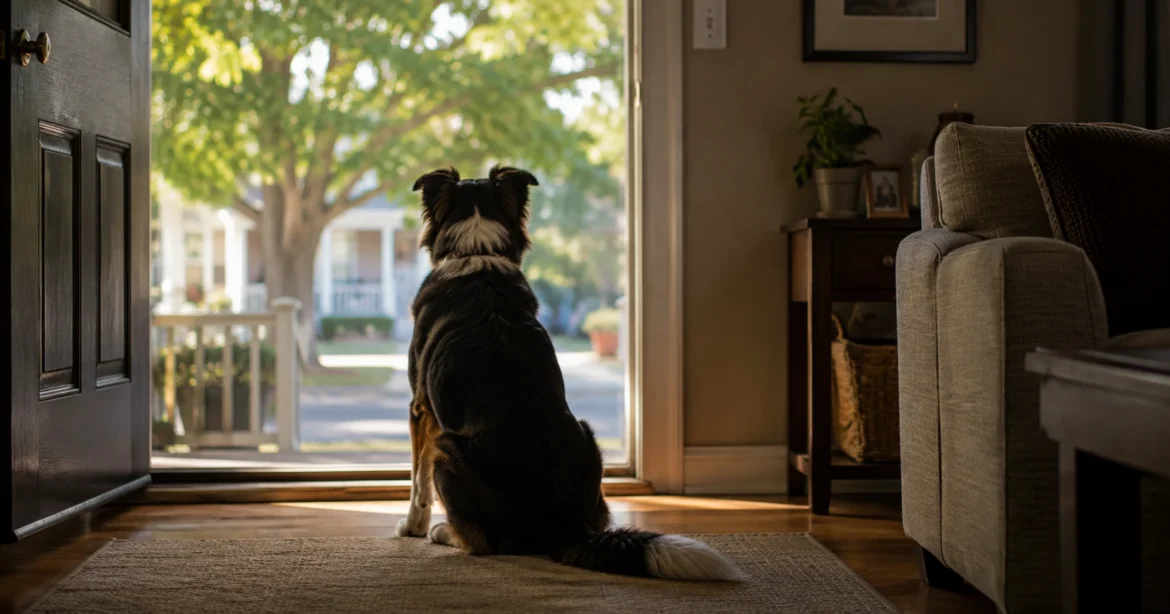
Nighttime is quiet and dark, with fewer normal distractions, which can make an anxious dog more attuned to their own unease. Dogs with general anxiety, noise sensitivity (fireworks, storms, unfamiliar outdoor sounds), or separation anxiety when sleeping in a different room from you may whine more at night specifically because the usual daytime distractions aren’t there to mask it.

Pain or discomfort, especially in older dogs

Whining that’s new, especially in a senior dog, paired with reluctance to move, stiffness, or changes in how they’re lying down, can point to joint pain or another physical discomfort that’s more noticeable when lying still at night than during an active day. Arthritis in particular tends to worsen with stillness and cooler temperatures, which is exactly the environment of nighttime rest.

When to involve your vet: whining that’s new, doesn’t resolve with the basics (bathroom, water, temperature), is paired with pacing, disorientation, or a disrupted sleep-wake cycle, or shows up alongside limping, reluctance to jump or climb stairs, or other signs of pain.

A practical approach

Rule out the physical basics first (bathroom, water, temperature, comfort), then consider timeline: is this new, or has it always happened? New and sudden points more toward pain or a specific trigger; long-standing and consistent (especially in a puppy) points more toward normal adjustment or anxiety that training and time can address. Avoid immediately rushing in and rewarding the whining with attention every time, which can reinforce it, but also don’t ignore a genuinely new pattern that could be medical.

Frequently asked questions

Should I ignore my dog’s whining at night?

Not universally — ignoring a genuine need (bathroom, pain) isn’t appropriate, but consistently rewarding attention-seeking whining with immediate attention can reinforce the pattern. The key is distinguishing need from habit, which usually becomes clearer once you’ve ruled out the basics a few times.

How long does puppy nighttime whining usually last?

Most puppies settle significantly within 1–2 weeks as they adjust to the new environment and routine, though full adjustment can take a bit longer for some individual dogs. Consistent routine and gradual independence-building (rather than either extreme of full isolation or constant co-sleeping) tends to speed this up.

Why does my senior dog suddenly whine at night when they never used to?

A sudden new pattern in an older dog is worth a vet visit rather than assuming it’s behavioral — arthritis pain, vision or hearing loss causing disorientation in the dark, and canine cognitive dysfunction are all more common explanations at this life stage than a new anxiety developing out of nowhere.

Related reading

If nighttime whining is paired with alert behavior, why dogs bark at seemingly nothing covers the sensory side of what might be triggering it.

September 11, 2026 0 comments
0 FacebookPinterestEmail
How to Socialize a Puppy Before Full Vaccination
Training

How to Socialize a Puppy Safely Before Full Vaccination

by petdecoded September 9, 2026
written by petdecoded
Short answer: The critical socialization window (roughly 3–14 weeks) closes before most puppies are fully vaccinated, which puts owners in a genuine bind between infection risk and the developmental cost of under-socializing. The generally recommended balance: prioritize controlled, lower-risk socialization (well-vaccinated adult dogs, private spaces, carried outings) over public dog parks or unknown-dog contact until your vet clears full outdoor access.

This is one of the more genuinely tricky windows in puppy ownership — the behavioral science says socialize early and often, but the medical guidance says wait for full vaccination, and those two timelines don’t fully overlap.

Why the early window matters so much behaviorally

The period between roughly 3 and 14 weeks is considered the primary socialization window, when puppies are most receptive to forming positive associations with new people, animals, sounds, surfaces, and experiences. Puppies that miss substantial socialization during this window are statistically more likely to develop fear or reactivity issues later, which is exactly why trainers push hard for early exposure — but this window largely precedes full vaccination, which typically completes around 16 weeks.

What veterinary guidance actually says

Many vets and veterinary behavior organizations now recommend beginning socialization before the vaccine series is fully complete, as long as it’s done through lower-risk channels, because the behavioral cost of under-socializing is considered by many professionals to outweigh the infection risk when exposure is managed carefully. This is a shift from older, more cautious guidance, and it reflects a genuine, evolving balance of risks rather than a dismissal of infection concerns.

Lower-risk ways to socialize during this window

  • Puppy classes specifically designed for partially vaccinated puppies, often held in a controlled, sanitized indoor space with other vaccinated, health-screened puppies — many trainers and vets recommend these specifically because the risk is managed
  • Visits with known, fully vaccinated adult dogs (friends’ or family’s dogs with a confirmed vaccination history) in a private home or yard rather than a public space
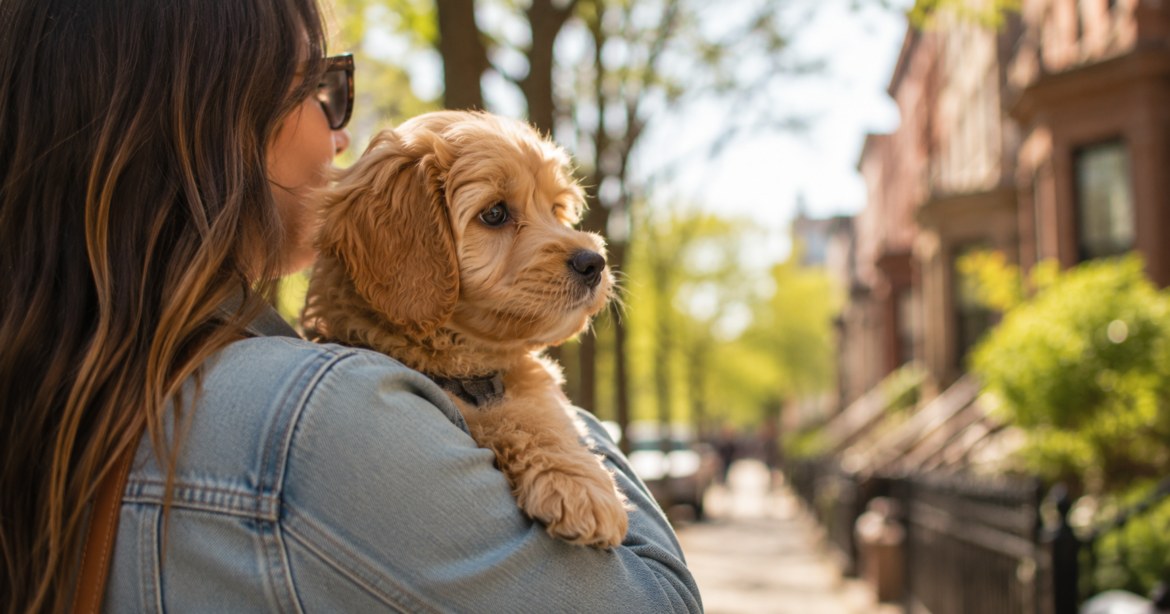
  • Carrying your puppy in public (a carrier, or simply held) to expose them to sights, sounds, and new people without direct ground contact in high-traffic areas
  • Car rides to new environments, even without getting out, to build comfort with novelty and motion
  • Controlled exposure to new sounds, surfaces, and objects at home — different flooring, vacuum noise, doorbells — costs nothing risk-wise and covers real socialization ground

What to avoid until fully vaccinated

Dog parks, pet store floors, and areas with unknown dogs of unknown vaccination status carry a real risk, particularly for diseases like parvovirus, which can be severe or fatal in unvaccinated puppies and can persist in the environment. This isn’t about being overly cautious — it’s a genuinely serious risk specific to this age group, which is why the “controlled exposure” approach exists as a middle path rather than either extreme.

Talk to your vet about your specific timeline. Vaccination schedules and regional disease risk vary, and your vet can give you a more specific, personalized recommendation for when it’s appropriate to expand exposure in your particular situation and location.

Frequently asked questions

Is it too late to socialize my puppy if they’re already past 14 weeks?

The window isn’t a hard cutoff — socialization is most impactful early, but continued positive exposure remains valuable well beyond 14 weeks, and it’s never truly “too late” to keep building positive associations, even if the process may take somewhat more patience.

How many new experiences should a puppy have per week during this window?

There’s no strict number, but the general guidance from trainers is regular, varied, low-stress positive exposures rather than either none or an overwhelming flood in a single day — quality and a calm, positive association matter more than a specific quantity.

Related reading

Socialization and puppy vaccination timing go hand in hand — see our full vaccination schedule for the medical side of this balance, or browse all Training articles.

September 9, 2026 0 comments
0 FacebookPinterestEmail
Can Dogs Eat Apples?
Health

Can Dogs Eat Apples?

by petdecoded September 7, 2026
written by petdecoded
Short answer: Yes, apples are a safe and genuinely healthy treat for most dogs, offering fiber and vitamin C in a low-calorie package. The one real precaution: remove the seeds and core first, since apple seeds contain a small amount of a cyanide-producing compound — a few accidental seeds aren’t an emergency, but seeds shouldn’t be fed intentionally or in quantity.

Apples are one of the easier “yes” answers in the world of dog-safe human food, as long as you prep them properly first.

Why apples are a solid treat choice

Apples provide dietary fiber, which can support digestive health, along with vitamin C and a naturally sweet flavor most dogs enjoy without the sugar and calorie load of a processed treat. The crunchy texture can also offer a mild, incidental teeth-cleaning benefit, similar to the effect of other crunchy produce.

Prep matters: seeds and core

  • Remove the seeds: apple seeds contain amygdalin, which releases a small amount of cyanide when broken down — a couple of accidentally swallowed seeds from a slice isn’t typically dangerous, but seeds shouldn’t be deliberately fed or fed in any quantity
  • Remove the core: it’s tough, harder to digest, and a minor choking consideration, especially for smaller dogs
  • Cut into appropriately sized pieces for your dog, especially for small breeds or dogs that tend to gulp food
  • Skip anything sweetened or flavored — apple pie filling, caramel apples, or dried apple with added sugar aren’t the same as plain fresh apple

How much is reasonable

A few slices as an occasional treat is a reasonable amount for most dogs, adjusted for size — a small dog needs less than a large one. Like most fruit, apples still contain natural sugar, so they’re best treated as an occasional addition rather than a free-feeding snack.

Frequently asked questions

Can dogs eat apple skin?

Yes, apple skin is safe and contains additional fiber and nutrients, though washing it first to remove any pesticide residue is a good habit, same as you’d do before eating it yourself.

Are there dogs who shouldn’t eat apples?

Dogs with diabetes should have fruit, including apples, introduced carefully and in consultation with a vet given the natural sugar content. Dogs with a known sensitivity to apples specifically (uncommon, but possible) should obviously avoid them.

Related reading

For the complete rundown of what’s safe and what’s genuinely dangerous, see our guide to foods toxic to dogs. See also can dogs eat eggs, can dogs eat peanut butter, or browse all Health & Safety articles.

September 7, 2026 0 comments
0 FacebookPinterestEmail
Why Does My Dog Bark at Nothing?
Behavior

Why Does My Dog Bark at Nothing?

by petdecoded September 5, 2026
written by petdecoded
Short answer: “Nothing” is almost never actually nothing — dogs hear frequencies and detect scents far beyond human perception, so most “barking at nothing” is a reaction to something real that you simply can’t sense. It can also be triggered by reflections, shadows, or distant movement outside a window. Persistent barking with no apparent trigger, especially paired with pacing or disorientation, is worth mentioning to your vet, particularly in senior dogs.

It’s unsettling to watch your dog suddenly snap to attention and bark at an empty room, but in almost every case, your dog is responding to a real stimulus — you’re just not equipped to detect it the way they are.

Dogs hear a much wider range than we do

Dogs can hear frequencies up to roughly 45,000 Hz, well above the human ceiling of around 20,000 Hz, and their hearing range extends further at the low end too. A sound from a distant vehicle, another dog several houses away, a rodent in the wall, or an appliance cycling on can all be completely inaudible to you while being perfectly clear to your dog. Barking at an apparently empty room is frequently just your dog reacting to something in that frequency gap.

Their sense of smell picks up what you can’t see

A dog’s nose can detect scents at concentrations far below what a human could notice, and scent can travel through walls, under doors, and across a yard well before you’d ever pick it up. A barking episode at a wall or door can be your dog registering another animal, a person, or an unfamiliar scent trail passing by outside, well before there’s any visual or audible cue for you to notice.

Visual triggers you might be missing

  • Reflections and shadows: light moving across a wall or window, especially from headlights or shifting sun, can trigger a reactive bark
  • Movement at the edge of a window’s view: a person, animal, or vehicle passing just outside your direct line of sight
  • Their own reflection: some dogs, especially younger or less experienced ones, will bark at a mirror or dark window reflecting their own movement

Alert barking is doing its job

Many dogs were bred, at least in part, for watchfulness — alerting their household to anything unusual is a core instinct, not a malfunction. From your dog’s perspective, barking at an unfamiliar sound or scent near the home is exactly the behavior they’re supposed to perform. It can be managed and redirected with training, but it isn’t inherently a problem to be “fixed” as much as a behavior to be channeled.

When it’s worth a closer look

Occasional alert barking at real (if imperceptible to you) triggers is normal. It’s worth paying closer attention if the barking is frequent, seemingly directionless rather than aimed at a specific spot, paired with pacing, disorientation, or changes in sleep, or shows up as a new pattern in an older dog.

In senior dogs specifically: new, repetitive barking at seemingly nothing, especially combined with confusion or a disrupted sleep-wake cycle, can be an early sign of canine cognitive dysfunction (similar to dementia in humans). It’s worth raising with your vet rather than assuming it’s a behavioral quirk.

Frequently asked questions

Should I correct my dog for barking at things I can’t see?

Harsh correction isn’t usually the most effective approach, since your dog is reacting to a genuinely real stimulus. A calmer approach — acknowledging the alert, then redirecting attention (a command, a treat, moving to another room) — tends to work better than punishment for a behavior your dog perceives as doing its job correctly.

Why does my dog bark at the same spot on the wall repeatedly?

This is frequently linked to a sound or scent source behind that wall — pipes, wiring, or even small pests can produce sounds inaudible to you but clear to your dog. If it becomes a persistent, fixed pattern, it’s worth checking that area for a physical source.

Is barking at nothing a sign of anxiety?

It can be, particularly if it’s paired with other anxiety signs like pacing, panting, or destructive behavior. On its own, occasional alert barking at an undetectable trigger is more often a sensory response than an anxiety symptom.

Related reading

If your dog’s alertness seems to spike at night specifically, why dogs whine at night covers a closely related pattern worth ruling out.

September 5, 2026 0 comments
0 FacebookPinterestEmail
Separation Anxiety Training Plan for Dogs
Training

Separation Anxiety Training Plan for Dogs

by petdecoded September 4, 2026
written by petdecoded
Short answer: True separation anxiety — genuine panic when left alone, not just boredom — responds best to gradual desensitization: building tolerance to your absence in tiny, manageable increments rather than jumping straight to a full workday alone. It’s slow, methodical work, and for moderate-to-severe cases, it’s genuinely worth involving a certified trainer or veterinary behaviorist rather than tackling it entirely solo.

Separation anxiety is one of the more misunderstood dog behavior issues, partly because “my dog hates being alone” covers a spectrum from mild boredom to genuine panic, and the right approach depends on which one you’re actually dealing with.

First, distinguish anxiety from boredom

A bored dog might chew a shoe or bark occasionally but generally settles down and isn’t in genuine distress. A dog with true separation anxiety typically shows signs of real panic: intense pacing, drooling, destructive behavior concentrated at exit points (doors, windows), house-training accidents despite being trained, or vocalizing that sounds distressed rather than just bored. If you’re not sure which you’re seeing, a short test recording of your dog while you’re out (many pet cameras or even a phone left recording can work) can clarify a lot.

The core method: gradual desensitization

1. Practice pre-departure cues without leaving

Pick up your keys, put on your shoes — the cues that normally signal you’re leaving — and then don’t leave. Repeat this regularly so those cues stop predicting distress on their own, separate from the actual departure.

2. Start with genuinely tiny absences

Step outside the door for literally a few seconds, then return calmly, with no big greeting (which can actually heighten the emotional intensity around comings and goings). Gradually increase the duration only as your dog shows they’re comfortable at the current length, not on a fixed schedule.

3. Build duration slowly, over days and weeks

This is genuinely slow work — going from seconds to minutes to eventually longer stretches, watching for signs of stress at each new duration before increasing further. Progressing too fast is one of the most common reasons this approach seems to “not work” when it just needed more time at each step.

4. Keep departures and returns low-key

Avoid dramatic goodbyes or excited hellos — both can inadvertently signal that your leaving and returning are significant, emotionally charged events, which works against the calm, unremarkable feeling you’re trying to build around your absence.

Supporting tools, not replacements for the training

  • A safe, comfortable space (crate if your dog finds it calming, or a specific room) can help, though it needs to already have positive associations, not be introduced as part of the anxiety-provoking absence itself
  • Puzzle feeders or long-lasting chews given right before you leave can help create a positive association with your departure, for dogs whose anxiety is mild enough that distraction genuinely helps
  • Background noise (a TV, white noise) can mask outside sounds that might otherwise trigger reactivity while alone
When to bring in a professional: moderate to severe separation anxiety, especially with property destruction, self-injury attempts, or extreme vocalization, often benefits significantly from working with a certified separation anxiety trainer or veterinary behaviorist, who may also discuss whether anti-anxiety medication could support the training process for particularly severe cases.

Frequently asked questions

Will getting a second dog help with separation anxiety?

Not usually — true separation anxiety is generally about distress from being separated from a specific person, not simply being alone, so another dog often doesn’t resolve it and can sometimes complicate the desensitization process further.

How long does separation anxiety training take?

It varies significantly by severity, from a few weeks for mild cases to several months for more severe ones, and progress isn’t always linear — setbacks during the process are common and don’t mean the approach has failed.

Related reading

If nighttime specifically triggers distress, why dogs whine at night covers a related, though distinct, pattern worth ruling out. For puzzle toys that help with departures, see our dog toys guide, or browse all Training articles.

September 4, 2026 0 comments
0 FacebookPinterestEmail
Can Dogs Eat Cheese
Health

Can Dogs Eat Cheese?

by petdecoded September 2, 2026
written by petdecoded
Short answer: Most dogs can eat small amounts of cheese safely, and it’s a classic go-to for hiding pills or as a high-value training treat. The catch is that dogs, like a lot of adult mammals, often have reduced lactose tolerance, and cheese is calorie- and fat-dense, so it works best as an occasional treat in small amounts rather than a food or a daily habit.

Cheese is popular for a reason — dogs love it, and it’s genuinely useful for training or getting a pill down. The details on which kind and how much matter more than the yes/no answer itself.

Lactose intolerance is common, even if it’s not obvious

Dogs lose much of the enzyme needed to digest lactose after puppyhood, similar to the pattern seen in many adult humans, which means a fair number of dogs experience some digestive upset (gas, loose stool) from dairy, even if they don’t react dramatically. This varies a lot by individual dog — some tolerate cheese just fine, others don’t — so introducing a small amount first and watching for a reaction is the safest approach.

Lower-lactose options tend to sit better

  • Hard, aged cheeses (cheddar, Swiss, parmesan) generally contain less lactose than soft cheeses, since more of it separates out during the aging process
  • Cottage cheese is often well tolerated and lower in fat than many hard cheeses, making it a reasonably popular choice
  • Avoid flavored or seasoned cheeses — anything with garlic, onion, or chives mixed in (some flavored cream cheeses, for instance) introduces a genuine toxicity risk
  • Skip blue cheese specifically — it contains a compound called roquefortine C, which can cause illness in dogs

Fat content matters too, especially for some dogs

Cheese is calorie-dense and often high in fat, which is a real consideration for dogs prone to pancreatitis or already managing their weight. A small cube here and there for training or pilling is very different from a daily cheese habit, and the latter is where fat content becomes a genuine long-term concern.

Frequently asked questions

What’s the best cheese for giving a dog a pill?

A small, soft piece of a low-lactose cheese like a mild cheddar or a bit of cream cheese (unflavored, no garlic or onion added) works well for most dogs, since it’s easy to mold around a pill and appealing enough to eat without hesitation.

Can puppies eat cheese?

In very small amounts, similar to adult dogs, though puppies’ digestive systems can be more sensitive overall, so start with an especially small portion and watch closely for any upset.

Related reading

For the full rundown of what’s safe versus dangerous, see our complete guide to foods toxic to dogs. See also can dogs eat peanut butter, can dogs eat bananas, or browse all Health & Safety articles.

September 2, 2026 0 comments
0 FacebookPinterestEmail
Newer Posts
Older Posts

The Decoded Digest

Real dog-care guides and comparisons, straight to your inbox — no spam, no fluff.

Popular Posts

  • 1

    New Dog Owner’s First 30 Days: Complete Walkthrough

    August 6, 2026
  • 2

    Puppy Vaccination Schedule: The Complete Guide

    July 27, 2026
  • 3

    How to Stop a Puppy from Biting

    July 31, 2026
  • 4

    Foods Toxic to Dogs: The Complete List for 2026

    July 25, 2026
  • 5

    Best Dogs for First-Time Owners

    August 8, 2026

Topics

  • Behavior
  • Breeds & Lifestyle
  • Health
  • Training

Meet the Dogs

Kimura Kimura
Abbey AbbeyIn memory

Pet Decoded is dedicated to these two — Kimura, who's still by our side, and Abbey, who we lost but will never forget. This site exists so they both live on.

Read our story →

About Pet Decoded

Real answers for dog owners, without the guesswork. We research and compare so you can make the right call for your dog — insurance, food, gear, and more.

Facebook Pinterest Instagram Youtube Envelope
  • Guides
    • Best Pet Insurance
    • Best Dog Food
    • Dog Cost Calculator New!
    • The Amazon Dog Shop
    • Health & Safety
    • Training
    • Behavior
    • Breeds & Lifestyle
    • Dog Walking Services
    • Subscription Boxes
    • Fresh Food Delivery
  • Useful Links
    • About Us
    • Contact
    • Affiliate Disclosure
    • Privacy Policy
    • Terms & Conditions

Join The Decoded Digest

Real dog-care guides and comparisons, straight to your inbox — no spam, no fluff.

© 2026 All Rights Reserved. Pet Decoded · Real answers for dog owners.

  • Pet Decoded Home
  • Privacy Policy
  • Terms and Conditions
Pet Decoded
  • Pet Decoded
  • Insurance
    • Healthy Paws
    • Lemonade
    • Spot
  • Dog Food
  • Gear
    • Leashes & Harnesses
    • Beds & Crates
    • Toys
    • Travel Gear
    • Grooming
  • Guides
    • Dog Cost CalculatorNew!
    • Behavior
    • Health
    • Training
    • Breeds & Lifestyle
    • Dog Walking
    • Subscription Boxes
    • Fresh Dog Food Delivery
  • About
  • Contact
  • Emergency Guide

Shopping Cart

Close

No products in the cart.

Close