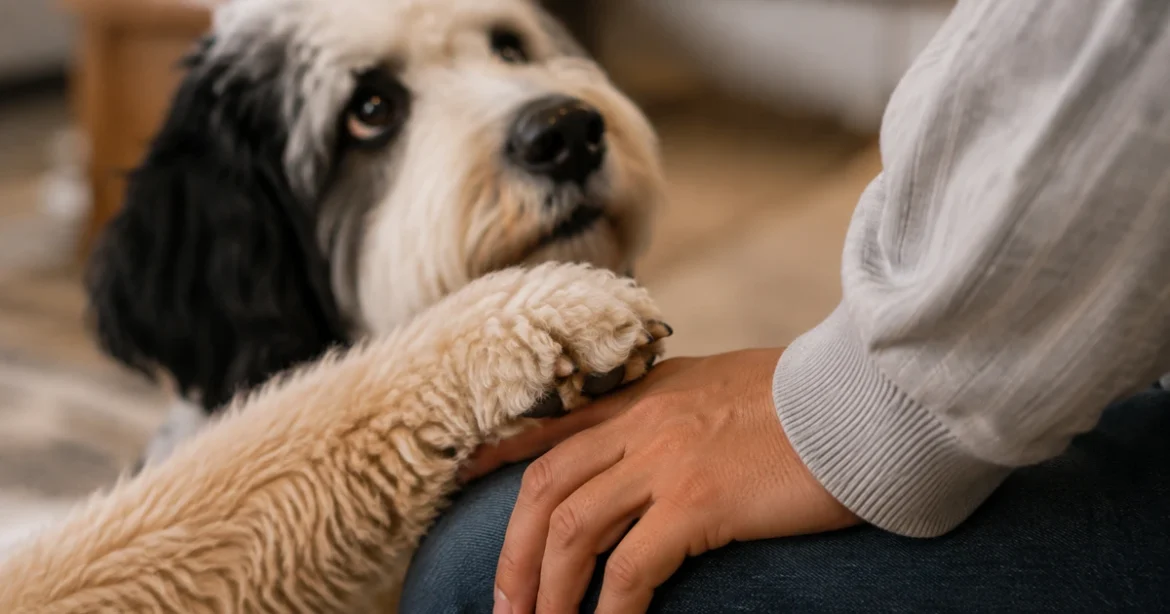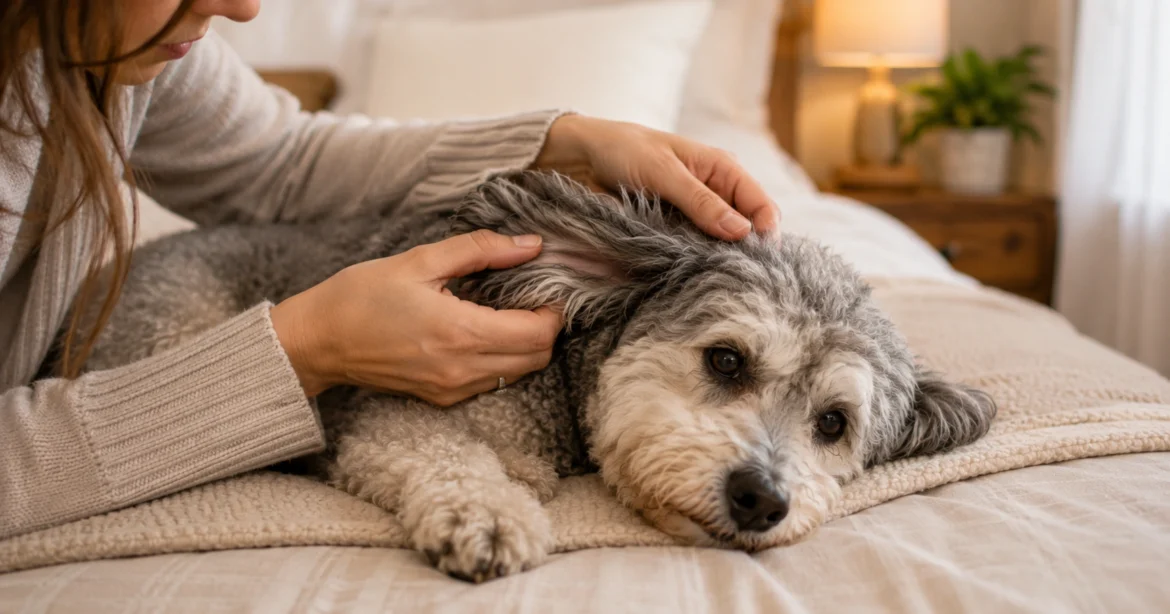
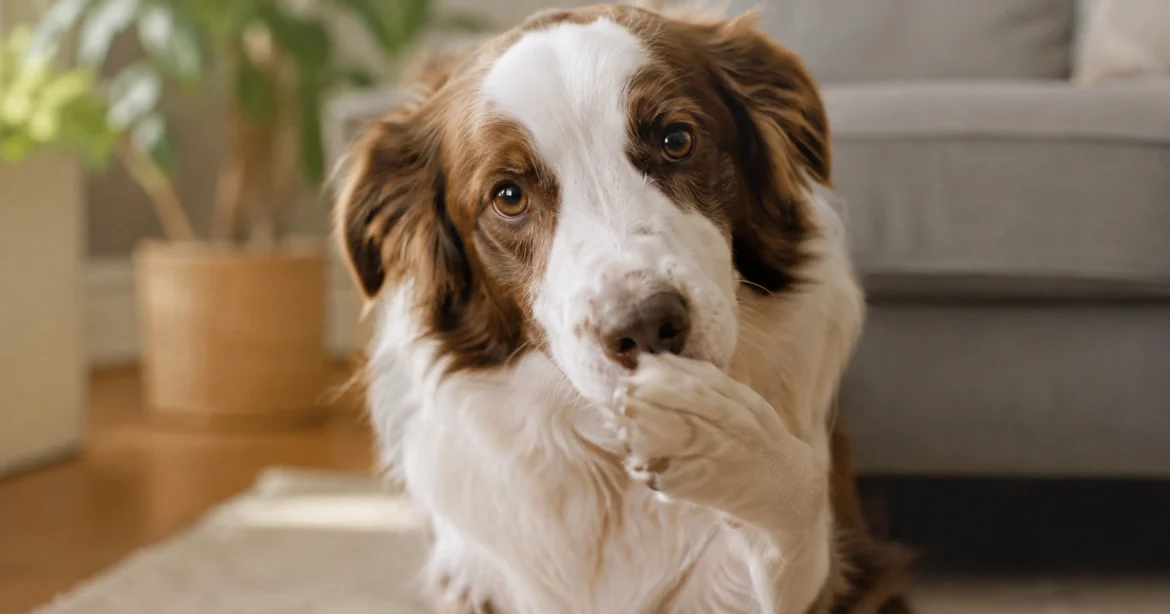
A little paw licking after a walk (cleaning off dirt, checking a sore spot) is normal. Constant, repetitive licking at the same paw or paws, especially enough to leave the fur damp or stained, is a different situation and usually has a specific, identifiable cause underneath it.
Allergies are the most common culprit, by a wide margin
Environmental allergens — pollen, grass, dust mites, mold — land directly on your dog’s paws every time they’re outside, and paws are a common site for the itching that environmental allergies cause. This is why paw licking often gets noticeably worse seasonally, tracking with pollen counts, and why some dogs lick their paws almost exclusively in spring or fall while being fine the rest of the year.
Food allergies show up here too, just less predictably
Food sensitivities can also manifest as itchy paws, though usually alongside other signs like itchy ears, a generally itchy coat, or digestive upset rather than paw-licking in isolation. Diagnosing a food allergy properly generally requires a structured elimination diet under veterinary guidance, not just switching brands and hoping.
Infections can start small and escalate fast
- Yeast infections: often produce a distinct musty smell and can turn fur a rust-brown color from the licking itself
- Bacterial infections: can develop secondary to constant licking, since the moist environment created by repeated licking is exactly what bacteria thrive in — meaning the licking itself can make things worse, not just be a symptom
- Interdigital cysts: painful, swollen areas between the toes that can develop from a range of underlying causes and often need direct vet treatment
Sometimes it’s not physical at all
Dogs with anxiety, boredom, or compulsive tendencies can develop paw licking as a self-soothing behavior, similar to nail-biting in humans — this is sometimes called acral lick dermatitis when it becomes chronic and creates a self-perpetuating cycle of licking and irritation. It’s genuinely hard to tell this apart from an allergy-driven cause without ruling out the physical causes first, since by the time it’s a habit, there’s often skin irritation either way.
Frequently asked questions
Can I just clean my dog’s paws to stop the licking?
Wiping paws after walks (especially during high-pollen seasons) can reduce allergen exposure and help somewhat, but it won’t resolve an underlying infection, food allergy, or anxiety-driven cause. It’s a reasonable first step, not a full solution if the licking is persistent.
Is paw licking worse in certain seasons?
Yes, for dogs with environmental allergies specifically — spring and fall pollen spikes are common trigger points, and some dogs have an almost predictable seasonal pattern to their paw licking once you track it over a year or two.
What’s the difference between normal grooming and a problem?
Brief, occasional licking after being outside or before a nap is normal grooming. Licking that’s frequent, focused intensely on one spot, leaves visible dampness or staining, or continues for extended periods in one sitting has crossed into something worth investigating.