
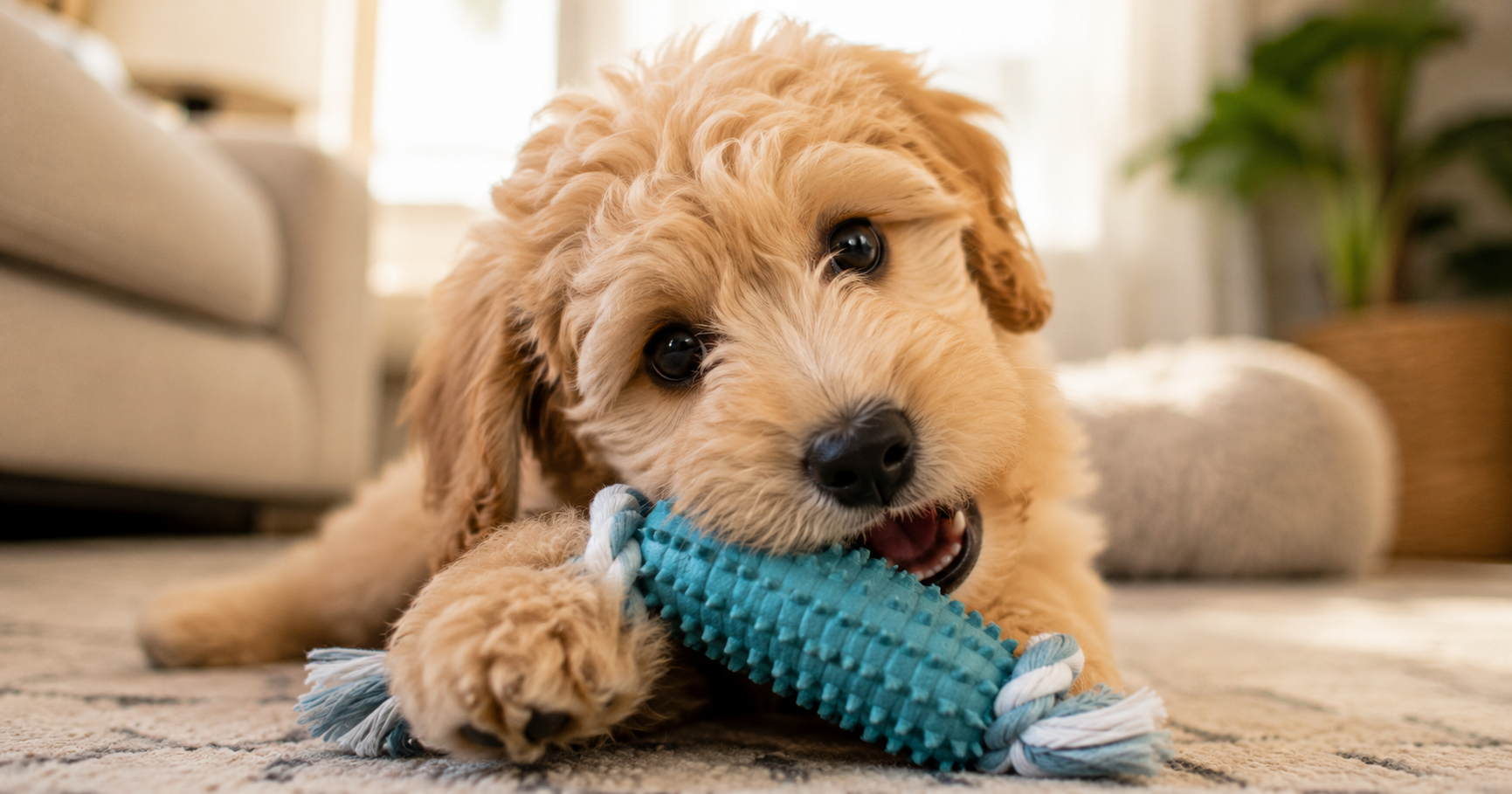
Puppy teeth are needle-sharp and every new owner underestimates how much that’s going to hurt until it happens. The good news: this phase is temporary, and how you handle it now genuinely shapes your dog’s bite behavior for life.
Why puppies bite so much in the first place
Puppies explore the world with their mouths the way toddlers explore with their hands, and biting is also a core part of normal puppy play — littermates bite each other constantly, and a yelp from a sibling is how a puppy first learns that biting too hard ends the fun. Teething (roughly 3–6 months) adds a physical urge to chew on top of the behavioral drive, which is why this phase often gets more intense before it improves.
Bite inhibition comes before “no biting at all”
Rather than trying to eliminate mouthing entirely and immediately, the more effective sequence is teaching your puppy that hard bites are unacceptable first, then gradually reducing pressure and frequency over time. This mirrors what happens naturally in a litter: a puppy that bites too hard gets immediate, clear feedback, and adjusts.
1. Yelp and stop, immediately
When a bite is too hard, give a sharp, high-pitched “ow” and immediately stop the interaction — withdraw your hand, stand up, turn away. This mimics the feedback a puppy would get from a littermate and is one of the more reliable ways to communicate “too hard” in a language your puppy already understands.
2. Redirect to an appropriate chew immediately after
The moment the biting stops, offer a toy or chew as an acceptable alternative. This teaches your puppy what they should be biting, not just what they shouldn’t — redirection without an alternative just leaves the underlying urge to chew unaddressed.
3. Give a short time-out for repeated hard biting
If the yelp-and-redirect cycle doesn’t calm things down, a brief pause in play (leaving the room for 30–60 seconds, or placing your puppy in a safe space briefly) removes the reward of continued interaction. Keep it calm and brief — this isn’t punishment, it’s simply ending the game.
4. Manage the environment while the skill develops
Keep appropriate chew toys within reach at all times, and avoid overly rough hand-play games that encourage mouthing in the first place. A tired puppy also bites less — make sure physical and mental exercise needs are being met, since an under-stimulated puppy often channels excess energy into biting.
What’s normal timeline-wise
Most puppies show real improvement in biting intensity and frequency by 5–6 months as teething resolves and consistent redirection takes hold, though full “no mouthing at all” often takes longer and continued consistency. If biting seems to be increasing in intensity, or is accompanied by genuinely aggressive body language (stiff body, growling that isn’t playful) rather than typical puppy exuberance, that’s worth a conversation with a trainer or your vet.
Frequently asked questions
Is it normal for puppies to bite harder when tired?
Yes, an overtired or overstimulated puppy often loses impulse control the same way an overtired toddler does, and biting intensity frequently increases. Recognizing this pattern and shifting to calm downtime rather than more play can help in the moment.
When should puppy biting be a concern rather than normal behavior?
If biting is paired with stiff body language, prolonged growling that doesn’t stop with a break in play, or seems genuinely defensive rather than playful, it’s worth involving a professional trainer or behaviorist rather than assuming it’s a phase that’ll pass on its own.