
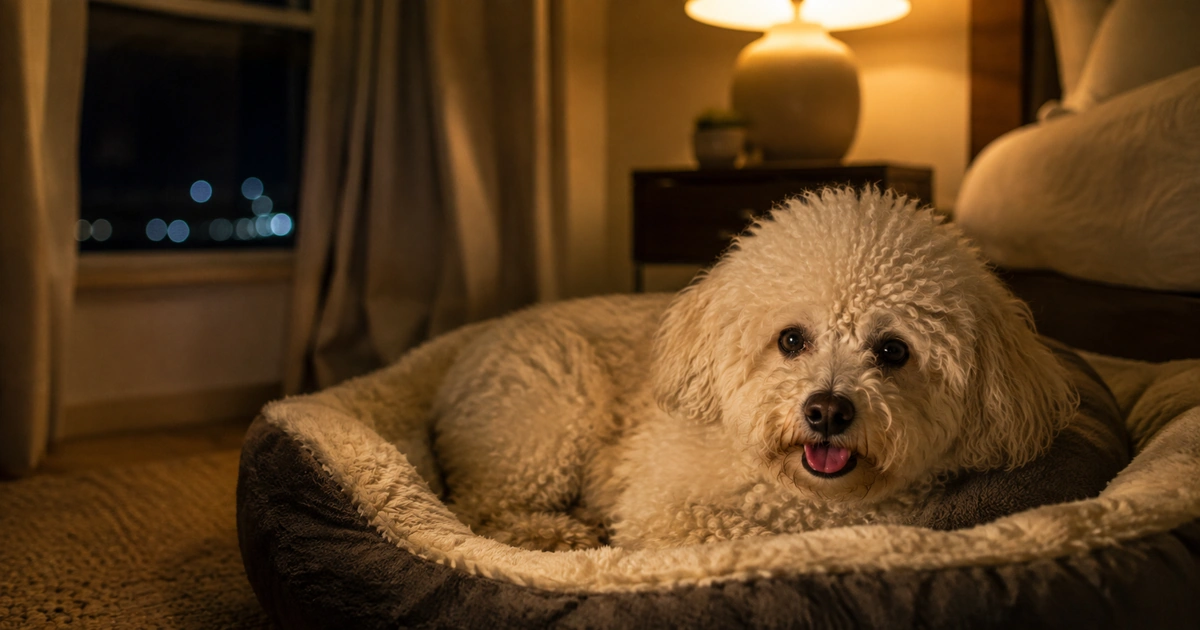
A little nighttime panting rarely means anything, but it’s one of those symptoms where the pattern and context matter a lot more than the panting itself.
The mundane explanations, first
- Room temperature: a room that’s warmer than it feels to you (dogs regulate heat less efficiently than humans, mainly through panting rather than sweating) can trigger panting well before you’d notice discomfort yourself
- Heavy bedding or a warm sleeping spot: a thick dog bed or blanket in a warm room adds up faster than expected
- Dreaming: dogs show visible physical activity during REM sleep — twitching, leg movements, occasional vocalizing — and brief panting during or right after a dream isn’t unusual
- Residual excitement or stress from something earlier in the day (a stressful event, an exciting visitor) can sometimes carry into a slightly elevated panting pattern at bedtime
When it’s a pain signal
Dogs experiencing pain, particularly from arthritis or another chronic condition, often pant more at night specifically because stillness (lying down for extended periods) can make joint discomfort more noticeable than it is during an active day. This is a genuinely common and often under-recognized sign of pain in senior dogs especially, worth connecting to our broader guide on signs your senior dog is in pain if this rings a bell.
When it could be anxiety
Nighttime panting paired with pacing, an inability to settle, or clinginess can reflect anxiety rather than a physical cause — separation-related anxiety, noise sensitivity to outside sounds at night, or general stress can all show up this way once the daytime’s usual distractions are gone.
When it points to something more serious
Panting that’s new, persistent, happens at rest in a genuinely cool environment, or is paired with coughing, reluctance to lie flat, pale or bluish gums, or visible distress can be associated with heart disease, respiratory issues, or other underlying conditions that need veterinary evaluation. This is a different category from the everyday explanations above, and it’s worth taking seriously rather than assuming it’ll pass.
Frequently asked questions
Is it normal for dogs to pant while dreaming?
Brief panting alongside other dream-related activity (twitching, leg movements) is generally normal and not something to worry about, as long as it resolves once the dog wakes or settles back down.
Can anxiety medication help with nighttime panting?
If a vet determines anxiety is the underlying cause after ruling out physical issues, they may discuss behavioral approaches or, for more significant cases, medication as part of a broader management plan — this isn’t a first-line home remedy decision, though, and needs a proper evaluation first.