
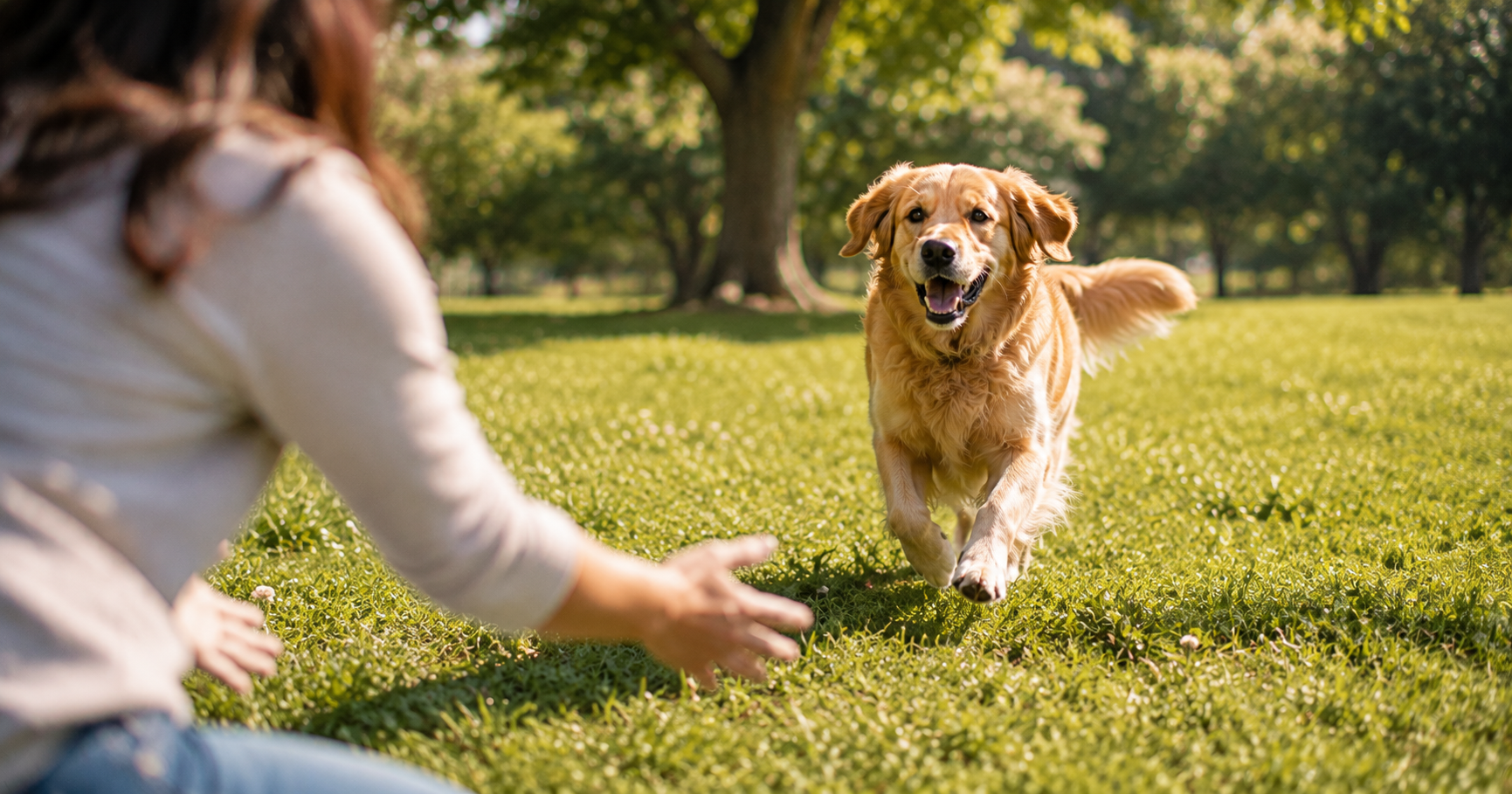
A dog that reliably comes when called is one of the most genuinely useful skills you can teach, and one of the most commonly botched, usually by accident rather than a lack of effort.
The single most important rule: never punish after they come
If your dog finally comes back after ignoring you for five minutes, and you scold them for the delay, you’ve just taught them that coming to you can end badly — which makes them slower to come next time, not faster. However frustrated you are in the moment, the arrival itself always needs to be met with genuine reward, every time, no exceptions.
Building the recall step by step
1. Start indoors, with zero distractions
Say your dog’s name and your recall word (“come” works, though some trainers prefer a unique word your dog hasn’t heard used loosely before), and reward heavily — high-value treats, genuine excitement — the instant they arrive. Repeat often in short sessions.
2. Add mild distractions, still on leash
Practice in the yard or a quiet outdoor space, on a long training leash, gradually introducing mild distractions (another room, a toy nearby) while maintaining the same high rate of reward for a successful recall.
3. Practice with real distractions, still on a long line
A 15–30 foot long training leash lets you practice in more distracting environments (a park, around other people or dogs) while still maintaining the ability to guide your dog back if the recall doesn’t land. This stage often takes the longest, and that’s expected.
4. Test off-leash only in a secure, controlled area
Only move to off-leash practice in a fully enclosed space once your dog has shown consistent, reliable success on the long line across a range of distractions. Rushing this step is the most common reason recall training breaks down in real-world situations.
Keeping the recall valuable long-term
- Vary the reward: sometimes a treat, sometimes play, sometimes just genuine enthusiastic praise, so the recall stays interesting rather than becoming routine and low-value
- Call your dog for good things, not just to end fun: if “come” only ever means the walk is over or playtime’s done, your dog learns to associate it with something unwelcome
- Practice regularly, even once it’s reliable, so the behavior doesn’t fade from disuse
Frequently asked questions
How long does it take to train a reliable recall?
With consistent daily practice, basic reliability in low-distraction settings often develops within a few weeks, but full reliability around real-world distractions can take several months of ongoing practice and reinforcement.
Should I use a shock collar for recall training?
Positive reinforcement-based recall training is widely recommended as the primary approach, since it builds genuine motivation to come rather than compliance driven by avoiding discomfort, which tends to be more reliable and doesn’t risk creating anxiety around the recall cue itself.