
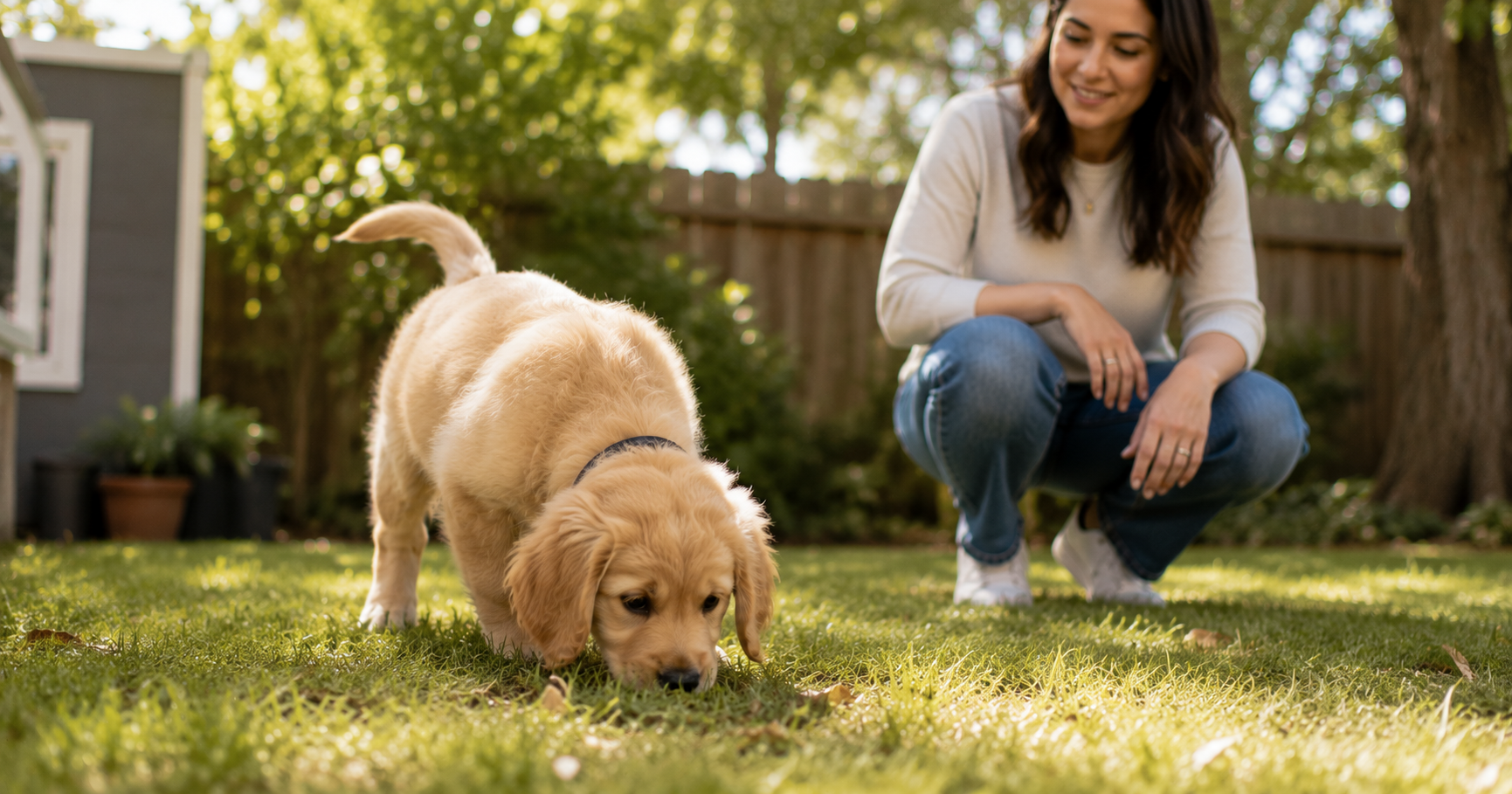
House-training timelines get exaggerated in both directions online — some sources make it sound instant, others make it sound endless. Here’s a grounded version, week by week.
Weeks 8–12: Frequent, predictable accidents are normal
At this age, your puppy has very limited bladder control and essentially no ability to “hold it” for planning purposes — they’ll need to go roughly every 1–2 hours while awake, immediately after eating or drinking, and right after waking from any nap. This is the highest-frequency, highest-effort phase, and it’s supposed to be.
Weeks 12–16: Patterns start to emerge
Bladder control improves gradually, and with a consistent schedule, most puppies start showing recognizable patterns — needing to go at fairly predictable times relative to meals, naps, and play. This is also when body language cues (sniffing, circling, heading toward the door) typically become more noticeable and trainable.
Months 4–6: Real reliability starts to build
By this stage, most puppies can hold it for several hours and are showing much more consistent success, especially with a maintained schedule. This is often when owners start to feel like training is “working,” though occasional accidents, especially during exciting or novel situations, are still common.
Months 6–12: Full reliability, with some individual variation
Most dogs reach full house-training reliability somewhere in this window, though smaller breeds (which have smaller bladders relative to their metabolism) sometimes take longer than larger breeds to reach the same consistency.
The core approach that speeds things up
1. Take your puppy out on a consistent schedule
First thing in the morning, after every meal, after naps, after play sessions, and before bed, at minimum — proactive timing prevents far more accidents than reactive cleanup ever will.
2. Reward immediately after they go, outside
Praise and a treat within seconds of finishing, while still outside, clearly connects the reward to the correct location and behavior. Waiting until you’re back inside to reward loses that connection.
3. Supervise closely indoors, or use a crate
A puppy that’s unsupervised indoors is a puppy with the opportunity to have an accident you didn’t catch in time. Close supervision or crating during unsupervised stretches prevents accidents from happening in the first place, which is more effective than correcting them after.
When to be more concerned
A puppy well past 6 months with frequent accidents despite a consistent schedule, or a previously house-trained dog that suddenly starts having accidents, is worth a vet visit — a urinary tract infection or other medical issue can look identical to a training problem and needs to be ruled out before assuming it’s purely behavioral.
Frequently asked questions
Why did my house-trained dog suddenly start having accidents?
A sudden regression in a previously reliable dog is worth a vet visit to rule out a urinary tract infection or other medical cause before assuming it’s purely behavioral — this pattern often has a physical explanation rather than a training one.
Do puppy pads slow down potty training?
Some trainers find that pads can create confusion about acceptable indoor-versus-outdoor elimination if used inconsistently, though they can be a reasonable tool for owners without easy outdoor access, especially early on before full vaccination allows outdoor exposure.