
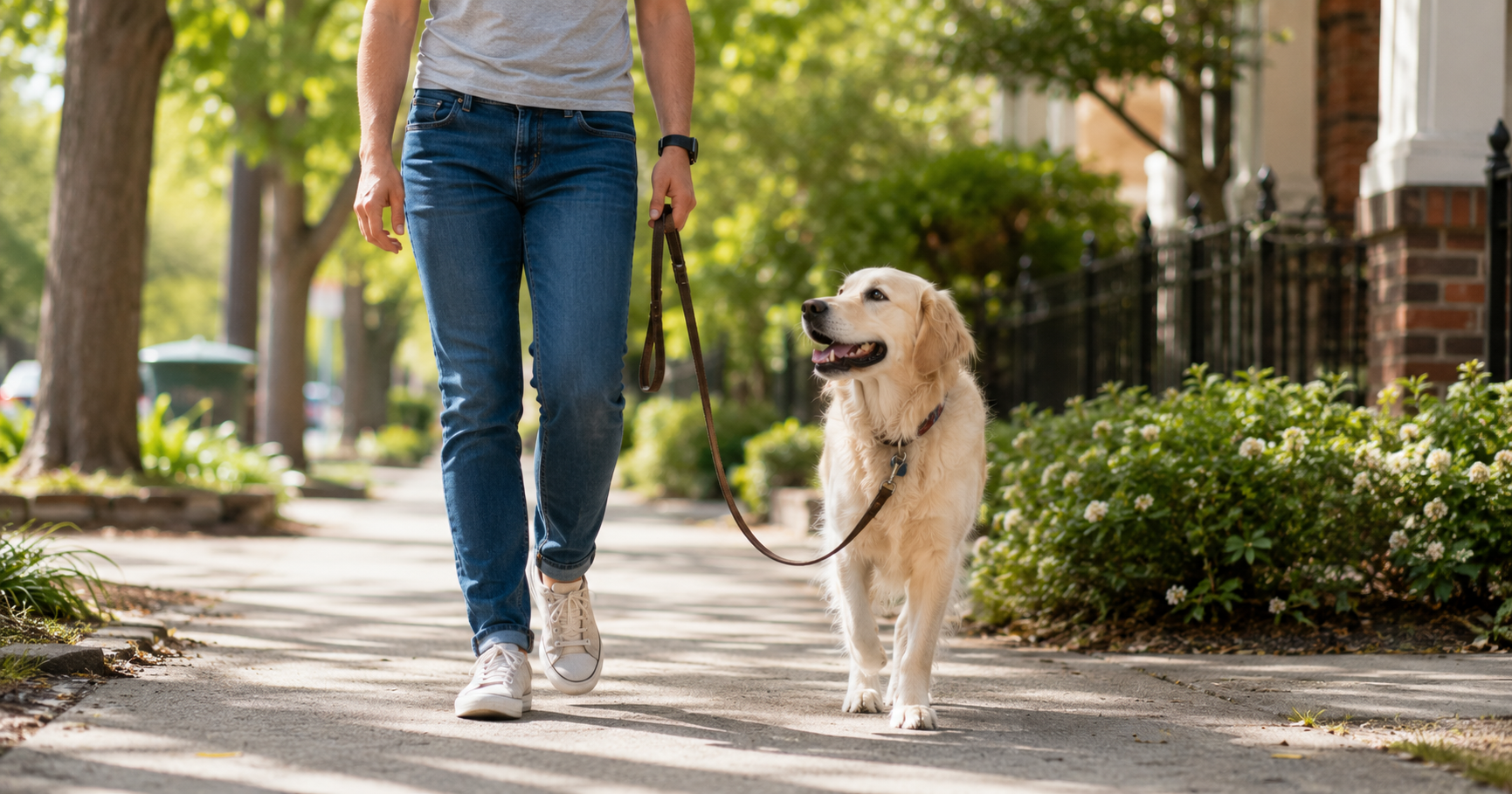
Leash pulling is one of the most common training complaints, and also one of the more fixable ones, because the underlying mechanism is refreshingly simple once you see it.
Why dogs pull in the first place
Dogs are naturally faster walkers than most humans and are highly motivated by what’s ahead — a smell, another dog, an interesting patch of grass — so pulling toward it is the default behavior without training otherwise. The critical detail: every time your dog pulls and the walk continues forward anyway, that’s an accidental reward, reinforcing exactly the behavior you don’t want.
The “be a tree” method
1. Stop the instant the leash goes tight
The moment you feel tension on the leash, stop walking completely — plant your feet, don’t move forward even an inch. Don’t yank back or say anything yet; just stop.
2. Wait for slack, then move again
Stand still until your dog either turns back toward you or the leash slackens on its own (often out of curiosity about why you stopped). The instant there’s slack, resume walking. This is the entire mechanism: forward motion only happens on a loose leash, never a tight one.
3. Reward position near you, not just the stop
Occasionally reward your dog with a treat when they’re walking in a good position near you, not just after a stop-and-slack cycle. This reinforces the position you want proactively, rather than only reacting to pulling after the fact.
4. Expect a LOT of repetitions early on
The first few walks using this method can involve stopping dozens of times in a short distance, which is completely normal and not a sign it’s not working — consistency is what makes the pattern click. Most dogs show real improvement within 1–2 weeks of consistent practice, faster with more frequent short sessions than infrequent long ones.
Equipment can help, but isn’t a substitute for training
- Front-clip harnesses redirect a pulling dog’s momentum sideways rather than letting them drive forward with full body weight, making pulling less physically rewarding while you train
- Avoid retractable leashes during training — they don’t provide the consistent tension feedback the stop-and-reset method relies on
- A standard 4–6 foot leash gives you the control and consistency this method needs
Frequently asked questions
How long does it take to stop a dog from pulling?
With consistent practice, most dogs show meaningful improvement within a few weeks, though full reliability, especially around high-distraction environments, often takes longer and benefits from continued reinforcement even after the initial improvement.
Do harnesses make pulling worse?
Standard back-clip harnesses can actually make pulling more comfortable for a dog (similar to sled dog gear), which is why front-clip harnesses, which redirect pulling sideways, are generally recommended specifically for dogs learning loose-leash walking.
Is it normal for puppies to pull more than adult dogs?
Yes, puppies have less impulse control and haven’t yet learned leash manners, so more frequent pulling and more repetitions of the stop-and-reset method are expected and normal at this stage.