
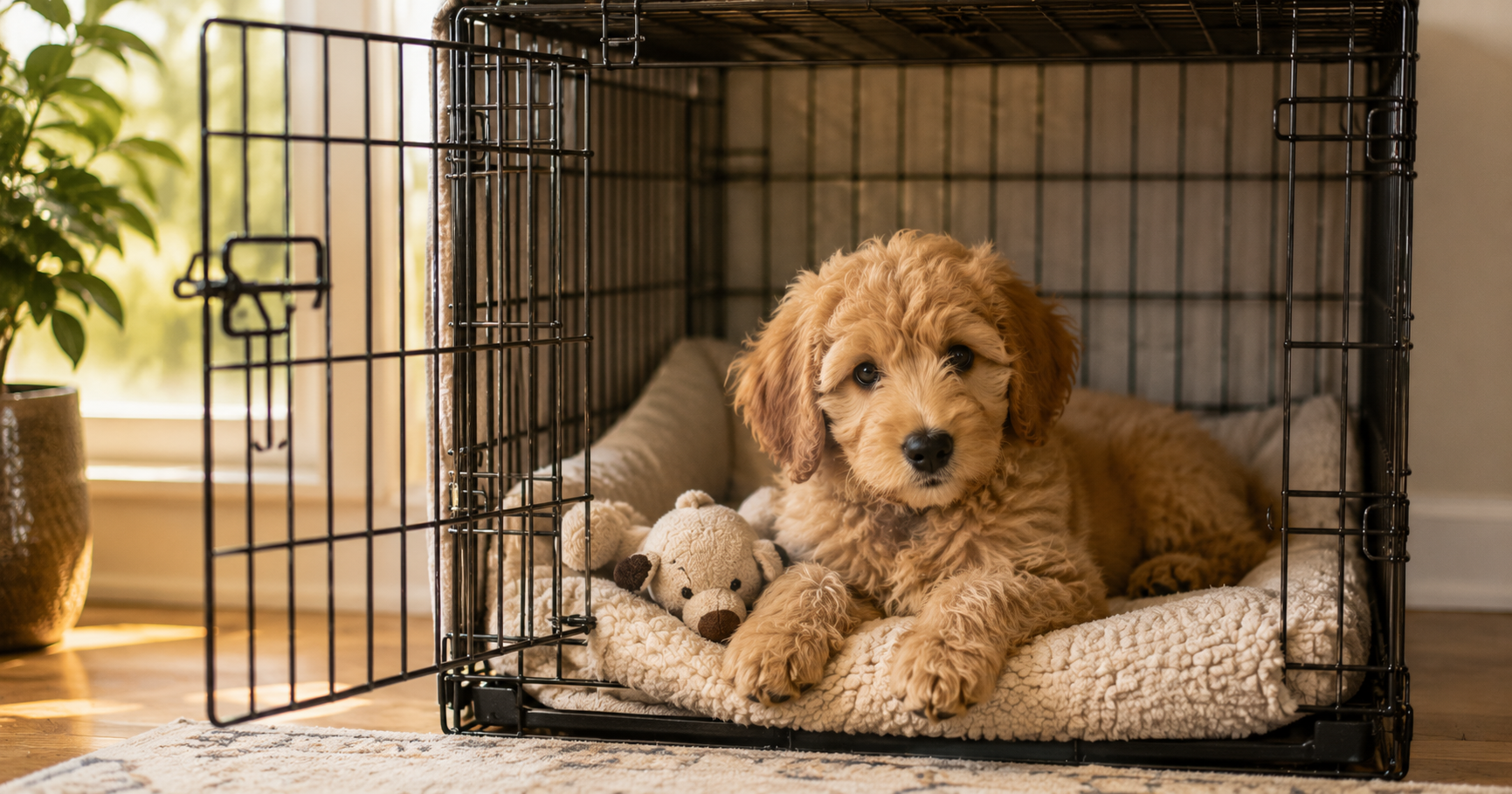
Crate training done well gives a dog their own safe, denlike space and gives you a reliable management tool — but the timeline matters as much as the technique, since asking too much too soon is where most of the frustration comes from.
Realistic bladder-holding times by age
| Age | Approximate max hold time |
|---|---|
| 8–10 weeks | ~1 hour |
| 3 months | ~3–4 hours |
| 4 months | ~4–5 hours |
| 5–6 months | ~5–6 hours |
| Adult dog (fully house-trained) | Up to ~6–8 hours, though regular breaks are still healthiest |
These are general guidelines, not guarantees — individual puppies vary, and factors like recent water intake and activity level shift things in either direction. Overnight is generally easier than daytime stretches since metabolism slows during sleep.
Building a positive association first
Week 1: Make the crate a good place to be, door open
Feed meals in or near the crate, toss treats inside for your puppy to find, and let them come and go freely with the door open. The goal here is purely positive association — no closing the door yet, no pressure.
Week 2: Short, closed-door sessions while you’re present
Start closing the door for just a few minutes at a time while you’re in the room, paired with a stuffed chew toy or treat. Gradually extend the duration as your puppy stays calm, opening the door before any whining escalates into a full protest (which would reward the whining instead).
Week 3: Practice brief absences
Once your puppy is comfortable with closed-door time while you’re nearby, start stepping out of the room for short periods, then gradually longer ones, then brief trips out of the house. Build duration slowly based on how your puppy is actually handling it, not a fixed schedule.
Week 4 onward: Extend toward real-world duration
Gradually work toward the actual stretches you’ll need — a workday, overnight — based on your puppy’s demonstrated bladder control and comfort level from the earlier weeks, rather than jumping straight to a full 8-hour day.
Common crate training mistakes
Sizing and setup matter too
The crate should be large enough for your puppy to stand, turn around, and lie down comfortably, but not so large that there’s room to sleep in one corner and potty in another — for growing puppies, a divider panel lets you adjust the usable space as they grow rather than buying multiple crates.
Frequently asked questions
Is it cruel to crate a puppy overnight?
Done properly with a positive association built first, overnight crating is widely considered a normal, safe part of house-training — puppies’ instinct not to soil their sleeping area supports this, which is part of why overnight stretches are often easier than daytime ones.
What if my puppy cries in the crate at night?
Some initial adjustment whining is common, especially in the first few nights, but persistent, escalating distress is different and may mean the pace was too fast or a bathroom need is genuine. Rule out a real need first, then avoid letting your puppy out specifically because of crying, which can reinforce the behavior.
When can I stop crating my dog?
Once a dog is reliably house-trained and hasn’t shown destructive or anxious behavior when loose in the house for extended test periods, many owners transition away from crating, though some dogs continue to prefer their crate as a cozy retreat indefinitely.
Do I need to buy a bigger crate as my puppy grows?
Not necessarily — buying a crate sized for your puppy’s expected adult size, with a divider panel to shrink the usable space while they’re small, is generally more practical and cost-effective than replacing crates as they grow.
Can crate training work for an adult rescue dog, not just a puppy?
Yes — the same gradual, positive-association approach applies at any age, though an adult dog with an unknown history may need a slower initial pace, especially if there’s any indication of past negative associations with confinement.
How long after eating should I wait before crating my puppy?
A general rule is about 20–30 minutes after a meal or water break to allow for a bathroom trip first, which reduces the chance of an accident during crate time, especially with young puppies who have limited bladder control.