
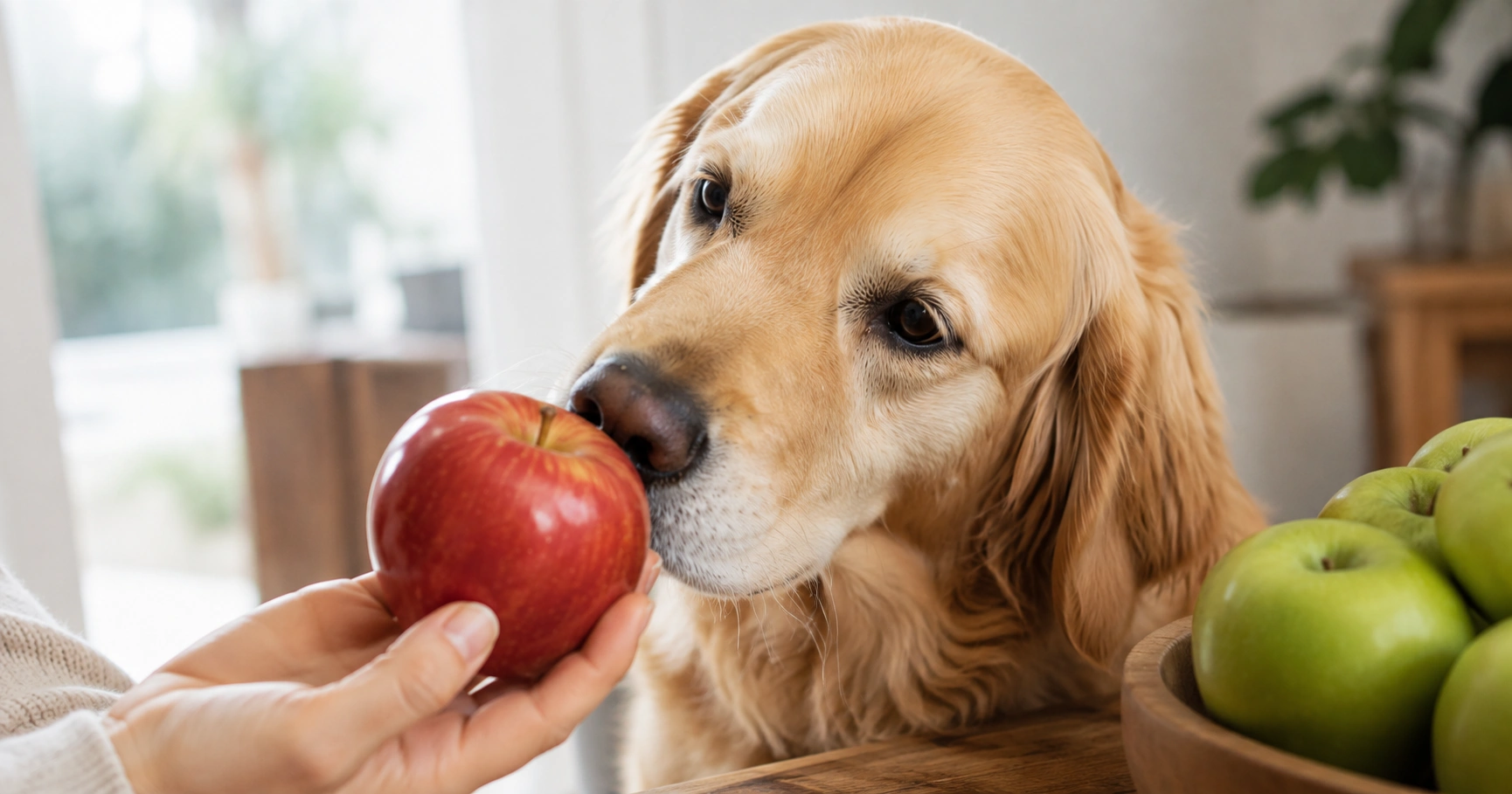
Apples are one of the easier “yes” answers in the world of dog-safe human food, as long as you prep them properly first.
Why apples are a solid treat choice
Apples provide dietary fiber, which can support digestive health, along with vitamin C and a naturally sweet flavor most dogs enjoy without the sugar and calorie load of a processed treat. The crunchy texture can also offer a mild, incidental teeth-cleaning benefit, similar to the effect of other crunchy produce.
Prep matters: seeds and core
- Remove the seeds: apple seeds contain amygdalin, which releases a small amount of cyanide when broken down — a couple of accidentally swallowed seeds from a slice isn’t typically dangerous, but seeds shouldn’t be deliberately fed or fed in any quantity
- Remove the core: it’s tough, harder to digest, and a minor choking consideration, especially for smaller dogs
- Cut into appropriately sized pieces for your dog, especially for small breeds or dogs that tend to gulp food
- Skip anything sweetened or flavored — apple pie filling, caramel apples, or dried apple with added sugar aren’t the same as plain fresh apple
How much is reasonable
A few slices as an occasional treat is a reasonable amount for most dogs, adjusted for size — a small dog needs less than a large one. Like most fruit, apples still contain natural sugar, so they’re best treated as an occasional addition rather than a free-feeding snack.
Frequently asked questions
Can dogs eat apple skin?
Yes, apple skin is safe and contains additional fiber and nutrients, though washing it first to remove any pesticide residue is a good habit, same as you’d do before eating it yourself.
Are there dogs who shouldn’t eat apples?
Dogs with diabetes should have fruit, including apples, introduced carefully and in consultation with a vet given the natural sugar content. Dogs with a known sensitivity to apples specifically (uncommon, but possible) should obviously avoid them.