Peanut butter has become such a default dog treat that it’s easy to stop reading the label — which is exactly the habit worth breaking, since manufacturers have quietly added xylitol to more products over the past several years.
Plain peanut butter: genuinely fine, and has some upsides
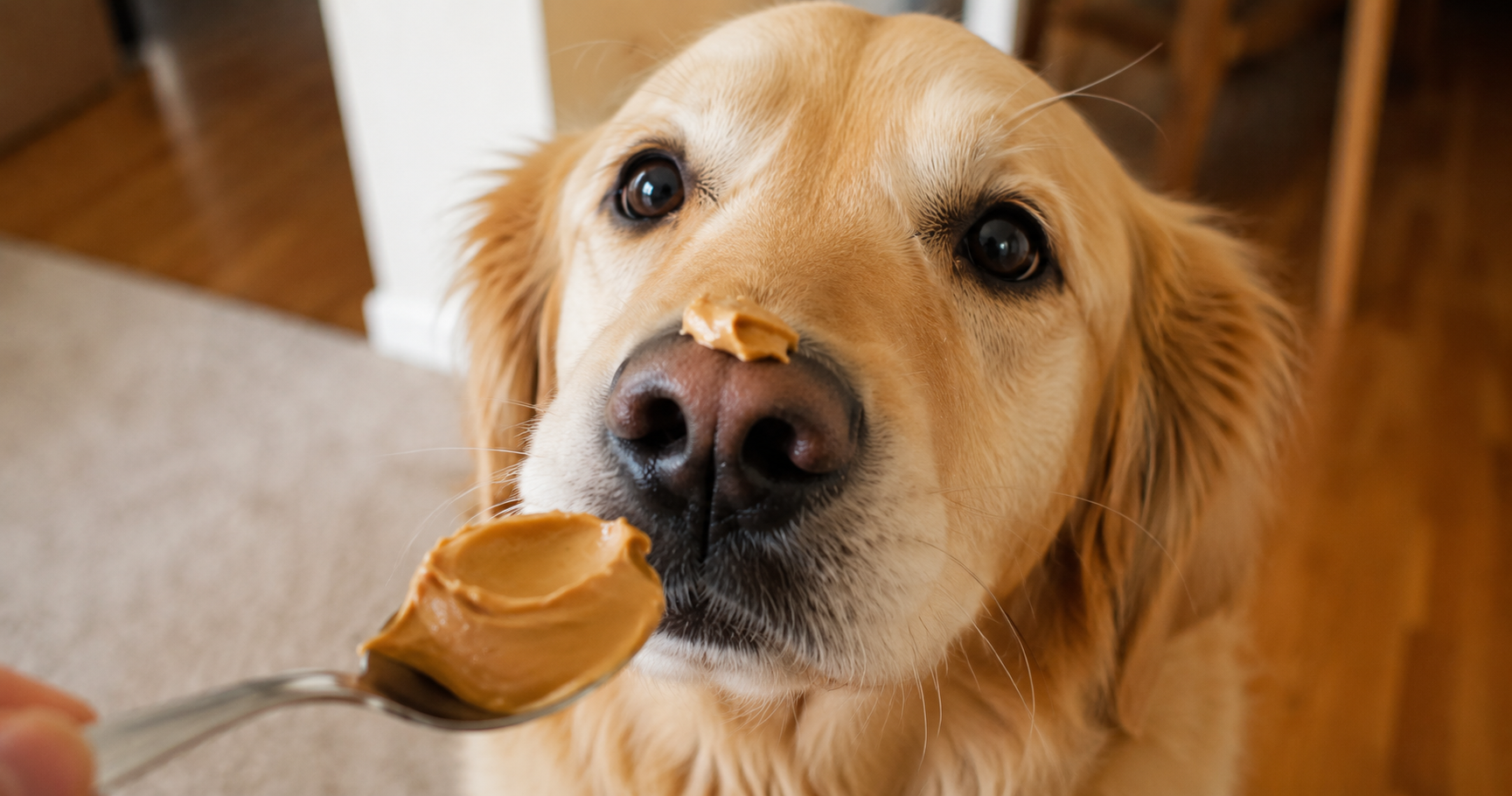
Peanuts themselves aren’t toxic to dogs, and peanut butter delivers protein and healthy fats in a texture dogs love, which is exactly why it’s a go-to for pilling a dog or filling a puzzle toy. Look for a short, simple ingredient list: peanuts, maybe salt, maybe a small amount of oil. That’s the version worth keeping in the pantry.
The xylitol problem, explained
Xylitol is a sugar alcohol used as a low-calorie sweetener, and it’s shown up in a growing number of “natural,” “keto,” or reduced-sugar peanut butter brands as manufacturers reformulate for human dietary trends — with little regard for the fact that it’s genuinely dangerous to dogs. In dogs, xylitol triggers a rapid insulin release that can cause a dangerous blood sugar crash, and in larger amounts, liver failure. This is a real and growing risk specifically because it keeps appearing in products people don’t expect it in.
How to actually check before sharing
- Read the full ingredient list every time, even for a brand you’ve used before — formulations change without much fanfare
- Watch for “xylitol” specifically on the label, sometimes listed under “sugar alcohol” more generically
- Be extra cautious with anything marketed as “sugar-free,” “natural,” “diet,” or “keto” — these are the categories most likely to contain xylitol
- Consider a dog-specific peanut butter if you want to remove the guesswork entirely — several brands make xylitol-free peanut butter specifically formulated for dogs
Moderation still matters, even with safe peanut butter
Peanut butter is calorie-dense and often high in fat, so it’s best used as an occasional treat or training reward rather than a regular part of a dog’s diet — too much, too often, can contribute to weight gain or, in sensitive dogs, an upset stomach. A small dollop in a puzzle toy or a thin smear on a pill goes a long way.
Frequently asked questions
How much peanut butter can I give my dog?
As an occasional treat, a teaspoon or so for a small dog and up to a tablespoon for a larger dog is a reasonable general guideline, though it should stay occasional rather than a daily habit given the fat and calorie content.
Is crunchy or smooth peanut butter better for dogs?
Either is generally fine ingredient-wise; smooth is often preferred for stuffing puzzle toys since it’s easier to work into small spaces, while crunchy poses a very minor extra choking consideration for dogs that gulp food quickly.
Can puppies eat peanut butter?
Yes, in small amounts, following the same xylitol-check rule as adult dogs. Introduce any new food gradually and in small quantities to watch for individual sensitivity, as with any new treat for a puppy.