
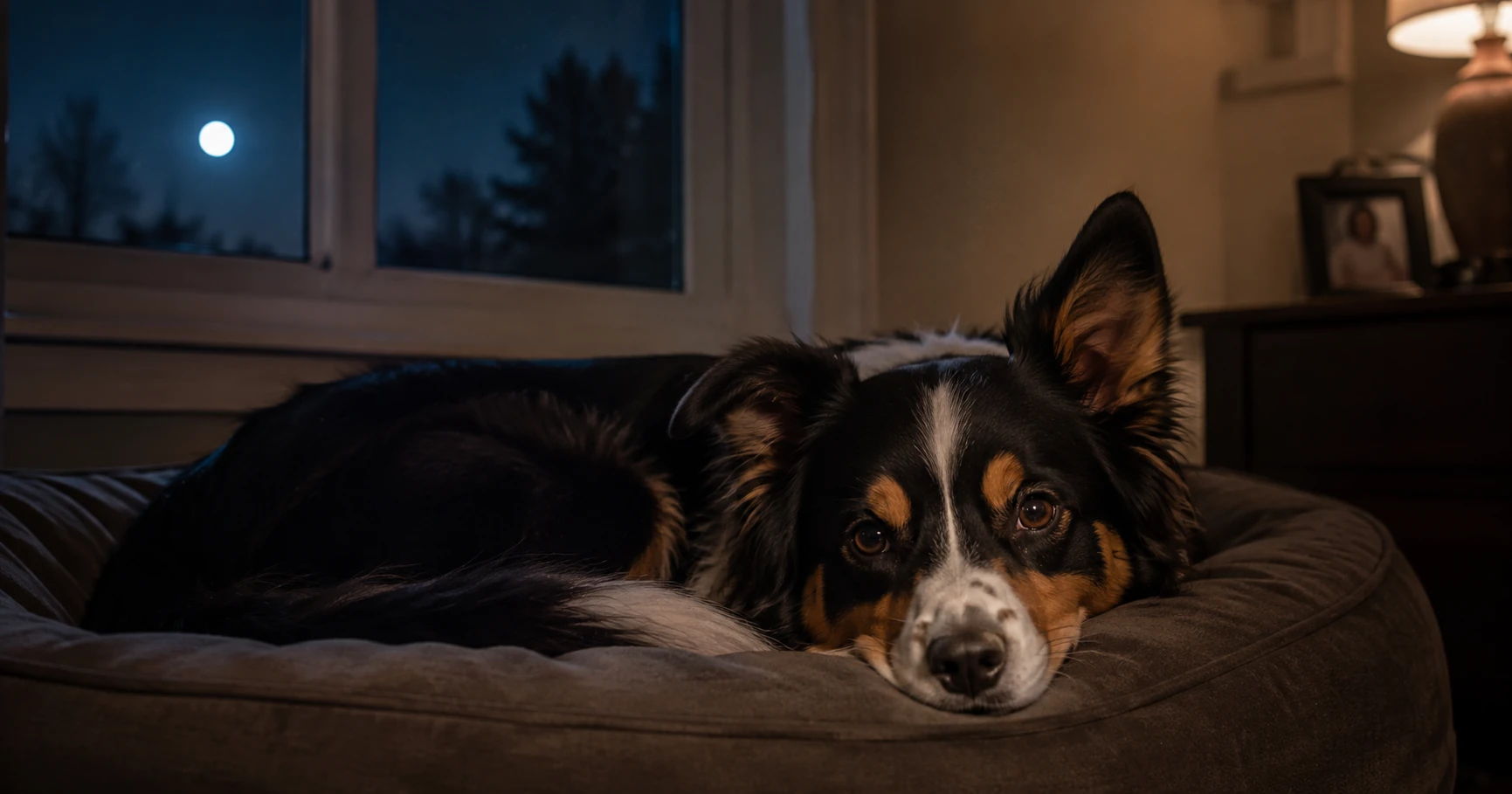
A dog whining at 2am is one of those problems that feels urgent in the moment and is usually solvable once you work through it methodically — the trick is ruling out causes in a sensible order rather than guessing.
Start with the basics: needs
- Needs to go outside: especially in puppies, seniors, or dogs on a new feeding schedule, a full bladder is the most common and easiest-to-rule-out cause
- Thirsty or hungry: less common at night but worth checking, particularly if dinner was earlier than usual
- Too hot or too cold: dogs can’t easily adjust bedding themselves, and a room that’s comfortable for you may not be for a dog with a heavy coat or, conversely, a short-haired breed
- Physical discomfort: an uncomfortable bed, a joint pressed at an odd angle, or a collar that’s bothering them
Puppies whine at night for a very specific reason
A new puppy in an unfamiliar home, often separated from littermates and a mother for the first time, is experiencing genuine separation distress at night — this is developmentally normal, not a training failure. It typically improves over the first few weeks as the puppy settles in and builds trust in the new environment. Crate training with the crate near your bed initially, then gradually moved, tends to ease this transition better than either ignoring it entirely or moving the puppy into your bed permanently.
Anxiety and loneliness
Nighttime is quiet and dark, with fewer normal distractions, which can make an anxious dog more attuned to their own unease. Dogs with general anxiety, noise sensitivity (fireworks, storms, unfamiliar outdoor sounds), or separation anxiety when sleeping in a different room from you may whine more at night specifically because the usual daytime distractions aren’t there to mask it.
Pain or discomfort, especially in older dogs
Whining that’s new, especially in a senior dog, paired with reluctance to move, stiffness, or changes in how they’re lying down, can point to joint pain or another physical discomfort that’s more noticeable when lying still at night than during an active day. Arthritis in particular tends to worsen with stillness and cooler temperatures, which is exactly the environment of nighttime rest.
A practical approach
Rule out the physical basics first (bathroom, water, temperature, comfort), then consider timeline: is this new, or has it always happened? New and sudden points more toward pain or a specific trigger; long-standing and consistent (especially in a puppy) points more toward normal adjustment or anxiety that training and time can address. Avoid immediately rushing in and rewarding the whining with attention every time, which can reinforce it, but also don’t ignore a genuinely new pattern that could be medical.
Frequently asked questions
Should I ignore my dog’s whining at night?
Not universally — ignoring a genuine need (bathroom, pain) isn’t appropriate, but consistently rewarding attention-seeking whining with immediate attention can reinforce the pattern. The key is distinguishing need from habit, which usually becomes clearer once you’ve ruled out the basics a few times.
How long does puppy nighttime whining usually last?
Most puppies settle significantly within 1–2 weeks as they adjust to the new environment and routine, though full adjustment can take a bit longer for some individual dogs. Consistent routine and gradual independence-building (rather than either extreme of full isolation or constant co-sleeping) tends to speed this up.
Why does my senior dog suddenly whine at night when they never used to?
A sudden new pattern in an older dog is worth a vet visit rather than assuming it’s behavioral — arthritis pain, vision or hearing loss causing disorientation in the dark, and canine cognitive dysfunction are all more common explanations at this life stage than a new anxiety developing out of nowhere.