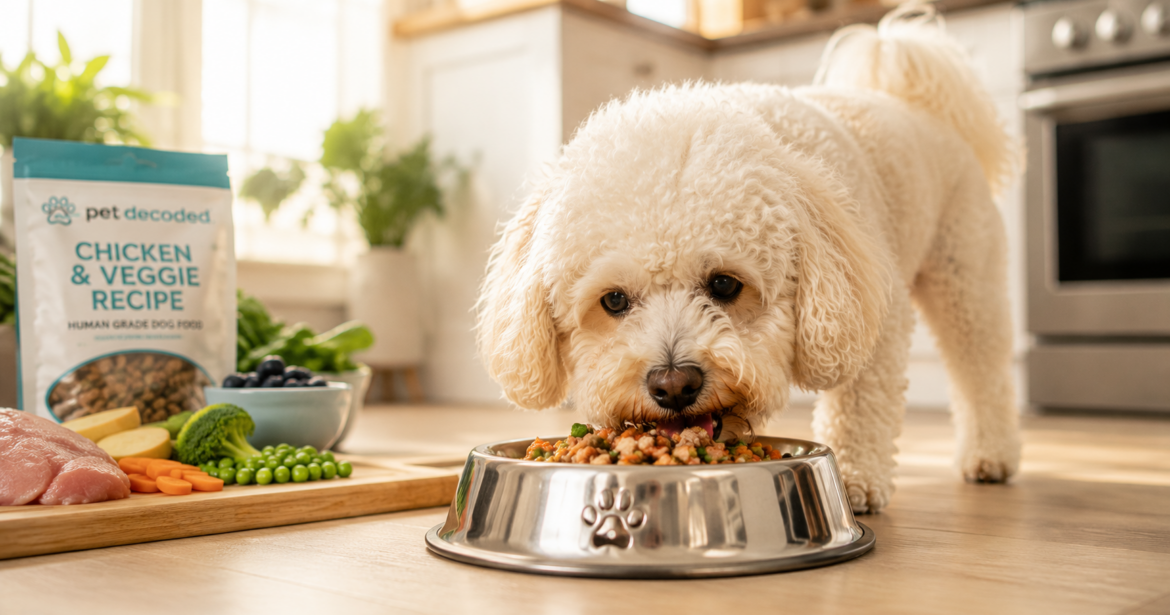
Fresh dog food delivery has become one of the fastest-growing categories in pet nutrition — instead of a bag of shelf-stable kibble, your dog gets human-grade meals portioned specifically for their weight, age, and activity level, shipped frozen or refrigerated straight to your door. Here’s how the two leading services actually compare.
Quick comparison
| The Farmer’s Dog | Ollie | |
|---|---|---|
| Meal style | Fresh, gently cooked | Fresh or gently baked (your choice) |
| Formulation | Developed by veterinary nutritionists | Vet-formulated, customized by dog profile |
| Portioning | Pre-portioned by weight, age, activity | Pre-portioned by weight, age, activity |
| Kitchen standard | USDA-approved facilities | USDA-certified kitchens |
| Best known for | Picky eaters, health-driven diet needs | Flexibility between fresh and baked formats |
| Trial/first order | Discounted starter box | Discounted starter box |
The two services, in detail
The Farmer’s Dog
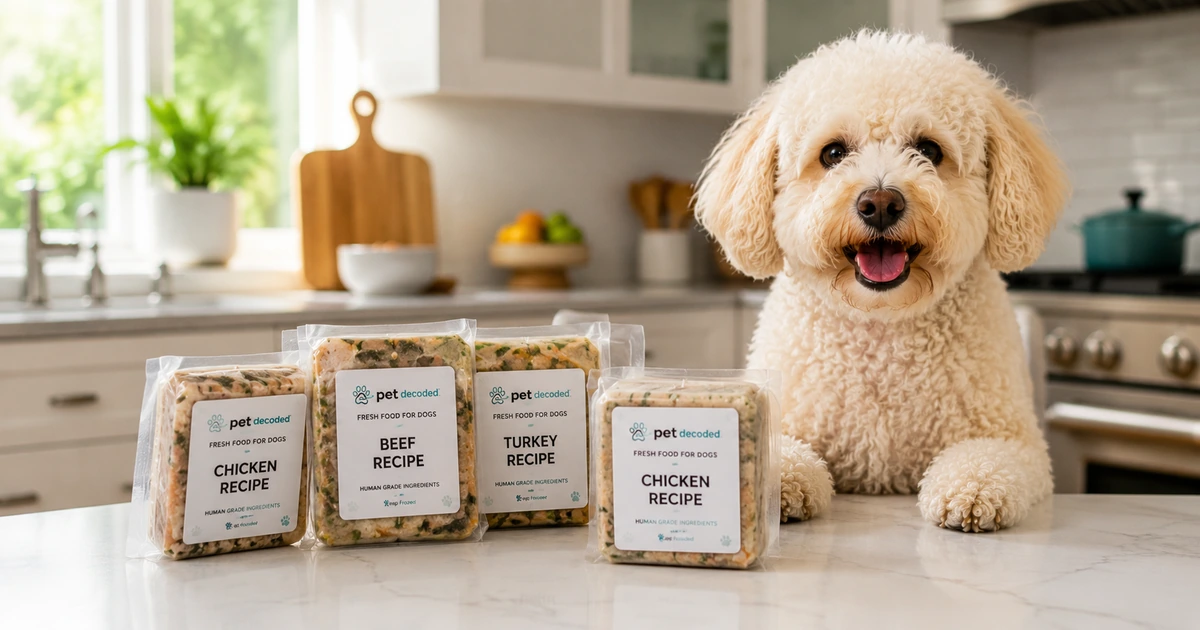
The Farmer’s Dog is one of the most established names in fresh dog food, built around recipes developed by veterinary nutritionists and prepared in USDA-approved kitchens. Meals are pre-portioned specifically for your dog based on a detailed profile you fill out during signup — weight, age, activity level, and any health considerations. It’s particularly well-regarded for picky eaters and dogs whose owners are managing a specific health concern through diet, since the formulation process leans clinical rather than just “premium marketing.”
Pros
- Strong reputation for picky eaters
- Veterinary-nutritionist-developed recipes
- Highly personalized portioning
Cons
- Premium pricing reflects the personalization
- Fresh format only — no baked alternative
Ollie
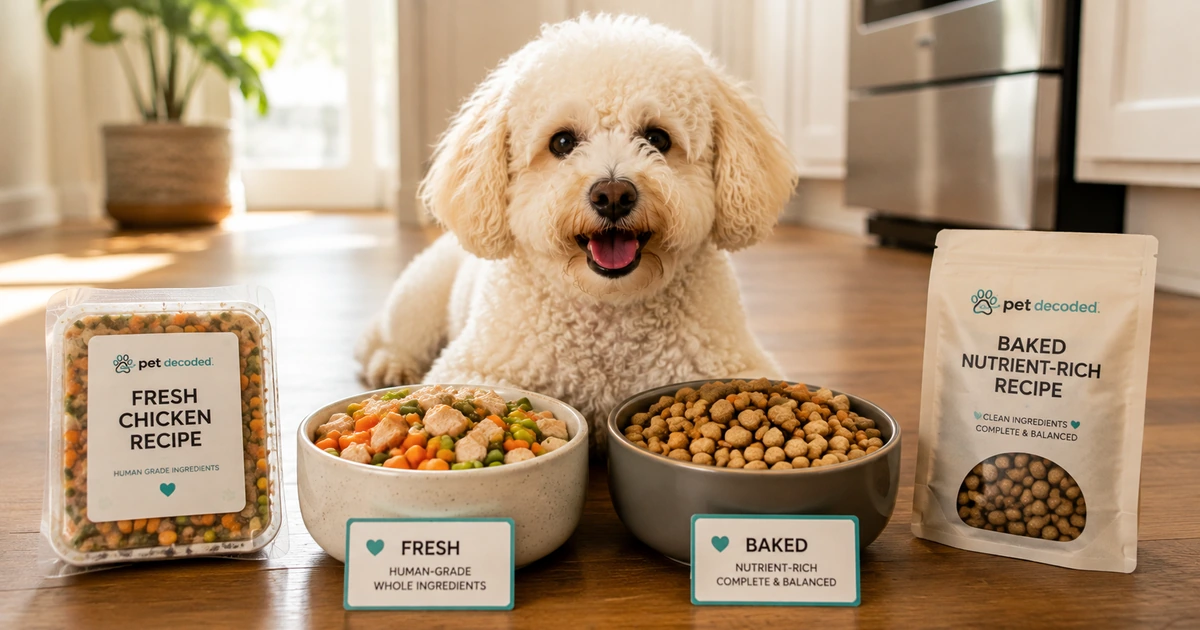
Ollie offers the same core promise — fresh, human-grade, vet-formulated meals customized to your dog — with one meaningful difference: you can choose between fresh and gently baked formats depending on what fits your routine and budget. The baked option in particular gives Ollie a bit more flexibility than a fresh-only competitor, and pricing at comparable portions tends to run slightly more affordable. Ollie also donates a portion of profits to dogs in need, which resonates with some shoppers.
Pros
- Choice between fresh and baked formats
- Tends to run slightly more affordable
- Vet-formulated, customized by profile
Cons
- Slightly less brand recognition than The Farmer’s Dog
- Still a premium price point vs. traditional kibble
What fresh food actually costs, by dog size
Fresh food is meaningfully more expensive than kibble, and both brands price per dog based on weight, activity level, and recipe choice, so an exact quote requires their calculators. As a general starting point for budgeting:
| Dog size | Typical monthly range |
|---|---|
| Small (under 20 lbs) | Roughly $60–$120/month |
| Medium (20–50 lbs) | Roughly $120–$250/month |
| Large (50+ lbs) | Roughly $250–$450+/month |
These are general estimates, not quotes — both brands’ starter discounts significantly reduce the first order, and ongoing pricing shifts based on the specific recipes and portion size your dog’s profile generates.
Ingredient sourcing and quality standards
Both brands operate at a meaningfully higher standard than typical shelf-stable kibble: recipes formulated with veterinary nutrition input, meals prepared in USDA-regulated facilities, and ingredient lists built around whole, recognizable foods rather than rendered meals and heavy preservatives. Neither publishes a full third-party lab-tested nutrient breakdown per batch the way some smaller boutique brands do, so if your dog has a specific medical diet requirement, it’s still worth reviewing the exact recipe with your vet rather than assuming any fresh-food brand automatically meets a prescription-level need.
How to choose
Frequently asked questions
Is fresh dog food actually better than kibble?
Fresh, human-grade food tends to have less processing and more identifiable whole-food ingredients than most kibble, and many owners report improved coat, energy, and digestion after switching — though individual results vary, and traditional kibble from a reputable brand can also be a perfectly healthy choice. If your dog has a specific health condition, it’s worth discussing the switch with your vet first.
How much does fresh dog food delivery cost?
Pricing depends heavily on your dog’s size and the specific plan, and both brands offer a discounted starter box for new customers — check each brand’s current pricing calculator with your dog’s details for an accurate quote rather than relying on a general estimate.
Can I switch my dog to fresh food gradually?
Yes, and it’s generally recommended — both services typically provide a transition guide for gradually mixing fresh food with your dog’s current diet over a week or two to avoid digestive upset from switching too abruptly.
Do these services work for puppies or senior dogs?
Both brands generally support a range of life stages through their profile customization, but it’s worth checking each brand’s specific guidance for puppies and seniors, and consulting your vet for any dog with special nutritional needs.
How is fresh dog food shipped and stored?
Meals typically arrive frozen or well-chilled in an insulated box with ice packs, timed to minimize transit time. Once delivered, portions generally go in the freezer for longer-term storage and the fridge for what you’ll use within the coming days — specifics vary by brand, so check the included instructions on your first delivery.
Can I use fresh food if my dog has allergies?
Both brands let you exclude specific proteins or ingredients when building your dog’s profile, which can help with a known sensitivity, but a dog with a diagnosed food allergy should have any new diet reviewed with your vet first rather than treating an elimination approach as a DIY project.