
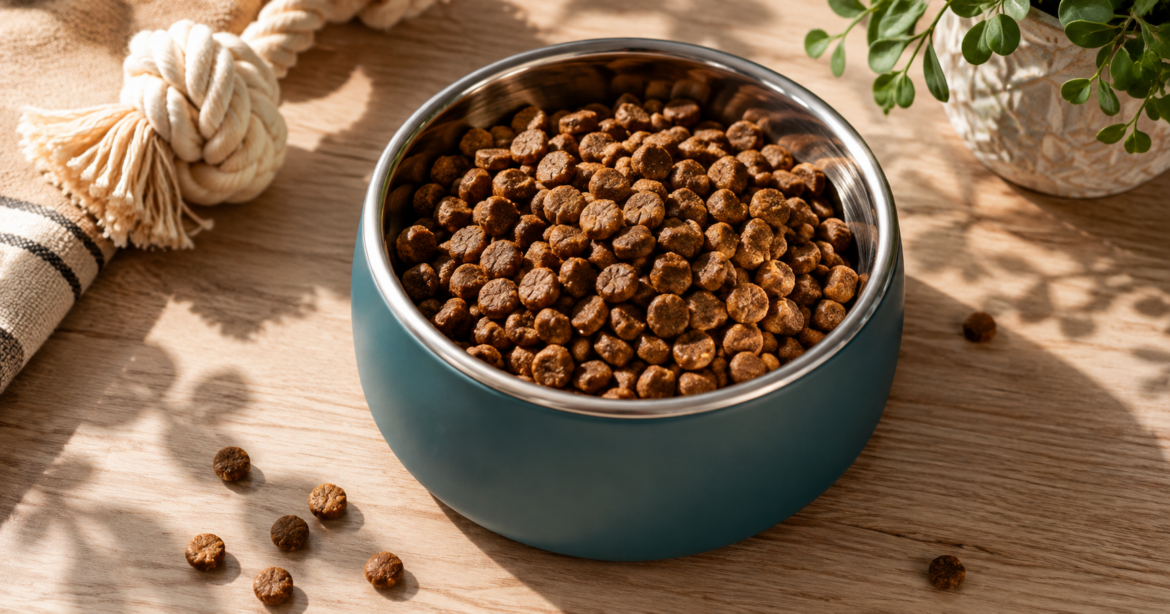
The best dog food for your dog depends on one thing first: life stage. A puppy, an adult, and a senior dog have different calorie, protein, and joint-support needs, and feeding an all-life-stages formula usually means overfeeding one end of that range to satisfy the other. Below are real picks for each life stage plus a genuinely good budget option, with what actually matters on the label — not just what’s trending.
Quick picks by life stage
| Life stage | Top pick | Typical price | Best for |
|---|---|---|---|
| Puppy | Purina Pro Plan Puppy | $1.80–$2.40/lb | DHA for brain development, controlled calcium for large breeds |
| Adult | Blue Buffalo Life Protection Formula | $1.60–$2.00/lb | Real meat first ingredient, no corn/wheat/soy |
| Senior | Hill’s Science Diet Adult 7+ | $1.90–$2.50/lb | Joint support (glucosamine/chondroitin), easier-to-digest formula |
| Budget (any adult) | Purina ONE SmartBlend | $0.90–$1.20/lb | Real meat first ingredient at a fraction of premium pricing |
| Sensitive stomach | Hill’s Science Diet Sensitive Stomach & Skin | $2.00–$2.60/lb | Limited ingredient, prebiotic fiber, easy digestion |
The picks, in detail
Purina Pro Plan Puppy

Puppies need DHA (an omega-3 fatty acid found naturally in mother’s milk) to support brain and vision development, and Pro Plan Puppy formulas include it directly rather than relying on generic fish oil blends. For large-breed puppies specifically, look for the “Large Breed Puppy” formula — it controls calcium and phosphorus levels to slow bone growth just enough to reduce the risk of joint problems later, which is a real concern in breeds that will end up over 70 lbs as adults. Real meat (chicken or lamb) is the first ingredient across the line.
Pros
- DHA for brain/vision development
- Large-breed formula controls calcium for joint health
- Widely available, consistent quality control
Cons
- Contains corn as a secondary ingredient, which some owners prefer to avoid
- Pricier than store-brand puppy formulas
Blue Buffalo Life Protection Formula

Real deboned chicken (or lamb, or fish, depending on the recipe) is the first ingredient, with no corn, wheat, or soy — three fillers that add bulk without much nutritional value. Blue Buffalo also adds “LifeSource Bits,” a mix of antioxidants, vitamins, and minerals cold-formed separately from the kibble to preserve their potency through the cooking process. It’s a solid middle-of-the-road premium formula: not the cheapest, but priced well below boutique or prescription-tier brands for comparable ingredient quality.
Pros
- Real meat first ingredient, no corn/wheat/soy
- Multiple protein options (chicken, lamb, fish) for rotation or sensitivities
- Widely available at grocery and pet stores
Cons
- Higher fat content than some competitors — watch portions on less active dogs
- Some recipes include pea protein, a point of ongoing (unresolved) research interest around grain-free diets
Hill’s Science Diet Adult 7+

Senior dogs need fewer calories (their metabolism slows) but more support for joints and digestion. This formula includes glucosamine and chondroitin for joint health and uses a natural fiber blend to keep digestion moving smoothly — both common trouble spots for dogs 7 and older. Hill’s also runs one of the more rigorous quality-control and feeding-trial programs in the industry, backed by an in-house team of veterinary nutritionists, which matters more at the senior stage when a dog’s system has less margin for error.
Pros
- Glucosamine/chondroitin for joint support
- Calorie-controlled for a slower senior metabolism
- Backed by feeding trials, not just formulation on paper
Cons
- One of the pricier options on this list
- Not grain-free, which some owners specifically want at this life stage
Purina ONE SmartBlend

You don’t need a boutique brand to get a real meat first ingredient — Purina ONE delivers that at roughly half the per-pound cost of the premium picks above. It won’t have every trend ingredient (no LifeSource Bits, no added glucosamine), but the fundamentals — real protein first, no artificial preservatives, complete and balanced for adult maintenance — are solid. For a healthy adult dog without a specific health condition, this is the pick that stretches a budget furthest without cutting a corner that actually matters.
Pros
- Real meat first ingredient at a budget price point
- No artificial preservatives
- Widely available everywhere, including grocery stores
Cons
- No added joint or coat supplements
- Contains corn and soy, which grain-averse owners may want to skip
What actually matters on the label
Ignore the marketing language on the front of the bag and check three things on the back: the first ingredient should be a named meat (“chicken,” not “meat meal” or “animal by-product”), the guaranteed analysis should show at least 18% protein for adults (22%+ for puppies), and the bag should say “complete and balanced for [life stage]” per AAFCO standards — that’s the line that confirms it’s nutritionally sufficient as a sole food source, not a supplement or treat-grade product.
Frequently asked questions
How much should I feed my dog?
Start with the feeding guide on the bag, which is based on your dog’s weight, but treat it as a starting point, not a rule — adjust up or down based on body condition. You should be able to feel your dog’s ribs with light pressure but not see them; if you can’t feel them at all, reduce the portion.
Is grain-free dog food better?
Not necessarily. Grain-free became popular based on limited evidence, and the FDA has since investigated a possible link between certain grain-free, legume-heavy diets and a heart condition called dilated cardiomyopathy (DCM) in dogs without a genetic predisposition. Unless your dog has a diagnosed grain allergy (which is genuinely uncommon), a quality grain-inclusive formula is not an inferior choice.
How do I switch my dog to a new food safely?
Transition over 7–10 days: mix 25% new food with 75% old for a couple days, then 50/50, then 75% new to 25% old, then fully switch. Doing it faster risks an upset stomach or diarrhea, even when the new food is objectively a better formula.
When should I switch my dog from puppy food to adult food?
Generally around 12 months for small and medium breeds, and closer to 18–24 months for large and giant breeds, since their skeletal growth takes longer to complete. Ask your vet for a breed-specific timeline if you’re unsure.
What ingredients should I avoid in dog food?
There’s no universal blacklist, but ingredients worth scrutinizing include vague “meat meal” or “animal by-product” (unnamed protein sources), artificial colors (which serve no nutritional purpose), and propylene glycol in semi-moist foods. A named meat as the first ingredient is the single best predictor of overall quality.